Iran's Supreme Leader Killed in Major US-Israeli Military Operation
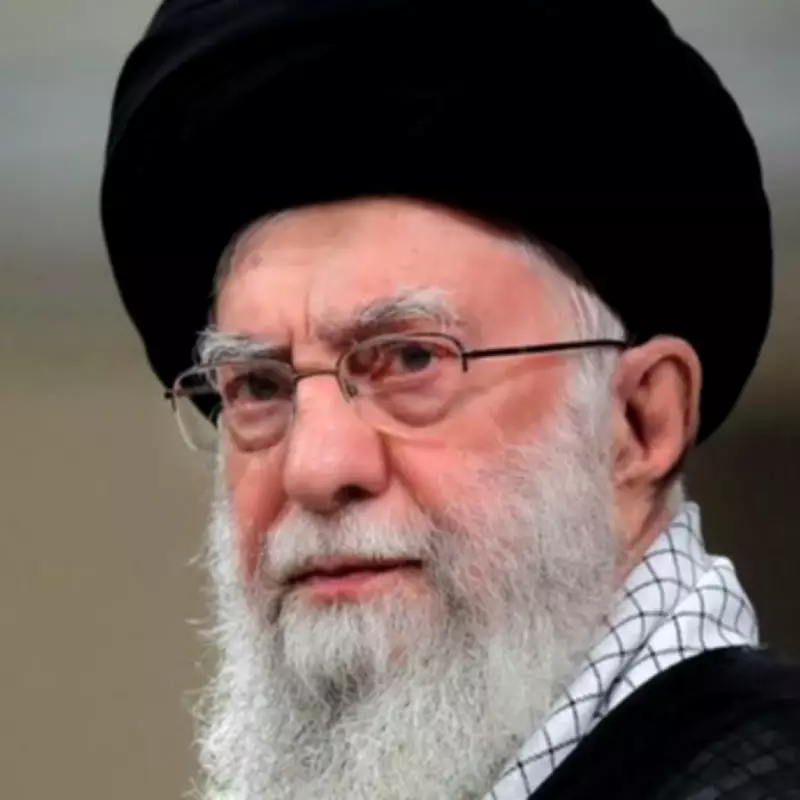
In a dramatic escalation of Middle East tensions, Iranian Supreme Leader Ayatollah Ali Khamenei has been killed during a major joint military operation conducted by the United States and Israel. The 86-year-old cleric's death was confirmed early Sunday by Iranian state television and the IRNA news agency, following earlier announcements from U.S. President Donald Trump. This unprecedented attack has thrown the future of the Islamic Republic into profound uncertainty while significantly raising the risk of widespread regional instability.
Military Strikes and Immediate Aftermath
The killing occurred during a sustained aerial bombardment targeting Iranian military and governmental installations. President Trump described the operation as "heavy and pinpoint bombing" that would continue throughout the week or as long as necessary. This marks the second major U.S. intervention in Iran within eight months, occurring amidst ongoing negotiations regarding Iran's nuclear program.
The elimination of Khamenei after decades of unchallenged authority creates a substantial leadership vacuum within Iran's political structure. The supreme leader traditionally holds final decision-making power on all major state policies, and no clear successor had been publicly designated prior to the attack.

Regional Reactions and Escalating Threats
Iran's paramilitary Revolutionary Guard immediately threatened to launch its "most-intense offensive operation" ever against Israel and U.S. bases in the region. Meanwhile, Iran's parliamentary speaker Mohammad Bagher Qalibaf delivered a televised address condemning U.S. and Israeli leaders as "filthy criminals" who would face "devastating blows" for their actions.
The crisis has created immediate travel disruptions across the Middle East. In Indonesia's Bali, airport authorities reported over 1,600 tourists stranded after several flights to Abu Dhabi, Dubai, and Doha were canceled or postponed due to regional airspace closures.
International Diplomatic Responses
Egyptian Foreign Minister Badr Abdelatty called urgently for "de-escalation and prioritizing diplomacy" to prevent "comprehensive chaos" in the region. Meanwhile, Argentina's President Javier Milei praised the joint operation, describing Khamenei as "one of the most evil, violent, and cruel individuals in modern history" while reaffirming Argentina's commitment to pursuing justice for the 1994 AMIA Jewish community center bombing in Buenos Aires.
China has begun organizing evacuations of its citizens from Iran, with more than 200 Chinese nationals scattered across the country. The Chinese embassy advised citizens to move away from major population centers and critical infrastructure in both Iran and Israel.
Additional Casualties and Security Developments
The attack resulted in significant additional casualties beyond Khamenei. Iranian state media reported that Maj. Gen. Mohammad Pakpour, head of the Revolutionary Guard, and Ali Shamkhani, a top security adviser to the late supreme leader, were both killed in the strikes. Additionally, Iranian prosecutor Ebrahim Taheri confirmed that the death toll from a strike on a girls' school in southern Iran's Minab county had risen to 148 killed and 95 wounded.
In Qatar, the Interior Ministry reported eight people wounded in Iranian attacks early Sunday, bringing the total wounded since strikes began to sixteen. The ministry urged residents to remain indoors except for emergencies.
Political Transition and Security Measures
A council has formed to govern Iran following Khamenei's death, as prescribed by Iranian law. The transitional body includes Iran's reformist President Masoud Pezeshkian, hard-line judiciary chief Gholamhossein Mohseni Ejei, and a member of the Guardian Council. According to Iranian law, the Assembly of Experts must select a new supreme leader "as soon as possible."
Security concerns have spread across the region. The U.S. Embassy in Jordan warned Americans to remain indoors due to reports of "missiles, drones, or rockets" in Jordanian airspace. In Iraq, protesters attempted to cross a bridge leading to Baghdad's heavily fortified Green Zone, with gunshots heard and smoke seen rising in the area.

President Trump issued a stark warning to Iran on Sunday, writing on Truth Social that American forces would respond to any escalation "WITH A FORCE THAT HAS NEVER BEEN SEEN BEFORE!" This exchange of threats between Washington and Tehran has created one of the most volatile security situations in the Middle East in recent decades.