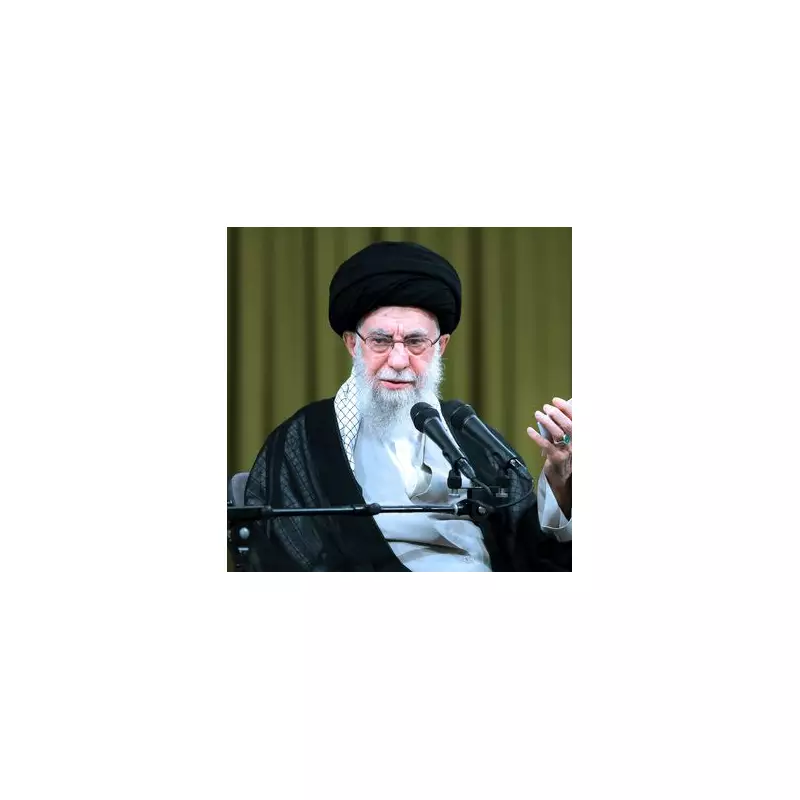
Iran's Supreme Leader, Ayatollah Ali Khamenei, has reportedly formulated a detailed contingency plan to flee to Russia should the ongoing wave of national protests overwhelm his security apparatus, according to an intelligence source.
The Unrest Threatening a Regime
The plan, described as a "plan B", comes as significant protests continue to spread across Iran. The unrest first ignited in Tehran in late December following a sharp devaluation of the Iranian rial against major currencies like the US dollar. This economic distress has been compounded in the New Year by soaring inflation and rising food prices, creating a potent mix of public anger that directly challenges the Ayatollah's rule, which has lasted since 1989.
An intelligence source told The Times that the critical juncture for the 86-year-old leader would be the moment his closest protectors either fail in their duty or turn against him. In such a scenario, the plan would be activated.

Details of the Escape Plan
The escape would involve Khamenei and a very close inner circle of approximately 20 people, split between family members and key aides. He would be accompanied by his son, Mojtaba Khamenei, who is widely considered his nominated heir apparent. The group would aim to board a flight from Tehran to Moscow.
The source further claimed the regime has "plotted an exit route" that involves gathering significant assets and cash to transport to Russia. This tactic would mirror the actions of Syria's Bashar al-Assad, who fled to Russia in 2024 after rebels took control, bringing with him up to $250 million (£185 million) in plundered state assets to cover debts to the Kremlin.
Why Russia?
According to analysis, Moscow presents the only viable sanctuary for Khamenei. Israeli intelligence veteran Beni Sabti stated the Ayatollah would have to flee to Putin as "there is no other place for him". The analyst noted Khamenei's personal admiration for the Russian President and a perceived cultural similarity between Iran and Russia.
This potential alliance is underpinned by existing geopolitical ties. The report also draws parallels with the US Treasury's actions in 2021, when it sanctioned two major Iranian organisations—the Execution of Imam Khomeini’s Order (EIKO) and Astan Quds Razavi (AQR). The US accused these entities, presented as charities, of controlling vast swathes of Iran's economy and funnelling expropriated assets to benefit Khamenei and senior officials.
The unfolding situation suggests that the fate of Iran's leadership could hinge on the loyalty of its security forces and the sustained momentum of public dissent. A flight to Moscow would mark a dramatic end to decades of rule and significantly alter the strategic landscape of the Middle East.