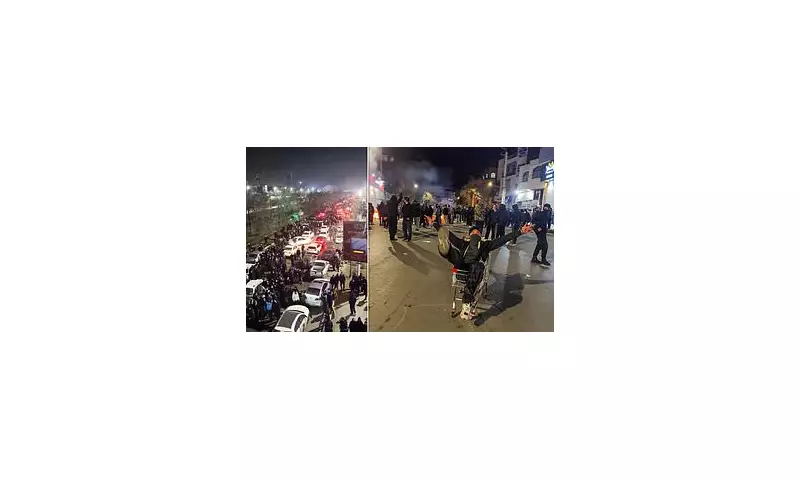
Iran is witnessing a seismic shift in public dissent, as waves of video evidence reveal a nationwide uprising of unprecedented scale and intent. This is not a call for reform but a demand for the complete rupture of the Islamic Republic's nearly 50-year rule.
A Chorus of Defiance: From 'Death to America' to 'Death to Khamenei'
The defining feature of this revolt is its direct and fearless challenge to the regime's core. For decades, state-organised chants of 'Death to America' and 'Death to Britain' were a staple of public life. Now, that same violent rhetoric has been turned inward, with crowds across the country roaring 'Death to Khamenei' – a direct curse aimed at the ageing Supreme Leader, Ayatollah Ali Khamenei.
This linguistic weaponisation signifies a profound rejection of the entire system he embodies. The protests have engulfed dozens of cities, from the capital Tehran to Mashhad, Isfahan, Shiraz, Tabriz, and Ahvaz, verified by open-source analysts. They unite Iran's diverse ethnic and class lines, drawing support from Kurdish towns, Arab provinces, Azeri cities, and the Persian heartlands.

Beyond Slogans: Targeting the Regime's Foundations
The movement has moved beyond mere demonstrations. In multiple locations, crowds have directly targeted symbols of regime power, including bases of the paramilitary Basij and sites linked to the Islamic Revolutionary Guard Corps (IRGC). The most potent symbolic challenge, however, is the resurgence of a royalist slogan that terrifies the clerical establishment: 'Zendeh bad Pahlavi!' (Long live Pahlavi).
This chant for Reza Pahlavi, the 65-year-old exiled son of the late Shah, is not mere nostalgia. It is a deliberate statement of intent, a refusal to accept the regime's narrative that Iran's history began with the 1979 Revolution. It represents a search for a unifying alternative and a reclaiming of national identity.
The state's response has been characteristically brutal yet tinged with panic. The regime has shut down the internet, throttled communications, and flooded major cities with IRGC units recalled from regional deployments. State television parrots claims of 'foreign agents' while ignoring the vast crowds, following a well-worn playbook that ended in the massacre of hundreds in November 2019.
A Global Shock in the Making: Why the World Must Pay Attention
The implications of this uprising extend far beyond Iran's borders. As the hinge of the Middle East, sitting astride the Caspian Basin and the Persian Gulf, Iran's stability directly impacts global energy security, with a fifth of the world's oil flowing through the Strait of Hormuz. A regime change would reconfigure the region, potentially collapsing proxy wars from Gaza to Yemen and altering nuclear calculations overnight.
Despite this, coverage in the UK has been muted. The BBC has offered scant sustained reporting, while Labour leader Keir Starmer has been criticised for awkward, hesitant statements. This silence and hesitation, whether born of geopolitical caution or domestic political concerns, serve as Tehran's greatest allies. As one Tehran resident wrote to the author: 'I have never seen anything like this.'
The courage on display is stark. Footage shows unarmed protesters marching toward IRGC headquarters, an act of profound contempt for the regime's 'killing arm'. An elderly woman, bloodied but defiant, declared she had 'been dead for forty-seven years' under the Islamic Republic. These Iranians, overwhelmingly pro-Western in sentiment, are risking everything to reclaim a future stolen by ideology and oppression. Their bravery demands our solidarity, not our silence.