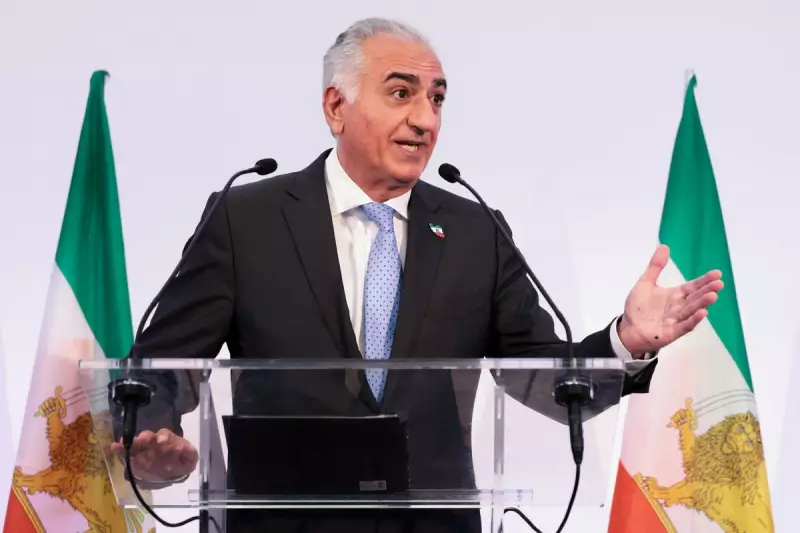
The exiled son of Iran's last monarch has publicly positioned himself as a figurehead for change, declaring himself a 'steward of a national transition to democracy' as mass protests against Supreme Leader Ali Khamenei's regime intensify across the country.
Who is the self-declared shah?
Reza Pahlavi, born in October 1960, is the eldest son of Mohammad Reza Pahlavi, the last Shah of Iran who was overthrown in the 1979 Islamic Revolution. The family fled into exile, with Pahlavi moving to the United States the year before the revolution for pilot training. He later earned a degree in political science from the University of Southern California.
Despite living abroad for over four decades, Pahlavi has consistently presented himself as a patriotic advocate for democracy and human rights in Iran. His official website states he has maintained contact with opposition groups both inside and outside Iran and has travelled globally to meet with world leaders and policymakers to discuss the plight of Iranians.

A voice amid the turmoil
Pahlavi's declaration comes as protests demanding regime change have swept through Iran, with his name being chanted in streets from Tehran to Mashhad alongside slogans like 'Pahlavi will return' and 'Seyyed Ali will be toppled'. The unrest has seen dozens of Iranians killed in violent clashes with police and a reported nationwide internet blackout imposed by authorities.
In a recent opinion piece for The Washington Post, Pahlavi argued the Islamic Republic is 'weaker and more divided than at any point since 1979'. He interpreted the chanting of his name not as a call to power, but as a recognition of the need for a unifying figure to guide a transition from tyranny. 'I bear it as a profound responsibility,' he wrote.
International reactions and controversies
Pahlavi's outreach has extended to international diplomacy, sparking both support and criticism. He notably thanked US President Donald Trump for promising to hold Iran to account, describing him as the 'leader of the free world'. However, President Trump has since ruled out a meeting, suggesting the US was not ready to back a specific successor should the Iranian government collapse.
Further controversy stems from Pahlavi's relationship with Israel. In 2023, he met with Israeli Prime Minister Benjamin Netanyahu, wearing a kippah and denouncing antisemitism. While some saw this as bridge-building, others criticised it as hypocritical given Israel's ongoing clashes with Palestinians in the occupied West Bank.
As the situation in Iran remains volatile, Reza Pahlavi continues to present himself from exile as a potential focal point for a movement seeking an end to over four decades of theocratic rule, though his ultimate role and the path to any democratic transition remain deeply uncertain.