Iran's Fragile Unity Tested by External Strikes and Internal Divisions
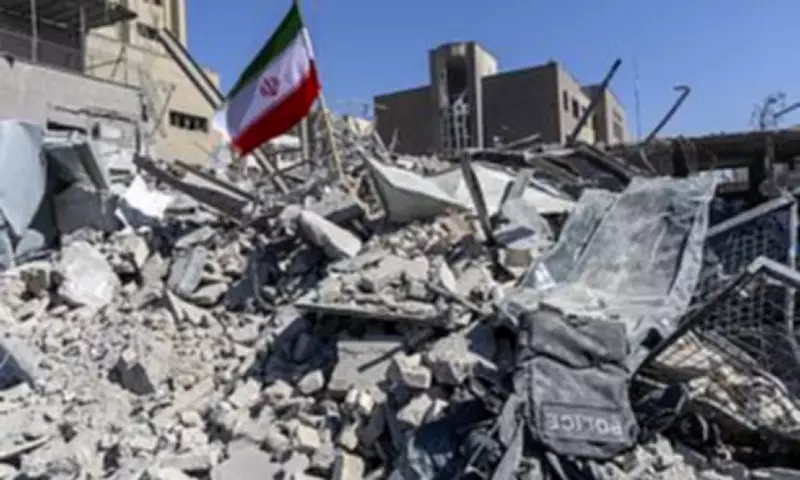
Global attention remains fixed on the unprecedented military campaign launched by American and Israeli forces against Iran, with retaliatory missile strikes from Tehran targeting Western assets across the Middle East. However, beyond the immediate exchange of rockets and drones, the Islamic Republic faces a profound internal threat that could undermine its very existence.
Beneath the Surface: Iran's Multi-Ethnic Reality
Despite outward displays of national and Shiite religious unity, significant ethnic fault lines run deep within Iranian society. The potential for civil conflict or even national fragmentation weighs heavily on the ruling theocracy and its Revolutionary Guard enforcers. While Persians dominate Iran's political and cultural landscape with their ancient heritage, they constitute a relatively narrow majority within the population.
Contrary to its name, the Islamic Republic of Iran functions as a multinational empire spanning from Turkey and Iraq in the west, across former Soviet southern borders including Armenia, Azerbaijan and Turkmenistan, to Afghanistan and Pakistan in the east. Official statistics on ethnic composition remain undisclosed, but estimates reveal a complex demographic picture.

With 93 million inhabitants making Iran the Middle East's second most populous nation, only approximately 60 million primarily speak Persian (Farsi). These Persian speakers concentrate in the central corridor extending south from Tehran through historic cities like Qom and Isfahan.
Minority Populations and Their Significance
Iran hosts numerous minority communities including Arabs in the southwestern border regions with Iraq, Baloch tribes along the southeastern Pakistan frontier, substantial Kurdish populations straddling Turkish and Iraqi borders, alongside diminishing Armenian Christian and Jewish communities. Yet one minority stands apart in both size and strategic importance.
The Turkic-speaking Azeris represent Iran's largest minority group, numbering roughly 27 million people—three to four times the population of neighboring Azerbaijan itself. These Iranian Azeris share ethnic and linguistic kinship with Turkey's population, creating significant geopolitical implications in an increasingly fluid Middle Eastern power landscape.
Historically, Shiite religious affiliation helped bind Azeris to the broader Iranian identity. However, as the Islamic Republic's legitimacy erodes and mosque attendance declines, Azeri nationalist sentiments may intensify. Energy-rich Azerbaijan, maintaining positive Western relations, could prove attractive to Iran's Azeri population, though whether this smaller neighbor could manage millions of potential breakaway citizens remains uncertain.
The Rising Turkic Bloc and Regional Realignments
This question may become secondary as Turkey continues consolidating influence across Turkic-speaking nations. The Organization of Turkic States—including Azerbaijan, Kazakhstan, Northern Cyprus, Kyrgyzstan and Uzbekistan with Turkey at the helm, plus observer members Hungary and Turkmenistan—represents a growing geopolitical force.
Beyond shared ethnic heritage, these nations are developing coordinated policies regarding oil and mineral exploration while pursuing infrastructure projects like the proposed Zengezur Corridor. This highway would connect Azerbaijan to its Nakhchivan exclave bordering Armenia, potentially extending to Turkey itself. If realized, this corridor could enable overland travel between Beijing and London within fifteen days.
Political Calculations and Unintended Consequences
Amid oppressive state control and economic devastation, Iran's Azeris have legitimate grievances. Israeli Prime Minister Benjamin Netanyahu has openly encouraged Iran's minorities to overthrow the Persian clerical regime, seemingly anticipating a Western-style democratic transition. While Netanyahu seeks a weakened Iran at nearly any cost, the international community fears potential civil war and refugee crisis escalation.

American advisors likely emphasize both these dangers and the expanding influence of the Turkic bloc, which commands substantial energy reserves and infrastructure. Turkey's strategic position as an east-west fulcrum, combined with its relationships with both Russia and Ukraine and growing arms industry, makes Ankara a crucial regional player.
Former President Donald Trump maintained positive relations with Turkish leader Recep Tayyip Erdogan, embracing opportunities presented by regional realpolitik. However, Turkey remains no ally to Israel. As Ankara contemplates potential accords with 27 million Iranian Azeris, Netanyahu might discover that his desired Iranian weakness could empower an even more formidable regional rival.