Iran's Defiant Stance in US Talks Amid Domestic and Military Pressures
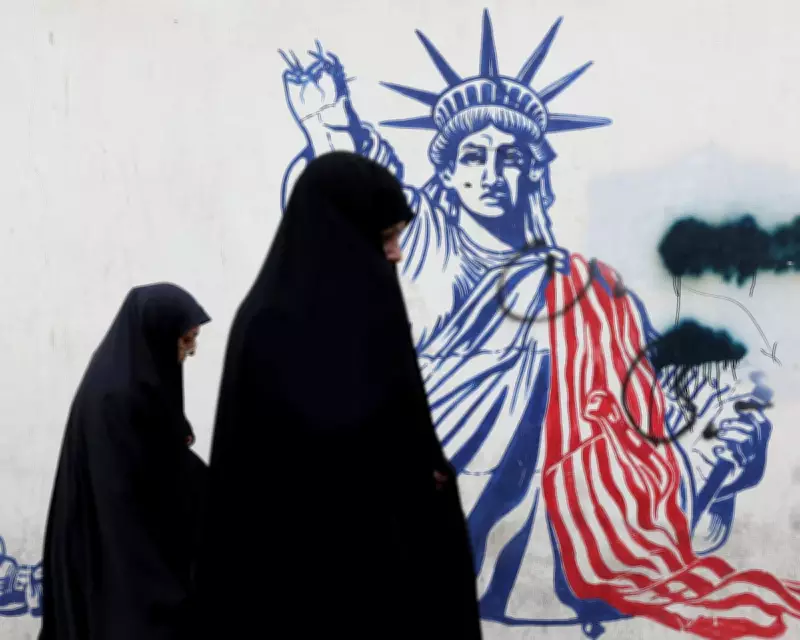
Women walk past an anti-US mural on a street in Tehran, Iran, a visual symbol of the longstanding tensions between the two nations. As negotiations between Iran and the United States resume, Tehran is adopting a surprisingly bullish and maximalist position, despite facing severe military strikes, crippling sanctions, and widespread domestic unrest that have significantly weakened the regime over the past eight months.
Unchanged Negotiating Position Despite Weakening Factors
Iran's refusal to alter its negotiating stance is particularly striking given the recent events that have exposed its vulnerabilities. During a 12-day war with Israel, Iran's air defences were shown to be inadequate, and Israeli intelligence successfully penetrated the country's political, military, and scientific elite. This conflict resulted in the deaths of more than 30 Iranian military commanders and over 160 strikes on military targets.
In June, the US launched a devastating attack using B-2 bombers and 30 Tomahawk missiles, targeting Iran's three major nuclear sites at Fordow, Isfahan, and Natanz. This assault effectively eviscerated Iran's nuclear programme. Subsequently, in September, UN-wide sanctions were reimposed after European powers withdrew their objections. By January, President Trump tightened economic pressure by imposing a 25% tariff on goods from countries trading with Iran.

Domestic Unrest and Economic Struggles
The impact of these measures has been profound on Iran's domestic front. Since June, the Iranian currency has more than halved in value against the dollar, and food inflation is approaching treble figures. These economic hardships sparked nationwide protests in January, during which security services demonstrated a willingness to use lethal force, resulting in thousands of casualties. The government's anxiety over public sentiment is evident, as it continues to enforce internet censorship more than a month after its implementation.
Despite these challenges, Iran's diplomats are not behaving as if the regime is on the brink of collapse. Instead, they are attempting to dictate the parameters, venue, and main topics of the talks with the US. Iran's negotiating team, known for its experience and toughness, remains steadfast. Wendy Sherman, the chief US negotiator for the 2013-15 nuclear deal, recalls that Iranian negotiators are legalistic, full of stamina, well-prepared, and tough, often using the phrase "one more thing" to push for concessions.
Confidence in Avoiding US Military Action
Iran's confidence appears to stem from a belief that President Trump will not carry out his threat of military attack due to the potential perils. Hamidreza Azizi, a visiting fellow at the German Institute for International and Security Affairs, notes that Iran's security elite consensus is that Trump avoids prolonged and costly wars. By making any conflict as unpredictable, messy, and expensive as possible, Iran hopes to deter US aggression.
Furthermore, Iran does not believe Trump has a coherent strategy for regime change or any interest in aligning with opposition groups inside or outside the country. As Senator Marco Rubio recently admitted to the Senate foreign relations committee, the US lacks a clear plan for what would follow if the Iranian regime were to fall, highlighting the complexity of such a transition in a long-standing authoritarian state.
Internal Dissent and External Intervention Debates
Within Iran, opinions on external intervention are divided. Supporters of Reza Pahlavi, the son of the deposed Shah, argue that a US attack could galvanise the masses to return to the streets, with better organisation and resolve despite previous crackdowns. Saeed Ghasseminejad, a close supporter of Pahlavi, claims that many Iranians desire such bombing to overthrow the regime.

Conversely, other dissidents, including human rights lawyer Nasrin Soutoudeh, express that while some view external strikes as a last hope against tyranny, many reject intervention. Figures like Mir Hossein Mousavi, the former prime minister and Green Movement leader, advocate for a peaceful and democratic transition, warning that war could undermine domestic democratic agency and deepen social divisions. A collective known as the Group of 17, including Nobel prize-winner Narges Mohammadi, has issued statements demanding change through prosecution of repressive leaders and democratic processes, without external interference.
Three signatories of this group have been arrested, with Vida Rabbani reportedly refusing to cooperate with authorities, and Mohammadi on hunger strike. These internal struggles highlight the regime's ongoing repression and the complexities of achieving change.
Trump's Shifting Focus and Future Implications
For now, President Trump seems to have lost interest in supporting jailed activists or radical change within Iran. However, this could change if Iranian negotiators overplay their hand in the upcoming talks. The outcome remains uncertain, with Iran betting on Trump's reluctance to engage in a costly war, while domestic pressures and international sanctions continue to mount.
As negotiations proceed, the world watches to see whether Iran's defiant stance will lead to a breakthrough or further escalation in this high-stakes diplomatic standoff.