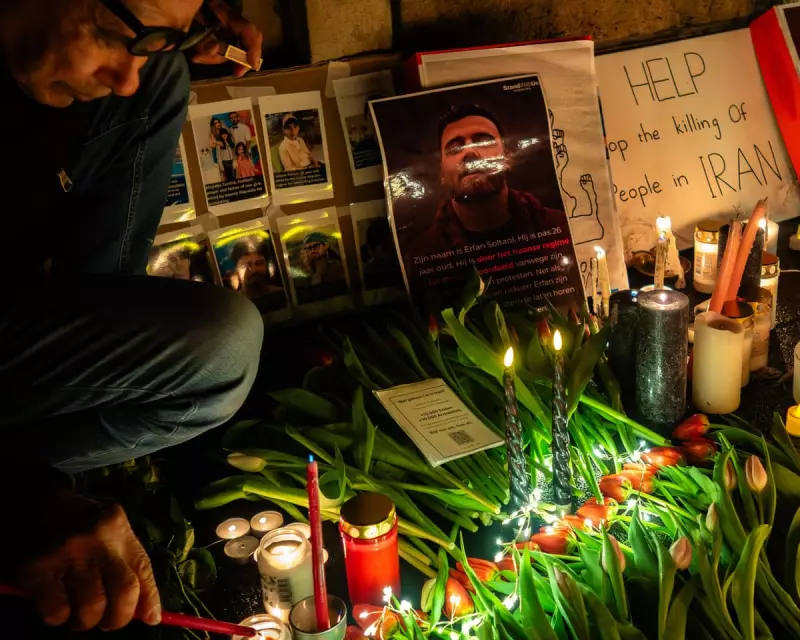
This week, a landmark and brutal chapter unfolded in the Middle East, largely obscured by an internet blackout imposed by Tehran. While the world's attention was elsewhere, the Iranian regime launched a devastating crackdown on its own citizens, with one official admitting to a death toll of 2,000 people. Other estimates, including from CBS News, suggest the number killed could be as high as 12,000.
A Regime's Ruthless Response to Nationwide Fury
The protests, which erupted across all 31 of Iran's provinces, represented a profound and widespread rejection of the ruling theocracy. The movement drew in Iranians from every segment of society—young and old, women and men, the urban middle class and the poor. Their grievances were not limited to a single issue, like the compulsory hijab, but constituted an all-out fury at a broken system.
The Iranian economy is in tatters, with a worthless currency and national income far below the global average despite the country's vast oil wealth. This wealth has been squandered on pursuing regional dominance through nuclear ambitions and funding proxy forces like Hezbollah and the Houthis, leaving domestic infrastructure crumbling. Beyond material deprivation, Iranians are denied fundamental freedoms: democracy is a sham, censorship is rampant, and misogyny is official state policy. The regime's disdain for life is starkly illustrated by its execution of over 2,000 citizens in 2025 alone.

Empty Promises and the Limits of Military Action
The protesters took to the streets knowing the extreme risks, emboldened in part by direct encouragement from US President Donald Trump. In a social media post and subsequent speech, Trump urged Iranians to "keep protesting" and promised that American help was "locked and loaded and ready to go." However, this rhetoric has, so far, proven as empty as similar promises made to Iraqi rebels in 1991, with no US military rescue materialising.
Experts argue that even a successful US military operation to remove the Supreme Leader, Ali Khamenei, would be a superficial victory. The theocratic system is deeply entrenched, capable of simply replacing its top figures. Suzanne Maloney, an advisor to both Democratic and Republican administrations, stated plainly: "This regime will simply replace itself." Furthermore, creating a power vacuum in a nation with no coherent political alternative ready to govern could lead to greater chaos.
Concrete Steps the World Can Take
While US bombs are not the answer, there is much the international community can and should do to pressure Tehran and support the Iranian people. Sanctions could be significantly tightened, targeting both individuals directly implicated in the recent bloodshed and core institutions like the Islamic Revolutionary Guard Corps (IRGC). The European Union could lead by formally sanctioning the IRGC, a move that would alter the calculations of regime insiders.
More direct support could involve cyber operations to disrupt the organs of repression, such as the morality police and the Basij militia. Providing internet access to Iranians through tools like Starlink would also help break the regime's information blockade.
Most fundamentally, the world must not look away. As media coverage wanes and political discussion moves on, thousands of corpses from a colossal slaughter are barely cold. Silence is not a moral stance; it only aids the oppressors who flog, hang, shoot, and blind their fellow citizens. The people of Iran are crying out for our attention and our action—starting with the simple refusal to ignore their plight.