For over a week, a profound silence has descended on Iran's digital landscape—a government-enforced nationwide internet blackout aimed at quelling dissent. Yet, from within this digital void, voices of defiance, hope, and profound anxiety are emerging, painting a complex picture of a nation at a potential turning point.
Unprecedented Scale of Unrest
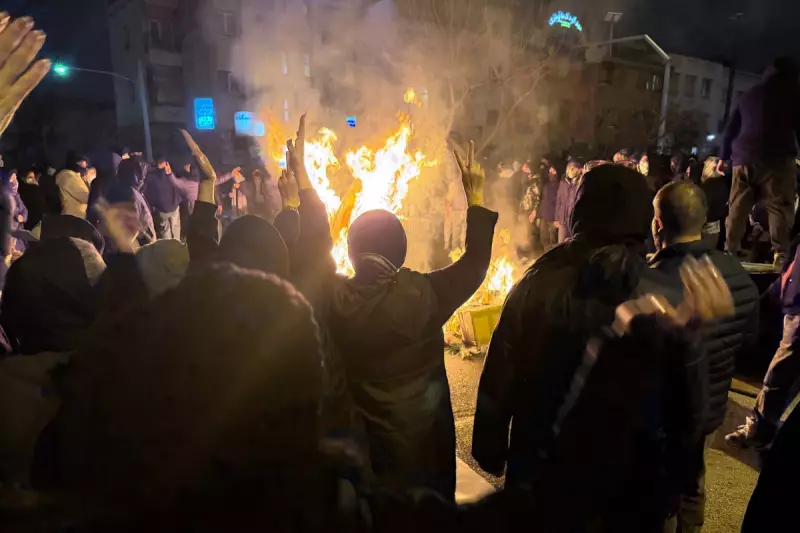
Despite the severe communications crackdown, reports confirm that protests of an unprecedented scale have erupted across all 31 of Iran's provinces over the past month. Millions have taken to the streets, presenting one of the most significant challenges to the Islamic theocracy in decades.
Speaking via a borrowed Starlink connection on Wednesday 14 January 2026, 22-year-old Liyana* conveyed a sense of cautious optimism. "For the first time, I feel truly hopeful," she said. "These protests are massive. Huge numbers of people are defying the curfews. This is so much bigger than what we saw after Mahsa – I really think this could be it. This could be the time that Iran is freed."

The human cost of the state's response has been severe. Independent reports, including from Iran International, estimate that approximately 20,000 people have been killed in the regime's crackdown on the demonstrations, underscoring the lethal seriousness of the unrest.
The Divisive Spectre of Foreign Intervention
The internal struggle has inevitably drawn international attention, most notably from the United States. President Donald Trump posted on his Truth Social platform on Tuesday, promising Iranian protesters that "Help is on its way." This potential for external involvement has sharply divided public opinion within Iran.
For some, like 61-year-old Arwa*, decades of struggle have eroded any reservations. "At this point, honestly, I would be grateful for foreign intervention – if someone were to come in and just topple it all… I just want this all to be over," she told The Independent. She described a populace that is "tired, frustrated, and poor," for whom life under the 36-year rule of Supreme Leader Ayatollah Ali Khamenei is no longer sustainable.
However, for others, the prospect of American-led action is a source of deep dread. Hadi*, also 22, expressed immediate unease at Trump's support. "He didn't care about us when he imposed all the sanctions which have made our lives almost unbearable," he argued. "He cares because he's seeing an opportunity to gain something. Trumpian politics is purely transactional."
Fears of Becoming 'The Next Libya or Iraq'
This fear is rooted in a grim regional history. Many Iranians look at America's actions in the Middle East and see a blueprint for chaos. Abdallah*, 36, pointed to ongoing US intervention in Venezuela, which he called illegal under international law. "What makes anyone think he'll respect international law when it comes to us?" he asked.
His central fear is stark: "I worry that American foreign intervention will turn us into the next Libya, Syria, Iraq." He warned that such interference historically leaves behind "a legacy of extreme violence, and a people with no leader – the perfect breeding-ground for civil war and tyranny."
While acknowledging the scale and violence of the current protests—the biggest he has witnessed—Abdallah confessed a deep-seated anxiety about what might follow the regime's collapse. "We're standing on a precipice, and I don't think enough people realise how close we are to the edge [of revolution]."
As the internet blackout persists, the fundamental questions remain unresolved. Can the protest movement sustain its momentum without digital coordination? Will outside powers shape its outcome? The answers are unclear, but the voices from inside Iran reveal a nation torn between the desperate hope for freedom and the terrifying fear of what that freedom might ultimately cost.
*Names have been changed to protect the identity of sources.