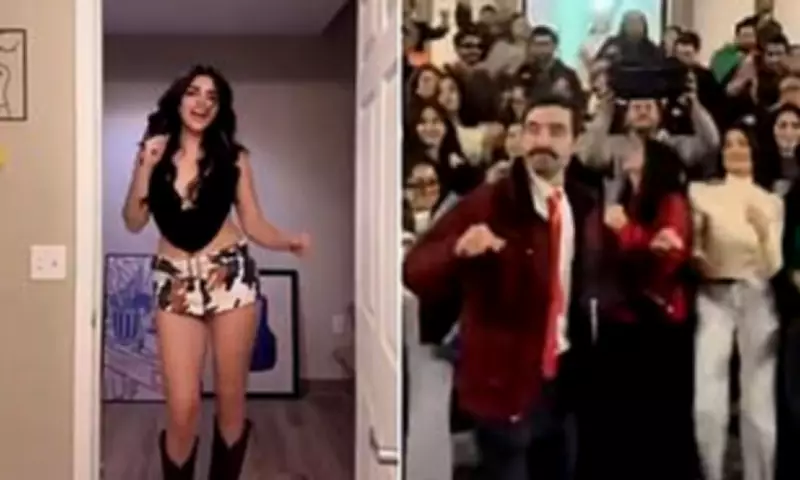
Iranians Worldwide Perform 'Trump Dance' in Celebration After US-Israel Strike Kills Supreme Leader
In a dramatic global response, Iranians have flooded social media with videos of themselves performing the famous 'Trump dance' following the killing of Iran's Supreme Leader Ayatollah Ali Khamenei in a joint US-Israel military operation on Saturday. The spontaneous celebrations erupted as President Donald Trump announced the operation's success, declaring Khamenei 'one of the most evil people in History' on his Truth Social platform.
Global Celebrations and Street Parties
The videos showcase jubilant crowds dancing in streets and individuals recreating Trump's signature fist-pumping moves at home with friends, all set to the 'YMCA' song that became a staple at Trump rallies. Celebrations have spread across major cities in the United States and Europe, with Iranian diaspora communities gathering in public spaces waving pre-revolution Iranian flags and chanting anti-regime slogans.
In London's North Finchley, the Persian community transformed Ballards Lane into a scene of 'absolute pandemonium and jubilation' according to local resident Jessica, who described thousands descending on the area. 'People are chanting and singing, handing out roses and Persian biscuits. Cars are tooting in the road while some hold up pictures of the Shah,' she told reporters.

Leadership Vacuum and Regime Legacy
Khamenei's death after 36 years as Iran's supreme leader creates a significant leadership vacuum, given the absence of a clear successor and his ultimate authority over all major policies. As chief Islamic cleric, he led Iran's clerical establishment and the powerful Revolutionary Guard, driving the country's increased Islamification and expansion of proxy forces across Yemen, Lebanon, Gaza and beyond.
His strong religious views long unsettled the Middle East, positioning Iran against more western-embracing neighbors like Saudi Arabia, the United Arab Emirates, Qatar and Bahrain. The regime systematically targeted women through mandatory dress codes and restrictions on employment, mobility and legal rights, often enforced violently by morality police.
Official Mourning and Iranian Response
Meanwhile, Iran has declared a 40-day mourning period and seven-day national holiday. During an emotional state broadcast, an anchor in black stifled tears while announcing Khamenei's 'martyrdom' in what was described as a 'joint criminal attack by the United States and the Zionist regime.'
The National Supreme Council statement described Khamenei as a revered religious figure whose 'long dream of martyrdom became true' during Ramadan, warning that 'martyrdom will spark a massive uprising against oppressors.' Casualty reports indicate 555 people killed across Iran since the strikes began, while four US service members and eleven Israelis have died in related operations.
Trump's Ultimatum and Regional Escalation
President Trump used his announcement to call on Iranian citizens to 'take back their Country' and issued a stark ultimatum to Iranian leaders. 'These intolerable threats will not continue any longer. I once again urge the Revolutionary Guard and Iranian military police to lay down your arms and receive full immunity or face certain death,' he declared.
Trump urged Iranians to 'be brave, be bold, be heroic' in overthrowing the Islamic regime, framing the operation as securing future generations' safety. However, Iran has vowed never to surrender, with national security official Ali Larijani confirming the country will not negotiate with the US as missiles continue raining down on Israel, Arab states and American military bases across the region.
The contrasting scenes—from celebrating Iranians dancing to YMCA worldwide to mourning broadcasts in Tehran—highlight the profound divisions exposed by Khamenei's death and the uncertain future facing the Middle East.