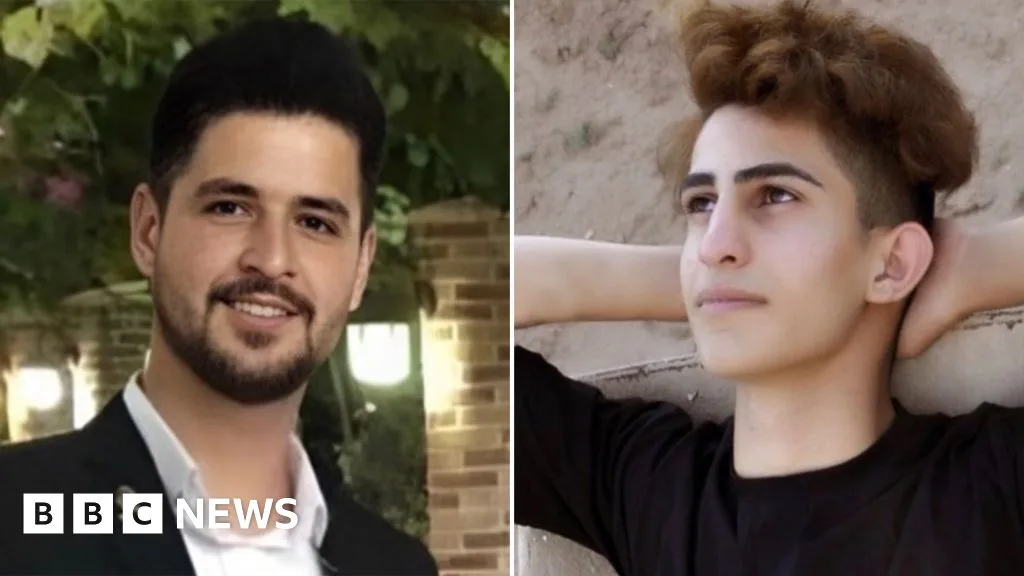
Dozens of demonstrators gathered outside Rajai Shahr prison in Karaj, Iran, overnight amid reports that authorities are preparing to execute two more anti-government protesters. Videos posted by opposition activists showed crowds chanting slogans, while the mother of Mohammad Ghobadlou, one of the men at risk, appealed for clemency.
The protest came just two days after two protesters were hanged on Saturday, drawing international condemnation. The UN human rights office described the executions of Mohammad Mahdi Karami and Seyed Mohammad Hosseini as “shocking,” noting they followed “unfair trials based on forced confessions.” A Revolutionary Court had found them guilty of “corruption on Earth” over alleged involvement in the killing of a Basij member in Karaj in November. Both denied the charge and claimed torture.
Authorities have labeled the nationwide protests, which began in September after the death of Mahsa Amini in morality police custody, as “riots” and have responded with lethal force. According to the Human Rights Activists’ News Agency (HRANA), at least 519 protesters and 68 security personnel have been killed, with over 19,000 arrested. HRANA reports 111 individuals face the “impending threat of a death sentence.”
Activists warned that Ghobadlou and Mohammad Boroughani had been moved to solitary confinement ahead of possible execution. The activist collective 1500 Tasvir released videos of the crowd shouting, “This is the last warning. If you execute [them] there will be an uprising/revolt.” Ghobadlou's mother, stating her son has bipolar disorder, told the crowd 50 doctors had signed a petition requesting a review of his mental health. She also claimed the policeman he is accused of killing was “martyred somewhere else.”
Ghobadlou, 22, had his death sentence upheld on 24 December for “enmity against God” after being convicted of driving into a group of policemen in Tehran, killing one. His trial proceeded without his chosen lawyer, and Amnesty International cited concerns of torture based on forensic evidence. Boroughani, 19, was also convicted of “enmity against God” for allegedly wielding a machete and setting fire to a government building.
In a separate development, the judiciary announced death sentences for three men in Isfahan over an attack that killed three security personnel in November. Among those sentenced to prison was professional footballer Amir Nasr-Azadani, who received 16 years for charges including “assisting in enmity against God.”