The Surgical Strike That Crippled Iran's Missile Command
Long before the first explosion tore through the night sky near Isfahan, American and Israeli intelligence had meticulously mapped their target. The building in question served as a crucial command node for the Islamic Revolutionary Guard Corps (IRGC) Aerospace Force, where personnel coordinated Iran's ballistic missile and drone operations. The operation in mid-March unfolded with clinical precision, beginning with extensive surveillance. Highly classified RQ-170 Sentinel stealth drones monitored a significant surge in activity at the facility, with vehicles moving rapidly, crews mobilising from hangars, and communications traffic spiking – clear indicators of an imminent Iranian attack.
The Invisible Assault That Blinded Iranian Defences
The kinetic phase was preceded by an invisible electronic onslaught. EA-18G Growler aircraft saturated Iranian radar systems with jamming signals, while AGM-88 HARM missiles hunted down and destroyed any remaining communications infrastructure. With the site effectively blinded, F-35I Adir stealth fighters moved into position, supported by B-2 Spirit bombers carrying the formidable GBU-57 Massive Ordnance Penetrator. The subsequent strike was devastatingly efficient. The GBU-57 penetrator burrowed deep into structures before detonating, causing buildings to collapse inward and crushing underground command centres. By morning, only charred ruins remained, with senior personnel obliterated. Follow-up surveillance confirmed a 'functional kill' that significantly degraded Iran's ability to plan and execute missile operations across the region.
Iran's Asymmetric Response: Mastering the Propaganda War
Despite suffering substantial military degradation, the Iranian regime has declared victory, with its Supreme National Security Council labelling the conflict an 'undeniable, historic and crushing defeat' for its enemies. This narrative has gained traction in some Western circles, largely due to Iran's sophisticated information warfare campaign. Recognising its inability to compete conventionally, Tehran has shifted to asymmetric tactics, exploiting divisions within enemy populations through psychologically targeted propaganda. Iran has spent years studying Western societal fractures, fears, and paranoias, weaponising this knowledge to undermine support for military actions against it.

The Rise of AI-Generated Disinformation Campaigns
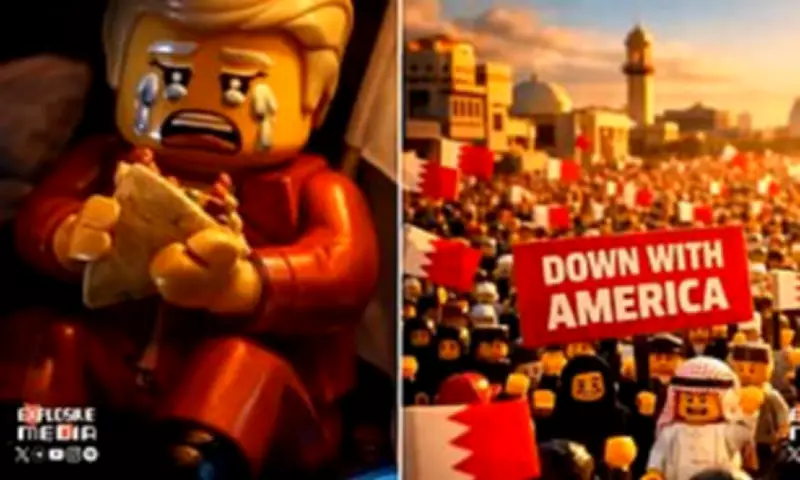
Iran's propaganda apparatus has embraced artificial intelligence to create culturally resonant disinformation. A particularly notable innovation is the production of 'Lego propaganda videos' featuring AI-generated figures of Western leaders. These videos depict figures like former US President Donald Trump and Israeli Prime Minister Benjamin Netanyahu in humiliating scenarios, often accompanied by inflammatory audio alleging corruption or incompetence. One recent example shows a Lego Netanyahu leading Trump on a chain leash while an AI-generated rapper makes scandalous accusations. The regime's objective is not necessarily the sophistication of the content but its viral dissemination through Western social media platforms, where users often share such material without verifying its authenticity.
Parallel to these digital campaigns, Iran has conducted physical operations with psychological objectives. As noted by researchers Dr Ben Yaakov and Alexander Pack in their paper From Missiles To Minds: Iran's Influence-Driven War Strategy, Iranian missile, rocket, and drone attacks frequently target civilian neighbourhoods, transport networks, and critical infrastructure with limited military value. The use of cluster munitions, which scatter bomblets across wide areas, aims to keep civilian populations under constant threat, disrupt daily life, and erode morale through sustained fear. Tehran gambles that mounting public pressure will eventually force Israeli and Western political leaders to concede.

Strategic Confusion and the Regime Change Dilemma
The United States and Israel have undermined their tactical successes with inconsistent strategic messaging. President Trump's early declaration that the war's objective was regime change provided Iran with a powerful propaganda tool: every day the regime survived could be framed as a victory. This highlights a fundamental principle of conflict – wars are judged not by damage inflicted but by objectives achieved. By this measure, the conflict currently represents a strategic shortfall for Washington and Jerusalem, despite their operational prowess.
Internal Degradation and Future Uncertainties
Behind the propaganda facade, the Iranian regime faces unprecedented internal challenges. Security sources report pervasive infiltration of Iran's security apparatus by Israeli intelligence, with confusion sown by seemingly counterproductive orders often attributed to Mossad-influenced commanders. The regime contends with internal paranoia, infighting, and executions of IRGC personnel for desertion or disobedience. Financial systems have been disrupted, impairing the government's ability to pay its employees, while relations with Gulf neighbours have deteriorated, closing vital sanctions-evasion routes.
The combination of military, financial, and institutional degradation could potentially catalyse the regime's collapse, though this outcome remains uncertain. The critical test will be whether the Iranian population, long suppressed through internet blackouts and state-controlled information, becomes emboldened to rise up or remains intimidated by repression. As Western discourse remains fractured and self-critical, Iranian leaders monitor these divisions, exploiting them to amplify their narrative of resilience and victory. The conflict thus represents a dual-front war: one of precision kinetics against military infrastructure, and another of perception management waged in the global information space.