
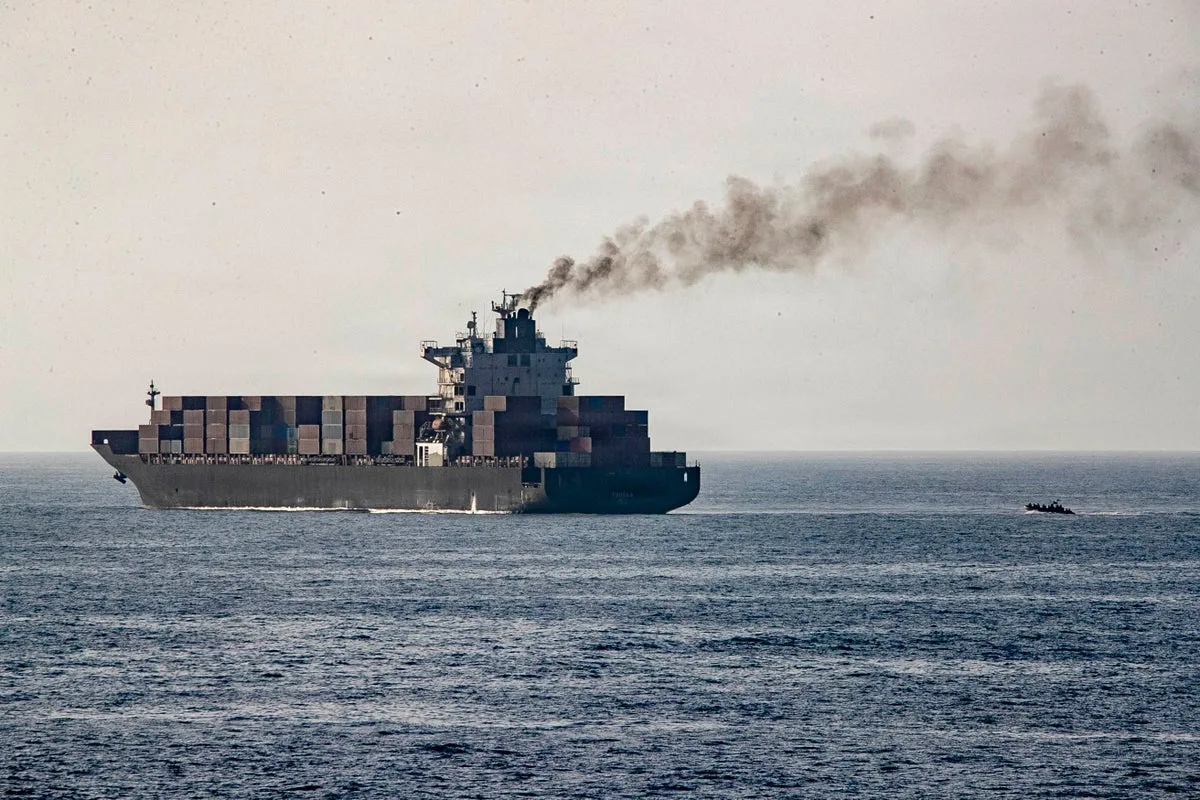
Donald Trump announced on Tuesday that the US would 'hold our attack' on Iran until a deal is made, marking a significant climbdown after earlier threats to blitz civilian infrastructure. The US president insists he is under 'no time pressure' to reach a peace agreement and will prioritise a 'good deal for the American people', but a substantial gulf remains between both sides on key issues.
The American navy continues to blockade Iranian ships in the Strait of Hormuz, a countermeasure to Iran's closure of the route that analysts estimate is costing Tehran as much as $435m per day. While Iran's economy will be damaged by a protracted war, experts say the status quo could also end up strengthening the authoritarian regime. The Pentagon now anticipates it will likely take six months to clear mines from the strait.
The Strait of Hormuz has proven a powerful lever of Iranian influence since the conflict erupted on 28 February. A fifth of global oil and liquefied natural gas usually passes through the waterway. Its closure has drained global supplies, forcing up prices and creating wide support for a quick end to the war. Trump argues that the status quo is also unsustainable for Iran, which he says is 'losing $500m a day' from the US blockade.
Miad Maleki, senior fellow at the Foundation for Defence of Democracies, assessed that the blockade could cost Iran $435m per day, as more than 90 per cent of its $109.7bn annual trade passes through the strait. Before the blockade, Iran was generating around $139m in oil revenue alone every day. The blockade also halts exports of some $54m in daily petrochemical exports and $79m in non-oil exports, and impacts the $159m in daily imports, creating shortages and driving up prices.
Andreas Krieg, a senior lecturer at King's College London, told The Independent that the status quo is 'not sustainable in any normal commercial sense'. However, he noted that Iran 'can tolerate this kind of pressure longer than most outsiders would like to admit'. The paradox, he said, is that if the impasse lasts, the Iranian regime is likely to reconstitute itself faster than expected, even while weakening economically. 'Over time, a very long impasse would still erode Iran’s economy, but in the near to medium term, the IRGC can absolutely tolerate this kind of status quo because it reinforces the idea that only hard power, repression and strategic coercion preserve the system.'




