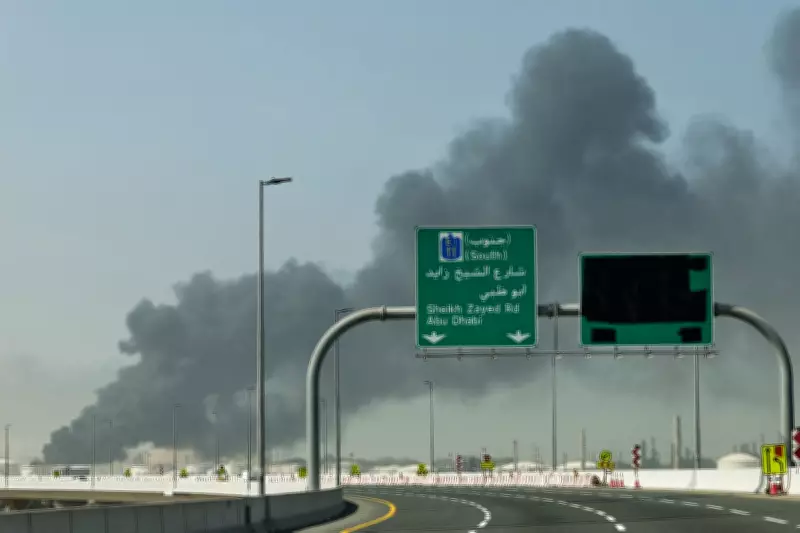
Iran's Gulf Strikes Continue: Dubai Hit by Second Day of Explosions
A fresh wave of explosions has been reported in Dubai for a second consecutive day, as Iran persists with its retaliatory strikes across the Gulf region. The attacks are in direct response to recent military actions by the United States and Israel, escalating tensions in the area.
Widespread Damage and Interceptions
Witnesses in Dubai and the Qatari capital Doha reported hearing loud blasts on Sunday, March 1, 2026. Authorities have attributed these sounds to successful interception operations by air defence systems. Despite these efforts, significant damage has been inflicted on key infrastructure and landmarks.
Thick black smoke continued to billow from the Jebel Ali port area, where a berth caught fire earlier in the day due to debris from an intercepted missile. The Dubai Media Office confirmed that shrapnel from downed drones fell on two residential houses, resulting in two injuries. Both individuals have received necessary medical care.

Targets and Iranian Strategy
Iran has stated its intention to target US bases in the region, but the strikes have impacted a broader range of sites across Gulf cities. In Dubai, notable damage has been reported at:
- Dubai International Airport, a critical aviation hub.
- The iconic Burj Al Arab hotel, a symbol of the city's luxury tourism.
- Palm Jumeirah Island, the man-made archipelago popular with residents and visitors.
These attacks underscore Iran's expanding military campaign, which has moved beyond declared targets to include civilian and commercial areas. The use of missiles and drones has prompted intense air defence responses, leading to the interception sounds heard by residents.
Official Statements and Regional Impact
In a statement released on Sunday morning, the Dubai Media Office clarified the situation: "Authorities confirmed that debris from drones intercepted by air defences fell in the courtyards of two homes in Dubai, resulting in two injuries. The injured have received the necessary medical care. Authorities also clarified that the sounds heard across the emirate were the result of successful interception operations."
This ongoing conflict highlights the volatile security environment in the Gulf, with potential implications for international travel, trade, and diplomacy. The targeting of major infrastructure like ports and airports could disrupt global supply chains and economic activities in the region.
As tensions remain high, further developments are anticipated, with regional governments likely to reassess their defence strategies and international alliances in response to Iran's aggressive posture.