Iran Launches Major Retaliatory Strikes Against US Military Installations Across Middle East
In a dramatic escalation of regional tensions, Iran has unleashed a significant barrage of missiles targeting multiple United States military bases throughout the Middle East. This aggressive action comes as a direct response to a massive joint assault conducted by the United States and Israel on Saturday morning, which struck targets in Tehran.
Explosions Rock Key Strategic Locations
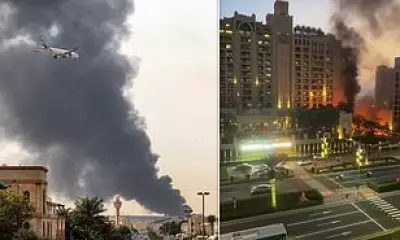
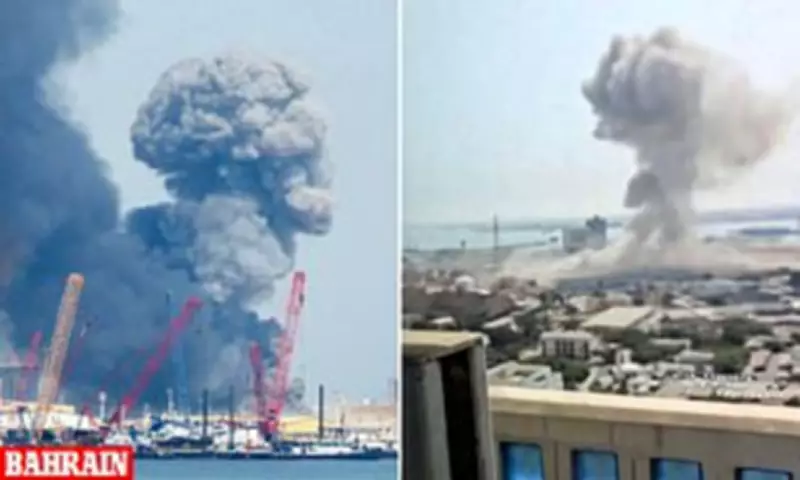
Explosions were reported in Bahrain, the strategic home port of the US Navy's Fifth Fleet, following threats from Iran's Foreign Ministry to attack all American military assets in the region. The Iranian operation, described as one of its largest in a decade, was launched in retaliation for what has been termed Operation Epic Fury by former US President Donald Trump.
The initial US-Israeli strikes occurred near the offices of Iran's Supreme Leader, Ayatollah Ali Khamenei, early on Saturday, culminating weeks of intensifying diplomatic and military brinkmanship between Tehran and Washington.

Comprehensive Targeting of US Military Presence
In response, Iranian forces systematically targeted several critical US military installations across the Gulf region. The strikes focused on:
- Al Udeid Air Base in Qatar, a major US air operations hub.
- Ali Al Salem Air Base in Kuwait, a key coalition facility.
- Al Dhafra Air Base in the United Arab Emirates, hosting advanced US aircraft.
- The headquarters of the US Fifth Fleet in Bahrain, a central command for naval operations.
Notably, bases in Oman appeared to have been spared, likely due to the Sultanate's ongoing role as a mediator in nuclear negotiations between Iran and the United States. The Fifth Fleet commands thousands of US sailors and oversees volatile waters stretching from the Persian Gulf to the Red Sea, often operating alongside British and French coalition partners.
Trump's Condemnation and Iranian Justification
Announcing the initial strikes in the early hours of Saturday, Donald Trump delivered a forceful eight-minute address condemning what he described as Iran's 'vicious' leaders' 47-year 'campaign of bloodshed and mass murder.' He vowed to 'raze [the country's] military industry to the ground' and warned that regional terrorist proxies would be 'obliterated,' with troops facing 'certain death' if they refused to disarm.
'It's been mass terror, and we are not going to put up with it any longer,' Trump asserted, highlighting attacks by Iranian-backed militias on US forces across the Middle East. He accused the regime of arming, training, and funding terrorist groups 'from Lebanon to Yemen, and from Syria to Iraq,' claiming these proxies have 'soaked the earth with blood and guts.'
Immediate Fallout and Regional Alert Status
As part of Iran's promised 'crushing response,' Israeli citizens were seen urgently fleeing to shelters following warnings of multiple incoming missile launches. Shortly after 8 a.m., the Israeli Defense Forces confirmed the detection of ballistic missiles launched from Iranian territory toward Israel, with defensive systems activated to intercept the threats.
The IDF issued subsequent alerts about an additional missile barrage. While several areas reported missile fragments falling to ground level, no injuries were immediately confirmed. Israel's Home Front Command disseminated urgent alerts via mobile phones to residents in targeted zones, instructing them to seek safety in secure rooms and public shelters.
Sirens initially sounded across Tel Aviv, later extending to Jerusalem and both northern and southern regions of Israel. In a significant mobilization move, Israel called up 20,000 reservists to supplement the 50,000 already on active duty. Civilians were ordered to remain in bomb shelters until further official notice, with hospital patients at Tel Aviv's Sourasky Medical Center relocated to a parking lot for protection following the sirens.

This exchange marks a severe deterioration in regional security, with both sides demonstrating a readiness for large-scale military engagement. The situation remains fluid, with international observers closely monitoring for further escalation or potential diplomatic intervention to de-escalate the crisis.