Middle East Engulfed in Conflict After US-Israeli Strikes Kill Iran's Supreme Leader
The Middle East has been plunged into a rapidly escalating military confrontation following coordinated strikes by the United States and Israel that resulted in the death of Iran's Supreme Leader, Ayatollah Ali Khamenei. The initial offensive, described as a wide-scale military operation, targeted Iran's nuclear programme and leadership structure. In a fierce response, Iran has launched what it terms its "most intense offensive operation" against US bases and allied nations across the region.
Widespread Retaliatory Strikes Target Multiple Nations
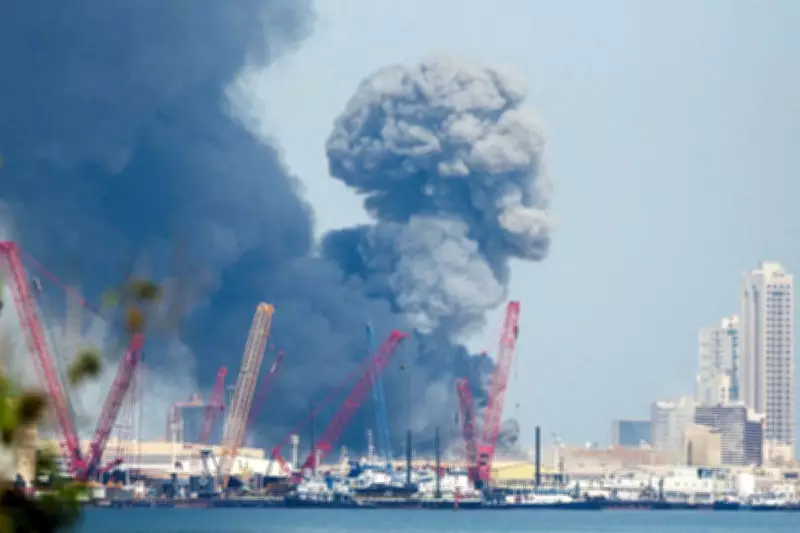
Iranian retaliatory actions have struck several countries, including Bahrain, Qatar, the United Arab Emirates, Kuwait, Jordan, and Oman. Civilian infrastructure has not been spared, with reports of attacks on hotels, airports, and residential buildings. The US Navy's 5th Fleet service centre in Bahrain was hit by a missile attack on Saturday, while residential structures in Manama also sustained damage.
In the United Arab Emirates, which hosts significant US military installations, strikes have caused casualties. One person was killed and several injured at Zayed International Airport, and four people were wounded at Dubai International Airport following an unspecified incident. A luxury hotel in Dubai also caught fire after debris reportedly fell during an Iranian missile barrage.

Regional Aviation Paralyzed and Diplomatic Fallout
The conflict has severely disrupted air travel across the Middle East. Global airlines have cancelled flights throughout the region, and Dubai International Airport, a major global aviation hub, has suspended all operations. Airspaces over Iran, Iraq, Kuwait, the UAE, Lebanon, Bahrain, and Jordan remain effectively closed, with the European Union's aviation regulator advising airlines to avoid the affected zones.
Diplomatic tensions have soared, with Iran's President Masoud Pezeshkian asserting that Tehran views revenge for the US and Israeli attacks as a "legitimate right and duty." The Qatari foreign ministry stated it reserves the right to respond to Iranian attacks on Doha, where loud explosions were heard for a second consecutive day. Additional reports of strikes have emerged from Jordan, Iraq, and Saudi Arabia.
Maritime Incident and Heightened Rhetoric
Further escalating the crisis, an oil tanker off the coast of Oman was struck on Sunday morning, injuring four people and forcing the evacuation of twenty others. The US embassy in Muscat has issued warnings for its staff and American citizens to seek shelter amid the ongoing hostilities.
Political rhetoric has intensified dramatically. Former US President Donald Trump issued a stark warning on social media, stating, "THEY BETTER NOT DO THAT, HOWEVER, BECAUSE IF THEY DO, WE WILL HIT THEM WITH A FORCE THAT HAS NEVER BEEN SEEN BEFORE!" in response to Iranian threats. The current US President condemned the Iranian regime as "a vicious group of very hard, terrible people" whose actions endanger US troops, bases, and allies worldwide, following the announcement of Khamenei's death, whom he labelled "one of the most evil people in History."
This unfolding conflict marks a severe deterioration in regional stability, with military engagements spreading across multiple nations and threatening to draw in broader international involvement. The targeting of civilian sites and critical infrastructure underscores the conflict's devastating human and economic toll, as governments and airlines scramble to respond to the rapidly evolving security situation.