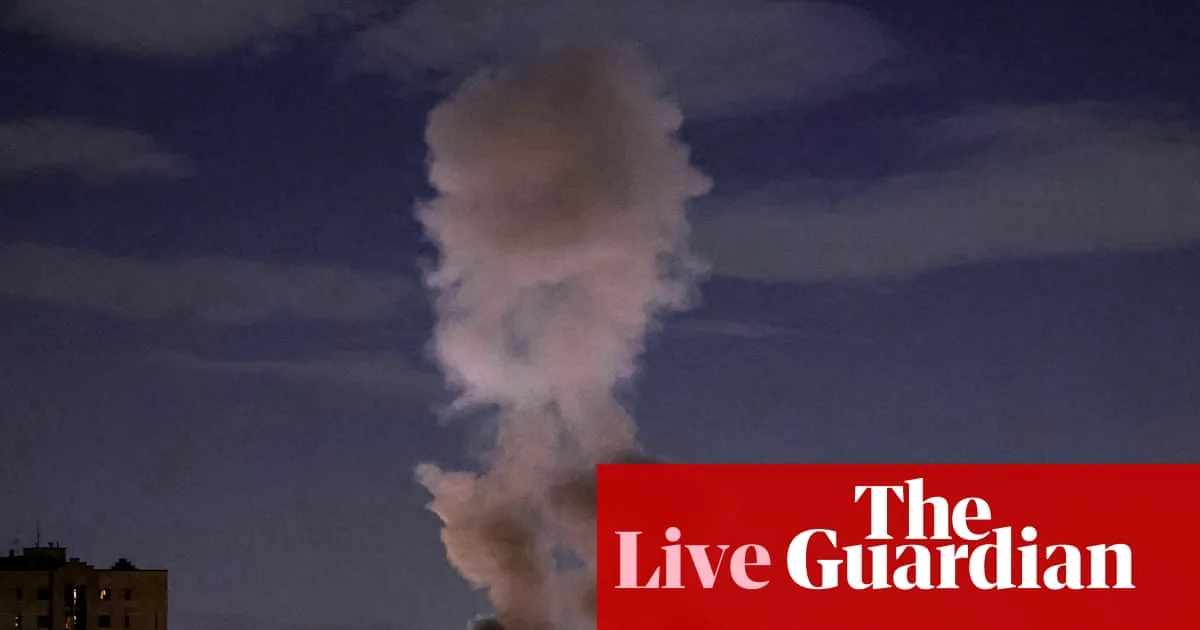
Iran's Leadership Decimated in Coordinated US-Israel Military Strikes
The Islamic Republic of Iran has been plunged into its most severe crisis in decades following coordinated military strikes by the United States and Israel that killed Supreme Leader Ayatollah Ali Khamenei and multiple senior military commanders. The attacks, launched in the early hours of Saturday morning, formally reignited a conflict that had been simmering since last summer's 12-day war and have fundamentally altered the geopolitical landscape of the Middle East.
Decapitation of Iran's Leadership Structure
The precision strikes targeted key command structures and eliminated Iran's most significant leadership figures. Most notably, the operation resulted in the death of Ayatollah Ali Khamenei, who had maintained absolute power since 1989. Former US President Donald Trump marked Khamenei's demise with a social media post declaring the supreme leader "one of the most evil people in history" and framing the action as "justice for the people of Iran and all Great Americans."
Israeli intelligence reports confirm that additional senior figures were eliminated, including Mohammad Pakpour, commander of the Islamic Revolutionary Guard Corps (IRGC), Defence Minister Aziz Nasirzadeh, and Admiral Ali Shamkhani, head of Iran's defence council. This represents the most significant decapitation of Iranian leadership since the 1979 revolution.
Immediate Retaliation and Escalating Conflict
In response to the devastating strikes, Iranian forces have launched retaliatory missile and drone attacks against multiple targets. These include Israeli territory, US military installations across the Gulf region, bases in Iraq and Jordan, and some civilian targets throughout the Gulf. The immediate retaliation signals Tehran's strategy of widening the conflict theatre to distribute costs and increase regional risk, despite the potential damage to Iran's fragile relationships with neighbouring Gulf states.
Strategic Context and Timing of Escalation
The weekend's dramatic escalation represents not a sudden rupture but the culmination of two years of steadily widening confrontation. Since October 2023, Israel has conducted sustained military campaigns against Hamas in Gaza, Hezbollah along Israel's northern border, and Houthi targets connected to Red Sea attacks, all of which indirectly targeted Tehran itself. These operations systematically eroded Iran's forward defence strategy and weakened its core military capabilities, leaving only its territory, missile programme, and regime leadership comparatively intact until now.
The strikes followed rounds of regionally supported diplomacy aimed at achieving a preliminary nuclear deal. However, Trump, potentially influenced by Israeli Prime Minister Benjamin Netanyahu and conservative hawks within his administration, chose to strike at what is widely perceived as a moment of Iranian weakness rather than allowing diplomatic efforts to mature.
Diverging Objectives Among Principal Actors
The three principal actors in this confrontation enter with distinctly different objectives. For the Islamic Republic, the overwhelming priority is survival through absorbing the initial shock, maintaining military and political cohesion, and continuing retaliatory actions. Iran is not fighting to achieve conventional victory but rather to ensure the regime's endurance through sustained conflict.
Donald Trump, by contrast, appears to be seeking a decisive outcome that demonstrates he has neutralised what he describes as a longstanding threat to the United States. His strategy rests on the assumption that overwhelming force targeting infrastructure, strategic assets, and senior leadership can dismantle Iran's strategic posture and compel either capitulation or internal rupture.
Israel's objectives broadly align with Washington's, though with narrower focus. While Netanyahu continues to publicly call on Iranians to seize what he terms a historic opportunity for regime change, Israel's primary concern remains ensuring that Iran becomes internally preoccupied and strategically weakened, if not permanently disabled.
Potential Pathways and Regional Implications
With Khamenei removed from the scene, several interconnected pathways now lie ahead. The constitutional mechanism for succession would likely be activated, with the assembly of experts formally appointing a new supreme leader. In practice, however, decisive influence would rest with the revolutionary guard and security establishment, which would seek to manage the transition tightly and prevent elite fragmentation.
A collective leadership arrangement, even if temporary, could emerge to stabilise the system, though this would leave Iran vulnerable to continued military pressure from US and Israeli forces. Alternatively, prolonged military pressure could expose fractures within Iran's political elite, with economic strain, military losses, and internal rivalries potentially weakening central authority and creating openings for opposition groups.
The most destabilising scenario would involve uncontrolled fragmentation similar to Libya's experience following Muammar Gaddafi's fall, though Iran possesses stronger institutions and deeper bureaucratic traditions that might mitigate complete collapse.
Irreversible Regional Transformation
What has become immediately clear is that the Middle East will not revert to its pre-war equilibrium. Gulf states that cautiously pursued de-escalation with Tehran now face renewed exposure and security concerns. Energy markets and maritime security, particularly around critical chokepoints like the Strait of Hormuz, will remain highly sensitive to further escalation.
Regional actors are already reassessing alliances and defence postures in light of the risks revealed by direct US and Israeli military action. The decisive phase of this conflict will not be the opening strikes but the emergence of a new political order from sustained military pressure.
While Iran may endure this war, the Islamic Republic as it has existed for decades will not survive unchanged. The United States may achieve its immediate military objectives, but the more consequential question remains whether Washington is adequately prepared for the transformed Iranian and regional landscape that will inevitably follow.