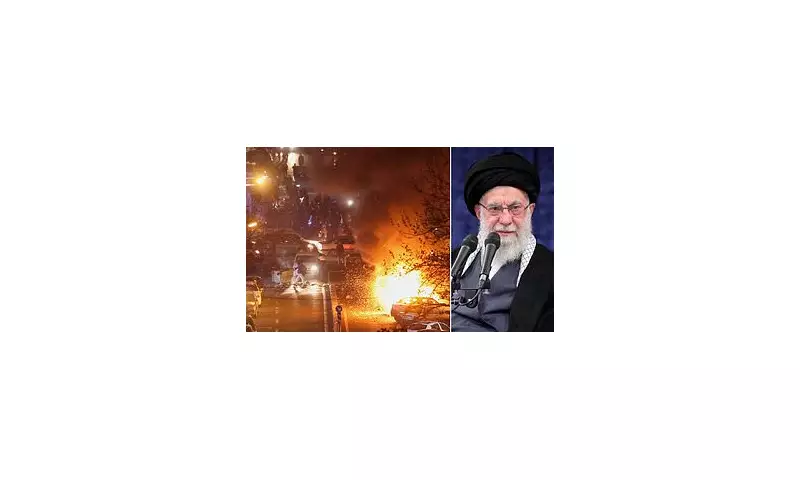
Iran's hardline leadership has declared the nation is back under its 'total control' following a period of intense civil unrest and a severe state crackdown that has resulted in hundreds of confirmed deaths.
Brutal Suppression and Conflicting Death Tolls
The regime's assertion of order comes after a violent response to widespread protests. Official figures acknowledge 648 fatalities, but human rights organisations warn the true number is likely far higher, with hospitals and morgues reportedly overwhelmed. The Norway-based Iran Human Rights (IHR) group has suggested there is evidence indicating more than 6,000 people may have been killed.
IHR director Mahmood Amiry-Moghaddam stated: 'The international community has a duty to protect civilian protesters against mass killings by the republic.' He emphasised the difficulty of verification due to an internet blackout imposed by authorities, which lasted for four days before being partially lifted to project an image of normality.

International Condemnation and Diplomatic Fallout
The crisis has triggered significant international reaction. UK Foreign Secretary Yvette Cooper spoke directly with Iranian Foreign Minister Abbas Araghchi, urging the Iranian government to 'immediately end the violence, uphold fundamental rights and freedoms and ensure British nationals are safe'.
In a tit-for-tat diplomatic move, the Iranian regime summoned the envoys of the UK, France, Germany, and Italy to protest what it called their support for protesters. Subsequently, the European Parliament banned all Iranian diplomats from its premises. Further escalating tensions, France evacuated non-essential staff from its embassy in Tehran.
Regime Rhetoric and Global Stances
Iranian officials have blamed foreign interference for the unrest. Araghchi vowed to 'hunt down' supposed foreign elements he accused of stoking the protests, while Supreme Leader Ayatollah Ali Khamenei condemned the US and Israel for allegedly attempting to overthrow the regime. Russia echoed this, criticising 'foreign powers' for interference.
Meanwhile, US President Donald Trump stated that 'all options', including air strikes, remained under consideration by the White House. A White House spokesperson confirmed that military action was among the 'many, many options' on the table. Despite this, the regime appears to have been temporarily bolstered by the absence of immediate US military follow-through on earlier threats.
Domestically, the Iranian leadership sought to downplay the dissent, orchestrating a pro-government rally of tens of thousands in Tehran's Enghelab Square. The regime claims the protests, sparked by dire economic conditions and food shortages, led to 53 mosques and 180 ambulances being set ablaze, alleging that ordinary Iranians would not target Islamic sites.