Iran's President Issues Apology for Violent Protest Crackdown
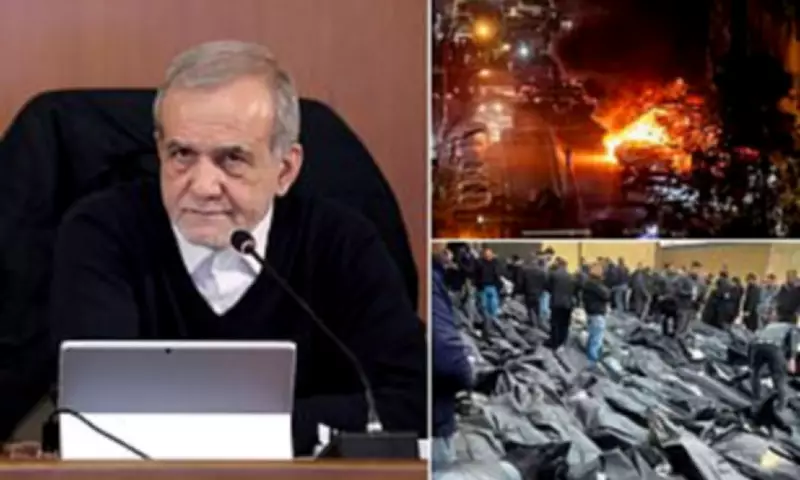
Iranian President Masoud Pezeshkian has issued a formal apology to all those affected by the nationwide protests and the subsequent bloody crackdown that followed. Speaking during the 47th anniversary of Iran's 1979 Islamic Revolution, Pezeshkian acknowledged the great sorrow felt by citizens, though he notably avoided directly attributing the violence to Iranian security forces.
We are ashamed before the people, and we are obligated to assist all those who were harmed in these incidents, the president stated. We are not seeking confrontation with the people. His remarks come as Iran's theocracy faces mounting pressure both domestically and internationally.
Domestic Unrest and International Pressure
The apology coincides with escalating tensions with the United States. Former US President Donald Trump has suggested deploying a second aircraft carrier group to the Middle East, while Israeli Prime Minister Benjamin Netanyahu has urged Washington to adopt the strictest possible terms in ongoing nuclear negotiations with Tehran.

Despite state television broadcasting images of tens of thousands supporting Supreme Leader Ayatollah Ali Khamenei, witnesses in Tehran reported anti-government chants of Death to the dictator! during government-sponsored fireworks. The protests, which saw thousands killed and tens of thousands detained, were brutally suppressed by Iran's paramilitary Revolutionary Guard.
Nuclear Negotiations and Verification Challenges
President Pezeshkian insisted that Iran is not seeking nuclear weapons and is prepared for any verification process, while simultaneously denouncing unspecified Western propaganda. However, the International Atomic Energy Agency has been unable to inspect Iran's nuclear stockpile for months, casting doubt on these assurances.
Iranian Foreign Minister Abbas Araghchi expressed distrust toward the United States, referencing the June attacks during previous negotiations. Last time we negotiated, last June we were in the middle of negotiation then they decided to attack us and that was a very very bad experience for us, he told Russian state channel RT. Despite this, Araghchi suggested a better deal than the 2015 Obama-era agreement might be possible.
Regional Diplomacy and Military Posturing
As commemorations took place, senior Iranian security official Ali Larijani traveled from Oman to Qatar, a key mediator that hosts a major US military installation previously attacked by Iran. This diplomatic movement occurs alongside significant US military deployments, including the USS Abraham Lincoln carrier group already in the region.
Trump's consideration of a second carrier reflects ongoing pressure tactics, with US forces having recently intercepted Iranian drones and responded to maritime incidents in the Strait of Hormuz. The USS George H.W. Bush has reportedly left Norfolk, Virginia, though its destination remains unclear amid these escalating tensions.
The complex situation underscores Iran's dual challenges: addressing domestic discontent over violent suppression while navigating precarious nuclear negotiations under intense international scrutiny and military pressure.