Trump Insists Iran Eager for Agreement Amid Escalating Naval Blockade
On Monday, Donald Trump declared that Iran is intensely seeking to negotiate a deal, even as his administration enforced a stringent naval blockade on the Strait of Hormuz. The US President asserted that the primary obstacle between the two nations revolves around nuclear ambitions, accusing Iran of desiring an atomic weapon to potentially threaten global security.
Blockade Implementation and Economic Implications
Mr Trump directed the US navy to obstruct all maritime traffic through the critical Strait of Hormuz starting at 3pm on Monday, aiming to regain strategic momentum forty-five days into the ongoing conflict. This move follows Iran's earlier shutdown of the shipping lane, which facilitates approximately one-fifth of the world's oil supply, after joint US-Israeli strikes triggered widespread economic turmoil.
Previously, Tehran had permitted select friendly vessels to pass, imposing informal tolls. However, the US President has now decisively moved to seal the strait entirely. He warned that Iran's naval forces are severely diminished, with any remaining fast attack ships facing immediate elimination if they challenge the blockade.

Trump's Remarks and Diplomatic Posturing
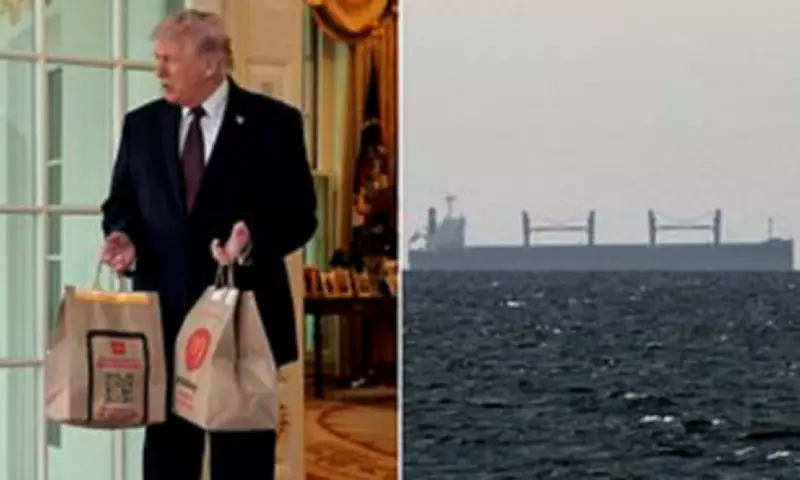
During a press conference at the Oval Office, where he received a McDonald's order and tipped delivery driver Sharon Simmons $100, Mr Trump stated, 'We've been called by the other side, they'd like to make a deal very badly, very badly.' He emphasized that Iran must not obtain nuclear capabilities, claiming agreement on numerous points except this critical issue, which he believes will eventually be resolved.
The President further argued that the United States possesses abundant oil and gas reserves, surpassing even Saudi Arabia, thereby reducing dependency on the strait. He vowed not to allow Iran to engage in global blackmail or extortion through energy leverage.
Iranian Response and Regional Tensions
Iranian parliamentary speaker Mohammad Bagher Ghalibaf mocked the blockade on social media, suggesting that Americans would soon reminisce about lower fuel prices once the economic impacts intensify. Tehran also issued a stark warning, threatening to sink any US ships attempting to blockade its ports.
Despite the collapse of direct peace talks in Pakistan within twenty-four hours on Sunday, indirect negotiations persist, and a two-week ceasefire in Iran remains tentatively intact. An official described the situation as a bargaining process, akin to a bazaar, indicating ongoing diplomatic maneuvering.
International Concerns and Broader Conflict
Israeli Prime Minister Benjamin Netanyahu cautioned that the ceasefire could dissolve at any moment, alleging Iranian violations of negotiation terms by failing to reopen the strait as agreed. Concurrently, Israel is expanding ground operations against Hezbollah in Lebanon, with Beirut expressing willingness to assist in disarming the group and planning discussions with Israeli counterparts in Washington.
Hezbollah leader Naim Kassem, however, urged Lebanon to withdraw from these talks, highlighting regional complexities.
Global Economic Warnings and Political Reactions
Prime Minister Sir Keir Starmer warned that the conflict threatens to inflict severe economic damage, with effects already evident at petrol stations across Britain. He predicted broader economic repercussions if the Strait of Hormuz remains closed indefinitely. Nevertheless, Sir Keir rejected Conservative calls to abandon Labour's Net Zero energy strategy and lift restrictions on new North Sea oil and gas drilling, emphasizing a commitment to environmental goals amidst the crisis.