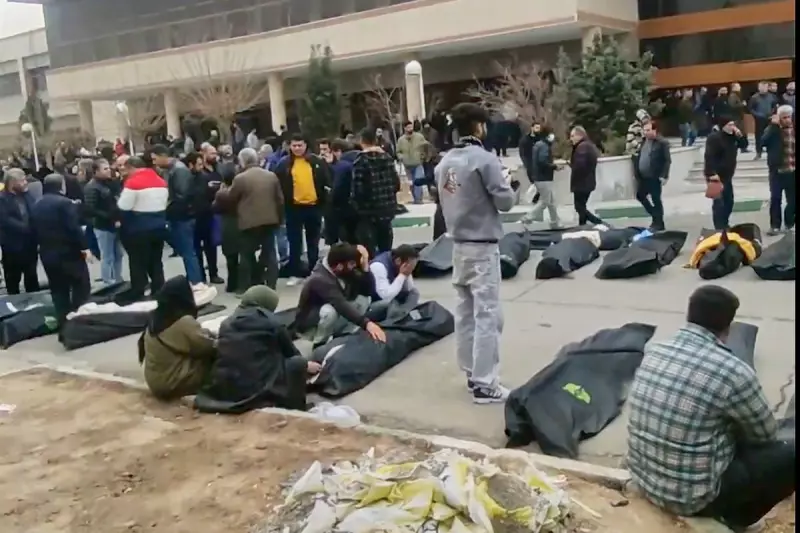
Iran's most senior judge has indicated that swift trials and executions await those detained during nationwide anti-government protests, as activist groups report the death toll has surged to at least 2,586—a figure not seen in decades of unrest.
Judiciary Chief Defies International Warnings
In a video statement on Tuesday, judiciary chief Gholamhossein Mohseni-Ejei emphasised the need for rapid judicial proceedings, suggesting delays would lessen their impact. This declaration comes despite a stark warning from U.S. President Donald Trump, who stated the United States would "take very strong action" if Iran proceeded with executions. Following reports of the mounting casualties, Trump further announced he was terminating any negotiations with Tehran and would "act accordingly."
The scale of the crackdown is immense. The U.S.-based Human Rights Activists News Agency confirmed the death toll on Wednesday, noting that 2,417 of the dead were protesters, 147 were government-affiliated, and 12 were children. More than 18,400 people have been detained. The death toll far exceeds that of any other protest wave in Iran since the 1979 Islamic Revolution.

Global Repercussions and Diplomatic Moves
The crisis is triggering international responses and heightened security measures. The virtual U.S. embassy in Tehran issued its third alert in five days, urgently advising American citizens to leave Iran immediately. Separately, some personnel at the Al Udeid Air Base in Qatar were advised to evacuate as a precautionary measure, a U.S. official confirmed.
Demonstrations of solidarity have emerged worldwide. In Bucharest, scores of protesters gathered outside the U.S. embassy, holding posters of Trump and Iran's exiled crown prince, pleading for international support. Meanwhile, in a significant development for communication, Elon Musk's Starlink satellite internet service began offering free access in Iran. Activists confirmed the move, which has become a crucial tool for circumventing the government's near-total internet blackout and documenting the violence.
Mass Funeral and Regional Appeals for Restraint
In Tehran, tens of thousands attended a state-organised mass funeral for security forces and civilians killed in the unrest. While state television reported 300 coffins would be present, Associated Press journalists observed around 100. The event, marked by chants of "Death to America," highlighted the regime's narrative blaming foreign interference for the turmoil.
Amid fears of a broader conflict, a senior Arab Gulf diplomat revealed that major Middle Eastern governments, including Turkey, Egypt, Saudi Arabia, and Pakistan, are actively discouraging the U.S. from military engagement with Iran. They warn that a war would have "unprecedented consequences" for regional stability and the global economy.
The fallout extends to trade, with experts noting that President Trump's threat of tariffs on nations trading with Iran could impact countries like India, particularly affecting its strategic investments such as the Chabahar port. As the situation evolves, foreign nationals, including dozens of Pakistani students and Indian citizens, are heeding their governments' advice to depart Iran.