Iran Rocked by Deadly Explosions Amid Escalating Regional Tensions
Iran was struck by two separate explosions on Saturday, resulting in five fatalities and multiple injuries, as officials swiftly moved to deny any assassination attempts against military leaders. The incidents occurred against a backdrop of heightened geopolitical friction, with the United States significantly bolstering its military presence in the region.
Details of the Dual Blasts
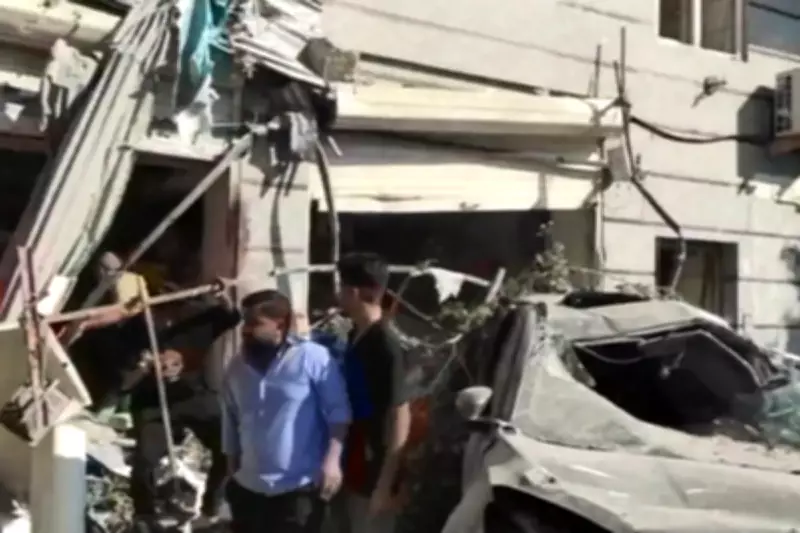
According to reports from the state-run Tehran Times, a gas explosion at a residential building in the western city of Ahvaz claimed four lives. The precise cause of this blast remains under investigation, with authorities yet to provide a definitive explanation.
Simultaneously, a second detonation shook the strategic southern port of Bandar Abbas, located on the vital Strait of Hormuz. This explosion resulted in one fatality and left fourteen individuals injured. Iranian media confirmed the incident but refrained from specifying a cause, while the semi-official Tasnim news agency explicitly labelled social media rumours alleging the targeting of a Revolutionary Guard navy commander as "completely false".

Diplomatic Denials and Accusations
In a period of intense strain between Iran, the United States, and Israel, two unnamed Israeli officials informed Reuters that Israel was not involved in either explosion. Meanwhile, Iranian President Masoud Pezeshkian launched a fierce verbal assault during a live state television broadcast.
Pezeshkian accused the leadership of Israel, the United States, and European nations of exploiting Iran's economic difficulties to incite recent domestic unrest. He claimed these foreign powers had provided resources with the intent to "tear the nation apart" and fragment Iranian society. Despite these accusations, Foreign Minister Abbas Araghchi indicated Iran's conditional openness to dialogue with the US, provided any talks were conducted on "fair and equitable" terms.
US Military Posturing and Arms Sales
The explosions coincided with a pronounced US military buildup in the Middle East. Former President Donald Trump confirmed the movement of a "massive armada" towards the region, issuing a stark ultimatum to Iran to either secure a deal or "face the consequences". He privately suggested a deadline had been given to Tehran for negotiations.
Amplifying the pressure, the Trump administration approved substantial arms sales totalling over $15 billion to key regional allies. This included a $9 billion package for Saudi Arabia, featuring 730 Patriot defence missiles, and a $6.67 billion sale to Israel encompassing 30 advanced Apache attack helicopters.
Calls for Restraint and Naval Warnings
US allies in the Middle East, including Saudi Arabia, Turkey, Oman, and Qatar, are reportedly urging both Washington and Tehran to exercise maximum restraint. Diplomats warn that further escalation from either side risks destabilising the entire region.
Tensions were further inflamed by Iran's announcement of a two-day live-fire naval exercise in the Strait of Hormuz. The US Central Command (CENTCOM) responded with a firm warning, stating it "will not tolerate unsafe" actions by Iran's Islamic Revolutionary Guard Corps (IRGC) that could threaten freedom of navigation or provoke incidents with US forces.
Background: The Power of the Revolutionary Guards
The context of these events includes the recent EU agreement to designate Iran's Revolutionary Guards (IRGC) as a terrorist organisation. The IRGC, answering directly to Supreme Leader Ayatollah Ali Khamenei, is a formidable military, political, and economic force within Iran and across the Middle East. Its elite Quds Force has been instrumental in projecting Iranian influence, notably through support for Shi'ite groups in Lebanon and Iraq.
As investigations into Saturday's explosions continue, the international community watches closely, with the volatile mix of domestic incidents, military mobilisation, and heated rhetoric creating a precarious situation for regional stability.