Iran's Foreign Minister Confirms Russia's Multifaceted Support in Conflict
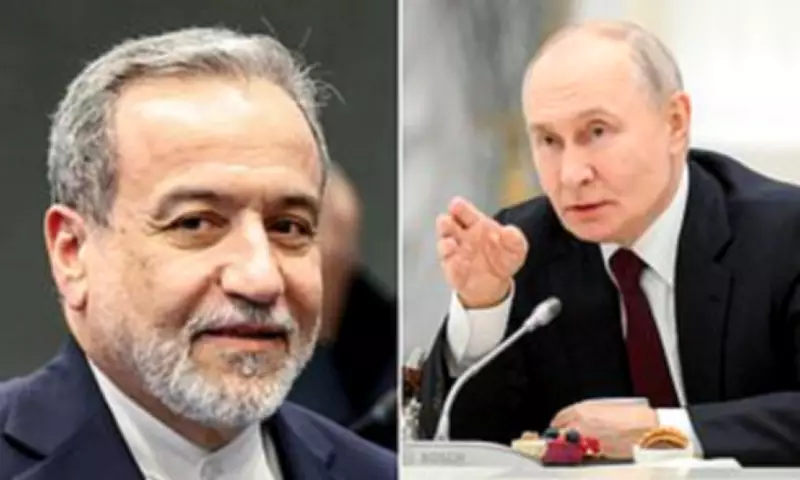
Iran's Foreign Minister Abbas Araghchi has publicly acknowledged that Russia is providing assistance to Iran "in many different directions" in its ongoing war against the United States and Israel. This statement was made during an interview on NBC's "Meet the Press," where Araghchi was questioned about claims that Russian President Vladimir Putin has been offering military intelligence to help Iranian forces track US military assets.
Strategic Partnership and Historical Cooperation
While Araghchi declined to provide specific details regarding the nature of the assistance, he emphasized that the two nations share a "strategic partnership." He challenged the notion that their military cooperation is a recent development sparked by the current conflict in Iran. When pressed by journalist Kristen Welker about whether Iran is receiving help from Russia, Araghchi stated, "We have a strategic partnership with Russia, military cooperation between Iran and Russia is not something new, it's not a secret, [the relationship has] been in the past and will be in the future."
This confirmation comes amid reports from the Washington Post, published on Friday, alleging that Russia is supplying Iranian forces with information to locate US service personnel, including aircraft and warships. If verified, this would mark the first involvement of another G8 power in the conflict, raising concerns that the war in Iran could escalate into a broader global confrontation.

US Response and Intelligence Leaks
Three intelligence officers reportedly informed the Washington Post that Russia had provided Iran with the locations of US military assets. However, the US administration has downplayed these allegations. When questioned about the claims at an unrelated White House event on Friday, former President Donald Trump reacted angrily, calling it a "stupid question." White House Press Secretary Karoline Leavitt later told Fox News, "We don’t comment on intelligence reports that are leaked to the press. Whether or not this happened, frankly, it does not really matter because President Trump and the United States military are absolutely decimating the rogue Iranian terrorist regime."
These allegations of Russian assistance emerge concurrently with the US Treasury Department's announcement of granting India a 30-day license to purchase Russian oil. Treasury Secretary Scott Bessent indicated that Trump was considering "unsanctioning" Russian oil to increase supplies, with the White House planning to announce further measures to alleviate market pressures during the conflict.
Regional Tensions and Diplomatic Maneuvers
Now in its tenth day, the Iran crisis has seen intermittent attempts at de-escalation. President Trump previously expressed a willingness to engage with Iranian leadership, while Iran's President Masoud Pezeshkian controversially apologized to neighboring countries for bombing raids. Pezeshkian promised that neighboring nations would be spared from drone and missile attacks if they did not permit Israel and the US to use their airbases for strikes against Iran.
However, Pezeshkian's remarks faced immediate backlash from hardline clerics and senior military personnel within Iran, who conducted further attacks across the Gulf shortly after his statement. Araghchi later clarified on "Meet the Press" that Iran had not been "attacking our neighbors" intentionally, but rather targeting US installations located in those countries. This claim appears misleading, as reports indicate that civilian sites such as airports and hotels have been hit by Iranian missiles and drones.
Military Capabilities and Internal Divisions
Araghchi also asserted that Iran has no plans to increase the range of its ballistic missiles, intentionally limiting them to 2,000 kilometers (1,240 miles) to avoid being perceived as a global threat. He denied any evidence or intelligence suggesting Iran is developing long-range missiles capable of reaching US soil.

Despite these conciliatory statements, internal divisions persist. The newly-appointed Supreme Leader Mojtaba Khamenei is expected to continue his father Ayatollah Ali Khamenei's hardline policies toward Israel and the US. Additionally, Iran’s parliament speaker Mohammad Baqer Qalibaf has declared that Iran is not seeking a ceasefire in the war with the US and Israel, warning that "aggressors" will be punished. He stated on state TV, "If the enemy attacks us from any country, Tehran will respond decisively."
The conflict has already caused significant devastation, with Israeli strikes on Iranian oil depots leading to explosions that sent "rivers of fire" through Tehran's streets and acrid smoke turning the sky red, highlighting the severe humanitarian and environmental impacts of the ongoing hostilities.