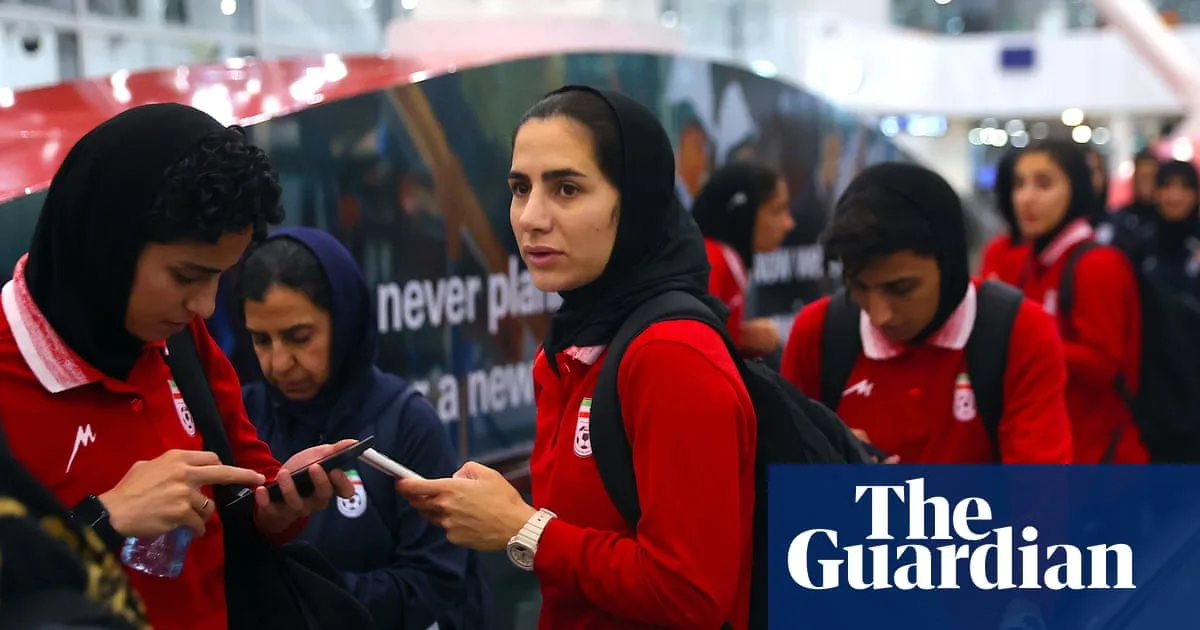
Iranian Football Chief Accuses Australia of Hostage-Taking Over Asylum Players
Iran Accuses Australia of Hostage-Taking Over Asylum Players

Iranian Football Federation President Launches Extraordinary Attack on Australia

The president of the Iranian Football Federation has launched an extraordinary diplomatic attack against Australia, accusing the nation of taking women's football players hostage after seven members of the national team were granted humanitarian visas this week.

Mehdi Taj, speaking to Iran's Tasnim News Agency, which maintains close ties to the country's Islamic Revolution Guard Corps, made the inflammatory claim that Australian police intervened to prevent Iranian players from leaving the country following their initial refusal to sing the national anthem during the Asian Cup tournament.

Dramatic Escape and Asylum Claims

The controversy began when five players managed to leave their team hotel on the Gold Coast and were subsequently granted humanitarian visas by the Australian Federal Government on Monday. This was followed by two additional team members receiving asylum status on Tuesday, bringing the total to seven individuals remaining in Australia while the rest of the squad returned to Iran.

Wide Pickt banner — collaborative shopping lists app for Telegram, phone mockup with grocery list

'After the game, unfortunately, the Australian police came and intervened, removing one or two of the players from the hotel, according to the news we have,' Taj told Iranian media, though Australian authorities have presented a different account of events.

Shocking Comparison to School Bombing

In perhaps his most inflammatory statement, Taj attempted to draw a direct comparison between the granting of asylum to football players and the tragic bombing of a girls' school in Iran that claimed 168 lives during the opening phase of regional conflict.

'They martyred our girls in Minab, 160 of them, and in this incident they are taking our girls hostage,' Taj declared, creating a controversial parallel between two fundamentally different situations.

The Iranian football chief further described protesters who attempted to block the team's bus from leaving their Gold Coast hotel as evidence of Australian interference, stating: 'They [Australian protesters] completely blocked them at the gate and told everyone to become refugees.'

Anthem Controversy and International Attention

The situation gained international prominence when the Iranian women's team initially refused to sing their national anthem during their first Asian Cup match on March 2, though they subsequently performed the anthem and gave military salutes during their remaining two tournament games after their initial boycott made global headlines.

The players' situation even drew attention from former US President Donald Trump, who released social media statements urging Australia to protect the athletes before reportedly having a late-night phone conversation with Australian Prime Minister Anthony Albanese about the matter.

World Cup Hosting Concerns Raised

Taj extended his criticism to question the upcoming men's World Cup, scheduled to be hosted by the United States, Canada, and Mexico from June to July this year, asking rhetorically: 'If the World Cup is like this, who in their right mind would send their national team to a place like this?'

His comments were echoed by Iranian Ministry of Foreign Affairs spokesman Ismail Baghaei, who posted on social media platform X: 'To the dear ladies of our homeland on the women's football team, I say: Iran awaits you with open arms. Do not worry. Return home.'

Australian Government's Response

Australian Home Affairs Minister Tony Burke provided a markedly different account of events, stating that department officials met with all players and most team management to offer them the opportunity to remain in Australia without pressure or coercion.

'In Sydney … it was simply themselves, the Department of Home Affairs and an interpreter, and they were given a choice,' Burke explained on Wednesday. 'What we made sure of was that there was no rushing. There was no pressure. Everything was about ensuring the dignity of those individuals to make a choice.'

Burke further revealed that players were given private opportunities to speak with family members before making their decisions, stating: 'Some have had direct conversations with family members in deciding what they would ultimately do.'

Pickt after-article banner — collaborative shopping lists app with family illustration

Safety Concerns for Returning Players

Iranian refugee advocate Ara Rasuli, who was involved in the asylum process, expressed serious concerns about the safety of players who chose to return to Iran, noting: 'They are in a lot of danger. There are all sorts of different threats, such as taking the families into custody, taking over their assets ... and that's why most of the girls are choosing to go back home, because the threats are a big issue in this matter.'

The situation highlights the complex intersection of international sports, political asylum, and diplomatic relations, with seven members of the Iranian women's football team now remaining in Australia under humanitarian protection while the rest of the squad has returned to face uncertain circumstances in their home country.




