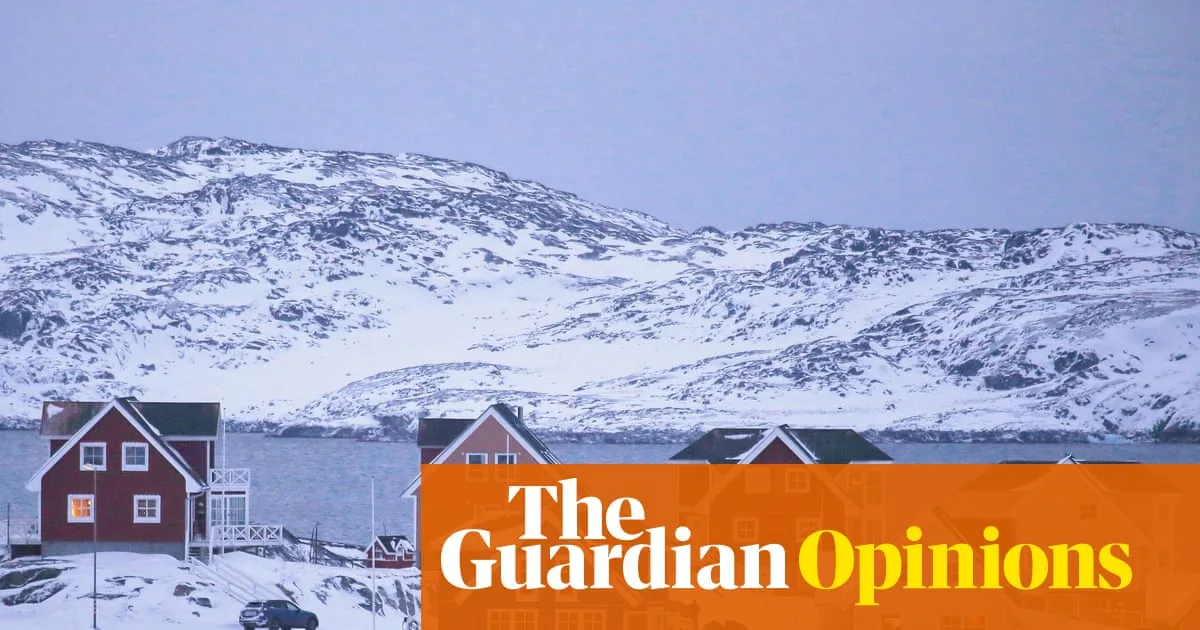
In the heart of Iowa's conservative landscape, a small town with profound Danish heritage is experiencing a notable political shift. Elk Horn, a rural settlement of approximately 600 residents situated midway between Omaha and Des Moines, has traditionally been a bastion of Republican support. However, President Donald Trump's persistent campaign to acquire Greenland, an autonomous territory of the Kingdom of Denmark, is causing significant unease and prompting a reassessment of loyalties within this tight-knit community.
A Republican Stronghold Questions Its Leader
Shelby County, which encompasses Elk Horn, delivered a resounding victory for Donald Trump in the 2024 presidential election, with the incumbent securing around 71 percent of the vote. This outcome continues a longstanding trend, as the county has consistently backed the Republican candidate in every presidential contest since 1968. Residents typically align with conservative values, often citing immigration and economic policies as key motivators for their support. Yet, the president's focus on Greenland has introduced an unexpected and deeply personal point of contention.
Cultural Pride and Personal Connections
The town's identity is intrinsically linked to its Danish ancestry. Immigrants from Denmark settled the area in the late nineteenth and early twentieth centuries, seeking economic opportunity, land, and religious freedom. They established farms and communities in the Midwest, bringing with them a culture that has been meticulously preserved for generations. Elk Horn, along with the nearby city of Kimballton, represents the largest rural Danish settlement in the United States.
This heritage is visibly celebrated. The town is home to the only authentic, operational Danish windmill in the US, a structure managed for over four decades by Lisa Steen Riggs. Visitors are greeted with the Danish word "Velkommen" (welcome) on town signs and websites, proudly proclaiming the opportunity to "Visit Denmark without a passport!" For many residents, maintaining strong, respectful ties with Denmark and relatives still in Europe is a matter of profound personal and cultural importance.
Confusion and Hurt Over Greenland Push
President Trump's ambition to assert "right, title and ownership" over Greenland has therefore been met with bewilderment and distress. Lisa Steen Riggs, 70, articulated the community's sentiment, noting that this issue was not a factor in their voting decisions. "People are hurt," she stated. "I don’t want my relatives in Denmark to be scared of us."
This view is shared by other prominent local figures. James Uren, a Republican voter who operates a Danish pastry shop, echoed a common question heard in local gatherings: "We don’t need to own it. Denmark will give us everything we want." He expressed confusion over the necessity of the acquisition, a sentiment reinforced by Erik Andersen, interim executive director of the town's Museum of Danish America. Andersen emphasised the need for cooperation over confrontation, stating, "You don’t need to bully one of your longtime allies."
Economic and Diplomatic Repercussions
The tension carries tangible economic risks for Elk Horn. The historic Danish windmill, recognised as one of Iowa's top tourist attractions, relies heavily on a gift shop selling authentic Scandinavian goods imported directly from Europe. Shaun Sayres, who now manages the windmill, revealed that some European suppliers have already indicated they will cease sales to the US due to the political climate. He described the situation as an "existential threat" to the town's concentrated tourism industry.
Furthermore, the town has benefited from a surge in Danish tourist interest following the circulation of documentaries produced by Danish filmmakers. This cultural exchange is now in jeopardy. Reports from Denmark suggest a shift in public opinion, with traditional favour towards the US waning under the unpredictability of the current administration. As one Danish citizen noted, conversations are increasingly about Europe standing independently, wary of reliance on an unpredictable ally.
A Strategic Puzzle
Adding to the local confusion is the perceived lack of strategic necessity. Residents point out that the United States already maintains military bases in Greenland through existing treaties with Denmark, one of America's oldest and most steadfast allies. The Kingdom of Denmark has repeatedly and firmly stated that the island is not for sale, leaving the president's proposed "framework of a future deal"—announced at the World Economic Forum in Davos—shrouded in uncertainty, even as direct military threats were walked back.
For the proud, conservative residents of Elk Horn, the episode presents a complex dilemma. They are, as Lisa Steen Riggs affirmed, "proud Americans, but we’re proud of our Danish heritage, too." The president's Greenland ambition has inadvertently pitted these two pillars of identity against one another, fostering a rare moment of political dissent in a deep-red community and highlighting how international diplomacy can resonate powerfully in the most local of settings.




