How Putin Lures Foreign Nationals to the Frontlines with Promises of Work and Citizenship
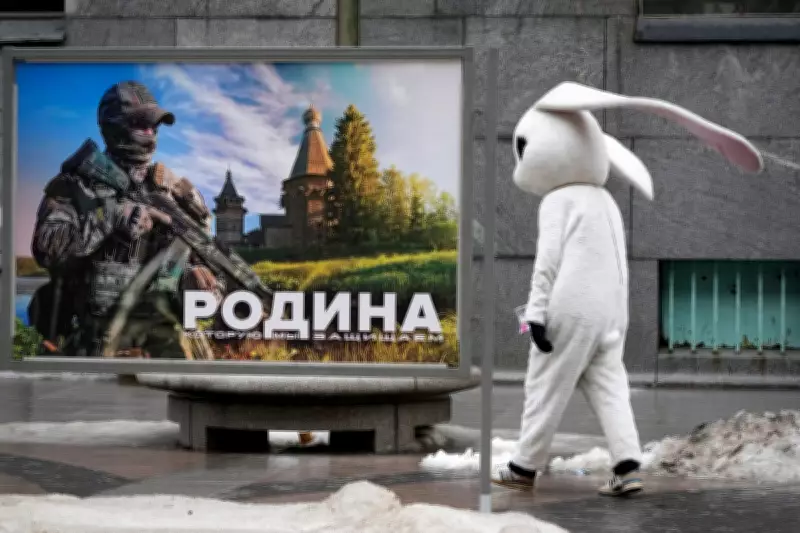
Moscow has developed a sophisticated recruitment strategy that relies heavily on what it describes as voluntary enlistment to sustain its military campaign in Ukraine. This approach allows the Kremlin to replenish its forces in the nearly four-year conflict while simultaneously avoiding the political risks associated with another nationwide mobilisation.
The Desperate Recruitment Drive
For average wage earners in Russia, military service represents a significant financial opportunity. For criminals seeking to escape harsh prison conditions, it offers a chance at freedom. For immigrants hoping for a better life, it provides a simplified path to Russian citizenship. The common requirement for all these groups is signing a contract to fight in Ukraine.
The bloody war of attrition has expanded beyond Russian borders, with foreign combatants increasingly joining the fray. Following a mutual defence treaty in 2024, North Korea reportedly sent thousands of soldiers to help Russia defend its Kursk region against Ukrainian advances. This international dimension represents a significant evolution in Moscow's approach to manpower shortages.

Global Recruitment Networks
Men from South Asian countries, including India, Nepal, and Bangladesh, have reported being systematically deceived by recruiters who promised legitimate employment opportunities, only to find themselves conscripted for combat duties against their will. Officials in Kenya, South Africa, and Iraq have confirmed similar patterns of their citizens being misled into fighting for Russian forces.
President Vladimir Putin told his annual news conference last month that 700,000 Russian troops are currently fighting in Ukraine. He provided the same figure in 2024, and a slightly lower number of 617,000 in December 2023. However, independent analysts question the accuracy of these official statistics, suggesting they may not reflect the true scale of military deployment.
Hidden Casualties and Foreign Involvement
The true extent of military casualties remains obscured, with Moscow releasing only limited official figures. The British Defense Ministry estimated last summer that more than 1 million Russian troops may have been killed or wounded since the conflict began. Independent Russian news site Mediazona, collaborating with the BBC and volunteer researchers, has documented over 160,000 confirmed troop fatalities through meticulous analysis of news reports, social media, and government websites.
Significantly, more than 550 of those confirmed deaths were foreign nationals from over two dozen different countries, highlighting the international dimension of Russia's recruitment efforts.
Russia's Alternative to Mobilisation
Unlike Ukraine, where martial law and nationwide mobilisation have been in place since Russia's full-scale invasion began in February 2022, Putin has resisted ordering another broad call-up of Russian citizens. When a limited mobilisation of 300,000 men was attempted later that year, tens of thousands of people fled the country to avoid conscription.
The mobilisation effort was halted after a few weeks when numerical targets were met, but a subsequent Putin decree left the door open for future call-ups. This legislation also made all military contracts effectively open-ended and prohibited soldiers from quitting service or being discharged, except under specific circumstances such as reaching age limits or suffering incapacitating injuries.
The Voluntary Enlistment System
Since the limited mobilisation, Moscow has increasingly relied on what it describes as voluntary enlistment. Putin claimed in December that the flow of voluntary enlistees signing military contracts remained strong, exceeding 400,000 last year alone. Similar numbers were announced in 2024 and 2023, though independent verification of these figures remains challenging.
Human rights activists report that these contracts often specify fixed terms of service, typically one year, leading potential recruits to believe their commitment is temporary. However, contracts are automatically extended indefinitely under current regulations, creating what amounts to permanent military service for many enlistees.

Financial Incentives and Regional Variations
The Russian government offers substantial financial incentives to attract enlistees, including high pay and extensive benefits packages. Regional authorities provide various enlistment bonuses that sometimes amount to tens of thousands of dollars, creating significant economic motivation for potential recruits.
In the Khanty-Mansi region of central Russia, for example, an enlistee would receive approximately $50,000 in various bonuses according to local government figures. This represents more than twice the average annual income in the region, where monthly salaries during the first ten months of 2025 were reported to be just over $1,600. Additional incentives include tax breaks, debt relief, and other financial perks designed to make military service economically attractive.
Coercion and Expanded Recruitment
Despite Kremlin claims of relying exclusively on voluntary enlistment, media reports and human rights organisations document systematic coercion within the recruitment system. Conscripts aged 18-30 performing fixed-term mandatory military service, who are technically exempted from deployment to Ukraine, are often pressured by superiors into signing contracts that send them directly into combat zones.
Recruitment efforts have expanded to include prisoners and individuals in pretrial detention centres, a practice initially pioneered by the late mercenary chief Yevgeny Prigozhin and subsequently adopted by the Russian Defense Ministry. Current legislation explicitly permits recruitment of both convicted individuals and suspects in ongoing criminal cases, significantly broadening the potential recruitment pool.
Targeting Foreign Nationals
Foreign nationals represent a particularly important target for Russian recruitment efforts, both within Russia and internationally. Specific laws have been adopted offering accelerated Russian citizenship for foreign enlistees, creating a powerful incentive for migrants seeking permanent residency status.
Russian media and activist groups report that raids in areas with high migrant populations frequently lead to individuals being pressured into military service. New citizens are routinely directed to enlistment offices to determine their eligibility for mandatory service, creating what amounts to a pipeline from immigration to military deployment.
In November, Putin issued a decree making military service mandatory for certain categories of foreigners seeking permanent residency, formalising what had previously been an informal practice.
International Recruitment Networks
Some foreign nationals are reportedly lured to Russia by human trafficking networks that promise legitimate employment opportunities, only to deceive them into signing military contracts. Cuban authorities identified and attempted to dismantle one such network operating from Russia in 2023, highlighting the transnational nature of these recruitment operations.
Nepal's Foreign Minister Narayan Prakash Saud told The Associated Press in 2024 that his government had formally requested Russia to return hundreds of Nepali nationals recruited to fight in Ukraine, as well as to repatriate the remains of those killed in combat. Nepal has since implemented travel restrictions prohibiting citizens from traveling to Russia or Ukraine for work, specifically citing concerns about military recruitment.
Government Responses and Diplomatic Tensions
India's federal investigation agency announced in 2024 that it had disrupted a network that lured at least 35 Indian citizens to Russia under false pretenses of employment. The men received combat training and were deployed to Ukraine against their will, with some suffering "grievously" according to official statements.
When Putin hosted Indian Prime Minister Narendra Modi for talks in 2024, New Delhi secured assurances that Indian nationals "misled" into joining the Russian army would be discharged from service, demonstrating the diplomatic complexities created by these recruitment practices.
Iraqi officials estimate that approximately 5,000 of their citizens have joined the Russian military, with an additional unspecified number fighting alongside Ukrainian forces. Authorities in Baghdad have cracked down on recruitment networks operating within Iraq, with one individual convicted last year of human trafficking and sentenced to life imprisonment.
Vulnerability of Foreign Recruits
Foreign nationals deceived into military service face particular vulnerabilities, according to Anton Gorbatsevich of the activist group Idite Lesom ("Get Lost"), which assists men attempting to desert from the Russian army. These individuals typically lack Russian language skills, have no military experience, and are often viewed as "dispensable" by military commanders, creating dangerous conditions on the frontlines.
An unknown number of Iraqis have been killed or reported missing while fighting in Ukraine. Some families have reported that relatives were lured to Russia under false pretenses and subsequently forced to enlist, while in other cases, Iraqis have joined voluntarily attracted by the salary and prospect of Russian citizenship.
Scale of Foreign Involvement
This month, a Ukrainian agency responsible for prisoner of war treatment reported that over 18,000 foreign nationals have fought or are currently fighting on the Russian side in Ukraine. According to their figures, almost 3,400 foreign fighters have been killed, with hundreds of citizens from 40 different countries held in Ukraine as prisoners of war.
If accurate, these numbers represent only a fraction of the 700,000 troops that Putin claims are fighting for Russia in Ukraine, suggesting that foreign recruitment represents one component of a broader manpower strategy rather than the primary solution to personnel shortages.
Strategic Implications and Economic Costs
Artyom Klyga, head of the legal department at the Movement of Conscientious Objectors, notes that using foreign nationals represents just one approach to meeting Russia's constant demand for military personnel. Russian recruitment efforts appear relatively stable according to available data, with most individuals seeking assistance from organisations helping men avoid military service being Russian citizens rather than foreigners.
Kateryna Stepanenko, a Russia researcher at the Washington-based Institute for the Study of War, observes that the Kremlin has become increasingly "creative" over the past two years in attracting enlistees, including expanding foreign recruitment initiatives. However, she notes that these recruitment efforts are becoming "extremely expensive" for Russia, particularly as the country faces economic challenges including slowing growth and international sanctions.
The evolving recruitment strategy reflects Moscow's adaptation to the prolonged conflict in Ukraine, balancing military needs against domestic political considerations while expanding its search for personnel beyond traditional sources.