Europe's influence in the Middle East has hit a historic low, crippled by its perceived immoral stance on the Gaza war and its exclusion from major diplomatic processes. Yet, according to analyst Nathalie Tocci, a path to regaining a constructive, independent role remains – and it runs through the fragile states of the Levant.
The Shattered Framework of European Influence
The traditional transatlantic framework that defined Europe's role in the region has completely collapsed. For decades after the 1956 Suez crisis, Europe accepted a secondary position to the United States, sheltering under its security umbrella while occasionally attempting to temper Washington's hegemonic excesses. This was evident during the Oslo peace process and the patient diplomacy that led to the 2015 Iran nuclear deal, the Joint Comprehensive Plan of Action (JCPOA).
Today, that dynamic is gone. The Ukraine war has consumed Europe's foreign policy focus, while the need to secure US support, particularly under a second Donald Trump administration, has demanded uncritical acceptance of Washington's regional actions, including the illegal bombing of Iran. Meanwhile, the US now bypasses Europe to engage directly with rising regional powers like the Gulf states and Turkey.
Most damagingly, Europe's refusal to leverage its influence to end Israel's war in Gaza has destroyed its remaining credibility. When German Chancellor Friedrich Merz suggested Israel was doing Europe's "dirty work" by attacking Iran, it laid bare a perception that Europe, with few exceptions, now operates with no principles at all.
A Region Moving On Without Europe
On the Middle East's most pressing issues, Europe has been relegated to the sidelines. Any hope for a durable Gaza ceasefire or progress toward a Palestinian state now stems from Qatari mediation, with critical roles for Turkey, Saudi Arabia, and Egypt. European leaders largely hide behind Trump's peace plan, avoiding pressure on Israel.
Similarly, future US-Iran diplomacy will not be led by European capitals. The E3 grouping – France, Germany, and the UK – undermined its own position by triggering the "snapback" of UN sanctions on Iran, effectively killing the nuclear deal they helped broker. Any progress now depends on convergence between Gulf states and Iran, with Saudi Arabia potentially facilitating US-Tehran talks.
Europe's role has been reduced to, at best, supporting Gulf efforts to influence the Trump administration. This support matters, especially in maintaining a fragile Gaza ceasefire, but it is a far cry from the leadership Europe once aspired to provide.
The Levant: Europe's Last Chance for Relevance
Despite this bleak picture, the Middle East remains Europe's neighbour, making indefinite disengagement naive. With its room for manoeuvre shrunken, Tocci argues Europe must pivot its focus to the wider Levant – specifically Lebanon, Iraq, and Syria.
All three nations are in precarious states. Lebanon navigates a complex reform process under the constant threat of war, with Israel still occupying five outposts in the country. Iraq strives for a delicate balance, seeking greater autonomy without antagonising Tehran while avoiding the region's recent convulsions. Syria, following the overthrow of Bashar al-Assad a year ago, remains fragile under President Ahmed al-Sharaa as it attempts to reconcile justice with social cohesion while facing an expansionist Israel.
Here, a vacuum exists that Europe could help fill. The US, aside from some interest in Syria highlighted by President al-Sharaa's visit to Washington, is not deeply engaged in Lebanon or Iraq. While regional actors are essential for security or economic support, there is a clear demand for governance assistance. With the international liberal order in disarray, Europe can still make a constructive contribution by supporting stability in its eastern Mediterranean neighbours.
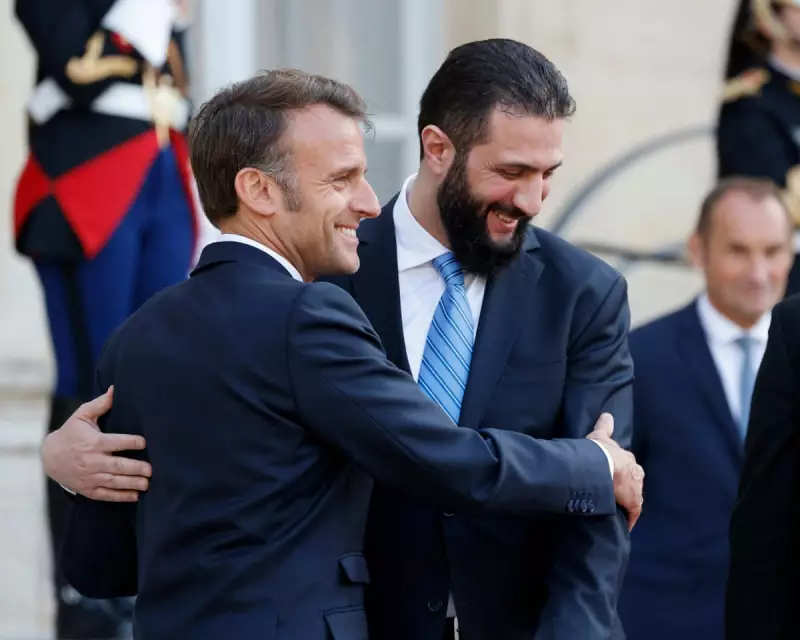
The symbolic meeting between French President Emmanuel Macron and Syrian President Ahmed al-Sharaa in Paris on 7 May 2025 underscores the potential for European engagement. By accepting that the past framework is gone and focusing pragmatically on stabilisation in the Levant, Europe may begin the long journey to regain its credibility and a meaningful role in the Middle East.