The Houthi Militia: From Mountain Backwater to Global Trade Disruptor
The world is entering a dangerous new phase of mass warfare where increasingly sophisticated technology serves primitive ideological goals. This alarming trend is exemplified by the Houthi movement in Yemen, which has transformed from a regional insurgency into a significant threat to international commerce and stability.
Origins and Expansion of a Radical Movement
Officially known as Ansar Allah (Defenders of God), the Houthis originated in the 1990s among the Zaydi Shia clan in Yemen's remote northwestern Saada province. Founded by Hussein al-Houthi, who was deeply influenced by Iran's 1979 Islamic Revolution, the group adopted his radical tenets as its ideological foundation. Following his death in 2004 during clashes with Yemeni government forces, leadership passed to his equally fanatical brother, Abdul-Malik al-Houthi, who continues to command the movement today.
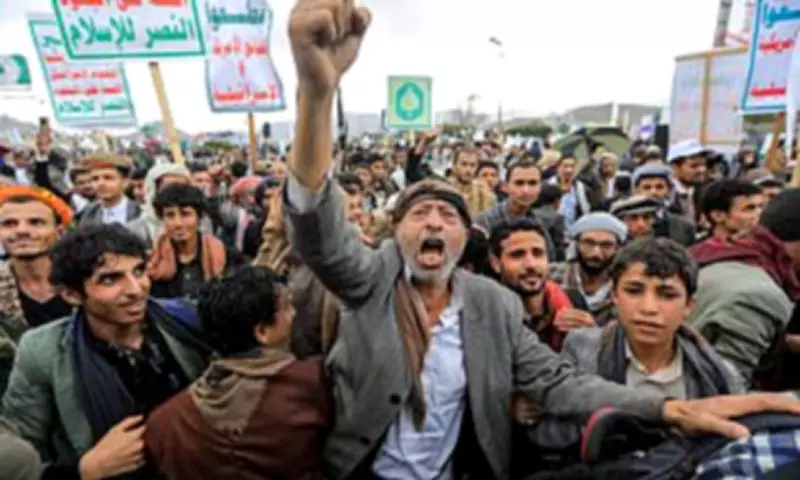
From modest beginnings with just a few thousand fighters in the early 2000s, the United Nations now estimates Houthi forces number in the hundreds of thousands. Their organizational structure deliberately mirrors that of Hezbollah, another Iranian proxy in Lebanon, demonstrating Tehran's strategic influence over the group's development and operations.

Strategic Control and Economic Leverage
The Houthis' current territorial control makes them uniquely dangerous to global interests. They command key regions of Yemen including the capital Sanaa, most of the country's northwest, and critically, the Red Sea coastline. This geographic advantage positions them directly alongside one of the world's most vital trade arteries.
With both Hamas and Hezbollah experiencing significant operational degradation, the Houthis have emerged as Iran's most effective proxy force. Tehran provides comprehensive support including training, intelligence sharing, and increasingly advanced weaponry such as ballistic missiles, anti-ship systems, and long-range drones. In return, the Houthis offer Iran strategic access to one of the planet's most economically sensitive regions.
Threat to Global Trade Routes
The implications of Houthi control over Yemen's Red Sea coast are profound. The group already threatens the narrow Bab el-Mandeb Strait at the Red Sea's southern entrance, through which approximately 12 percent of global trade passes, including substantial energy shipments. Should this chokepoint become effectively closed alongside existing disruptions in the Strait of Hormuz, the result would be a de facto blockade stretching from the Persian Gulf to the Suez Canal.
Since November 2023, Houthi forces have attacked more than 190 vessels navigating the Red Sea, a route that carries around 10 percent of the world's oil and nearly $1 trillion in goods annually. The cumulative impact has been severe, with shipping traffic through the region dropping dramatically as most vessels reroute around Africa's Cape of Good Hope. This diversion adds thousands of miles, weeks of transit time, and substantial additional costs to global trade flows.
Advanced Military Capabilities and Asymmetric Warfare
The Houthis have demonstrated remarkable military innovation despite their ideological primitivism. They have become the first non-state actor to deploy anti-ship ballistic missiles in sustained combat operations, combining them with cruise missiles and long-range drones to create persistent maritime threats. Their arsenal represents a hybrid of old and new technologies, including Soviet-era Scud and Tochka ballistic systems alongside Iranian-designed Quds-series cruise missiles and domestically produced drone platforms like the Samad series, which can reach targets up to 1,500 kilometers away.
Increasingly, these weapons are manufactured locally using captured industrial equipment. Intercepted shipments have revealed precision lathes, robotic welding systems, laser engravers, and circuit board production equipment—sophisticated weapons infrastructure established in one of Earth's poorest regions.

Perhaps their most effective innovation is economic warfare through ruthless cost asymmetry. Drones costing tens of thousands of dollars routinely force interception by defensive systems costing millions. During the initial weeks of Operation Rough Rider, the United States expended approximately $200 million in munitions to counter comparatively inexpensive Houthi threats. This strategy mirrors Iranian tactics demonstrated during Tehran's 12-Day War with Israel in 2025, when $20,000 Shahed-136 drones forced Israel to respond with $3.5 million Arrow missiles.
Human Rights Abuses and Social Control
Beyond military threats, the Houthis enforce brutal social controls and commit systematic human rights violations. The group has reportedly revived slavery practices in Yemen, while United Nations investigators have deemed credible reports that boys as young as 13 have been arrested for "indecent acts" (meaning homosexuality) or in "political cases" when their families resist Houthi ideology. These minors often share prison cells with adult detainees.
Women face particularly severe restrictions, requiring male guardians for travel and written male consent for movement within Houthi territory, even for employment purposes. These regulations extend to female United Nations employees operating in the region. In 2018, Houthi authorities covered female faces on billboards and removed mannequin heads from bridal shops, with armed gangs sometimes confiscating mannequins entirely for allegedly "arousing desire."
The Yemeni Coalition for Monitoring Human Rights Violations documented 1,181 violations against women by Houthis between 2017 and 2020 alone. In one particularly horrific 2021 case, a female detainee was reportedly forced into sexual intercourse with multiple men at a Houthi detention center as preparation for serving as a sex slave for "important clients."
The group's broader human rights record includes systematic kidnappings, torture, bombings, and displacement of thousands of civilians. Houthi forces have indiscriminately planted landmines near homes, schools, mosques, markets, and water sources, resulting in more than 1,929 civilian deaths and damage to over 2,872 public and private facilities over six years of conflict according to monitoring organizations.
Future Escalation and Global Implications
In recent statements, Houthi leadership has declared their intention to continue military operations "in the coming days until the criminal enemy ceases its attacks and aggression." The critical question is no longer whether they possess capability to disrupt global trade or widen regional conflicts—they have already demonstrated both capacities repeatedly.
The pressing concern now is whether they will choose further escalation, and whether the international community is prepared for the potentially devastating consequences, including possible Israeli military responses. What began as a local insurgency in Yemen's isolated northwestern mountains has evolved into a strategic player possessing both the ruthlessness and technical skillset to shape the trajectory of global crises. Their influence appears poised to grow rather than diminish in the coming period.