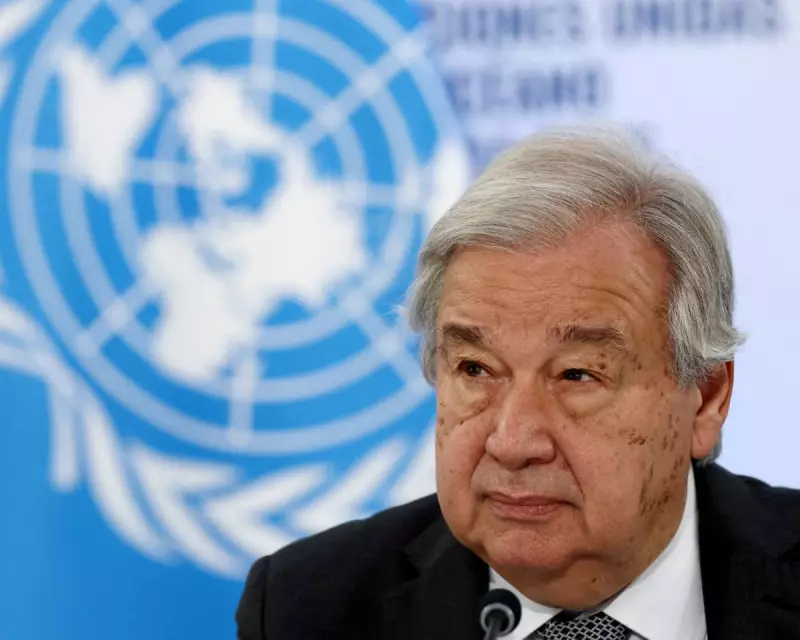
In a powerful and historic address, United Nations Secretary-General António Guterres has issued a stark warning about the severe challenges facing international cooperation. Speaking in London to mark the 80th anniversary of the UN General Assembly's first session, he highlighted how "powerful forces" are actively working to undermine the global system.
A Plea for Multilateralism at a Historic Site
The Secretary-General delivered his speech from the same venue where the journey began eight decades ago: London's Methodist Central Hall. It was here in January 1946 that delegates from 51 nations convened for the inaugural General Assembly session, passing a first resolution focused on disarmament and the elimination of atomic weapons.
Guterres contrasted that post-war optimism with today's fractured landscape. He made an impassioned plea for the principles of multilateralism and international law to prevail during a period of deepening global uncertainty. The UN head, who is due to step down at the end of 2026, painted a picture of a planet besieged by threats unimaginable in 1946.

Modern Threats and a New Arms Race
Guterres pointed to the existential climate crisis and the destabilising influence of cyberspace as key modern dangers. He noted that these emerge as many nations are locked in a renewed and costly arms race, though he refrained from naming specific countries.
"As the planet broke heat records, fossil fuel profits continued to surge," he told the audience. "And in cyberspace, algorithms rewarded falsehoods, fuelled hatred, and provided authoritarians with powerful tools of control."
He underscored the scale of global military spending, revealing that it reached a staggering $2.7 trillion last year. For context, he stated this sum is over 200 times the United Kingdom's current aid budget and equivalent to more than 70% of Britain's entire economic output.
UN Faces Existential Funding Crisis
The Secretary-General's sobering assessment comes at a time of profound financial strain for the United Nations, driven largely by policy shifts from the United States under President Donald Trump.
The US has declared it will allocate just $2 billion (£1.5bn) to UN humanitarian assistance—a dramatic reduction from its previous role as the leading funder. Accompanying this cut was a blunt ultimatum from the US State Department that the global body must "adapt, shrink or die." The US also plans to impose new demands on countries receiving aid.
In a further blow, just over a week after the funding announcement, President Trump confirmed the US withdrawal from multiple UN agencies and a key international climate treaty.
Experts warn these cuts will inevitably lead to a smaller and less effective international aid system. The UN itself has already indicated that the funding shortfall threatens to cripple its vital global peacekeeping operations.
Despite the immense pressure, Guterres struck a note of resilience. He affirmed that ongoing reforms are designed to ensure the "United Nations is more agile, more coordinated and more responsive" to the world's needs, even in an era of diminished support and rising challenges.