Greenland's Quest for Dignity Amid Colonial Complexities
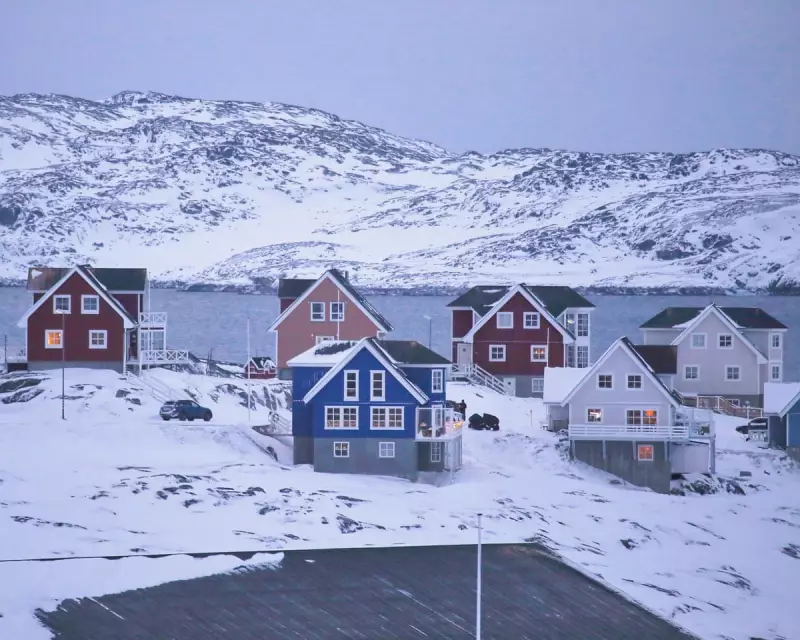
The people of Greenland continue to seek the dignity and pride that comes with being their own masters, a pursuit that now finds itself caught in a geopolitical crossfire. This remote Arctic territory, with its population of approximately 55,000, navigates a complex relationship with Denmark while facing unprecedented external pressures from the United States under the Trump administration.
Two Competing Narratives of History
Two distinct stories define the Greenland-Denmark relationship, each containing elements of truth and selective blindness. The first narrative, championed by Denmark's ruling classes, presents Greenland's journey as a remarkable success story of managed transition. Within the Danish kingdom, Greenlanders have maintained their language, culture, and identity while developing their own parliament, political institutions, and education system. They enjoy access to the same welfare services as other Danish citizens, achieving this under extraordinarily challenging conditions of isolation in the North Atlantic and Arctic oceans.
This perspective acknowledges that Greenlanders were not consulted during their 1953 integration into the Danish kingdom after over two centuries of colonial rule. However, it highlights that majorities in both the 1979 and 2008 referendums voted for arrangements expanding political control over their territory and resources. Greenland's own constitution describes the period from 1953 to 1979 as "hidden colonisation" but recognises subsequent decades as an era of "decolonisation." From this viewpoint, the Danish kingdom has served as a vehicle for Greenlanders to achieve gradual self-determination through institutional development.

The Persistent Shadow of Colonialism
The alternative narrative views Greenland's recent history as a continuation of colonisation rather than its resolution. Proponents point to enduring inequalities in pay between Danes and Greenlanders, negative attitudes from Danish employers operating in Greenland, and problematic media representations. They highlight historical scandals that reveal deeper patterns of oppression.
During the 1960s and 1970s, Danish doctors implanted contraceptive IUDs in thousands of Greenlandic women and girls without consent as part of a campaign to limit birthrates, affecting approximately half of Greenland's fertile female population at the time. Another dark chapter involved twenty-two children taken from their families in Greenland and transported to Denmark to be educated as future colonial administrators. While the Danish government has issued official apologies for these actions, they exemplify what many see as persistent institutional racism.
The existence of a demeaning Danish phrase for heavy intoxication that references being "as drunk as someone from Greenland"—so common it appears in official dictionaries—speaks to ongoing humiliation and denial of dignity. This narrative argues that while Greenland may be institutionally decolonised, its people still seek the fundamental pride of self-mastery.
Modernisation Battles and Economic Realities
The tension between these narratives reflects broader societal conflicts that emerge during rapid modernisation. Denmark maintains a broad consensus that it cannot rule Greenland against its citizens' will, yet many Danes simultaneously argue that Greenland lacks capacity to address its social problems and economy independently. The annual €600 million subsidy from Denmark serves as evidence for those who claim Greenland's freedom is financially supported by its former colonisers.
Geographical and cultural distance intensifies these tensions, making it morally and politically challenging to defend governance of a vast island by a small, distant country with different social and cultural history—unless Greenlanders consciously choose this arrangement as their path to greater self-determination.

Trump's Geopolitical Gambit
The Trump administration has skillfully exploited these divisions, despite leading a culture war against "woke" post-colonial ideology domestically. American appeals to anti-colonial forces in Greenland reveal both ignorance and imperial arrogance. Contrary to US claims, military access is already guaranteed through a 1951 treaty providing unlimited access to all parts of the island, including the US-operated Pituffik space base.
Arguments about needing Greenland for rare-earth minerals are similarly unconvincing, as Greenland has long welcomed international investors. The real challenge involves building infrastructure for resource exploitation—a high-risk investment where the US currently lacks capacity. The administration's clever approach suggests that if Greenland achieves independence, it would become strategically vulnerable to Chinese or Russian influence, thereby justifying US intervention.
A Forced Unity Against Imperial Ambitions
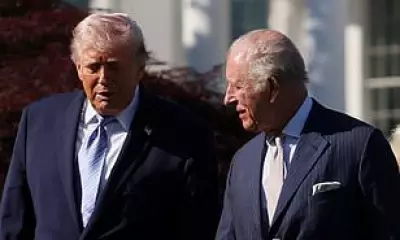
This geopolitical pressure has created an ironic unity. Following Trump's annexation threats, Greenlandic government leader Jens-Frederik Nielsen stated during a joint press conference with the Danish prime minister that Greenland would choose Denmark over the US "here and now." This marked a significant shift toward speaking with one voice, further demonstrated by coordinated protests across both territories where Danish citizens waved Greenlandic flags in solidarity against Trump's threats.
The administration's approach has exposed the moral dilemma at the heart of the Denmark-Greenland relationship. While there are clear legal and political answers to questions about Denmark's right to rule Greenland, the arrangement's moral legitimacy faces renewed scrutiny. Greenland finds itself in a precarious position: using Trump's interest to pressure Denmark for better terms, while simultaneously relying on the Danish kingdom for protection against American imperialism.
The Greenlandic Dilemma
For the first time in years, Greenlandic voices are receiving global attention. This recognition provides some dignity and agency, but for a small population in a geo-strategically vital location, insisting on independence carries profound dangers. As Trump's true ambitions become clearer—his desire for territorial expansion driven by "la gloire" rather than security or economic needs—the threat becomes more apparent.
The tragedy for Greenlanders is that just as they gain leverage to assert dignity and demand recognition from Denmark, they confront a new, more ruthless colonial power. Their basic living conditions would radically change under US control, likely resulting in lost rights and protections despite potential short-term financial benefits. They would be dealing with an administration that neither respects political commitments nor values human rights and political freedom in principle.
In this new geopolitical era, the ancient Thucydidean principle seems to apply: "The strong do what they can, and the weak suffer what they must." Greenland's dream of independence has become a dangerous trap, forcing an uneasy alliance with its former coloniser against a common imperial threat while continuing the complex journey toward true self-mastery and dignity.