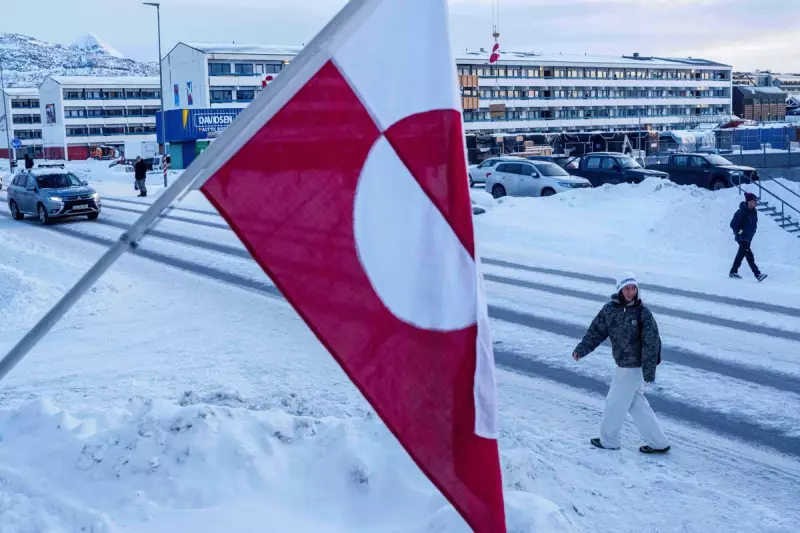
The remote Arctic island of Greenland has been thrust into the centre of a global diplomatic storm after former US President Donald Trump reasserted his desire to acquire the territory, even suggesting the United States could take it by force.
"People are not sleeping": Life under a geopolitical spotlight
The escalating crisis is now dominating daily life for Greenland's 57,000 inhabitants. Naaja Nathanielsen, a Greenlandic minister, told lawmakers in Britain's Parliament this week that the situation was all-consuming. "People are not sleeping, children are afraid, and it just fills everything these days. And we can't really understand it," she said.
Trump's rhetoric has included dismissing Denmark's defences in Greenland as merely "two dog sleds," a comment that has caused deep offence. Mari Laursen, a law student and former fishing trawler worker, told the Associated Press that such remarks undermine Greenlandic people and overlook a history of cooperation.

"During World War II, Greenlandic hunters on their dog sleds worked in conjunction with the U.S. military to detect Nazi German forces on the island," Laursen explained. She argued that in the harsh Arctic environment, a dog sled's utility surpasses that of warships or helicopters, stating: "It can go where no warship and helicopter can go."
Dismissing claims and suspecting motives
Many Greenlanders have also rejected Trump's repeated claims that Russian and Chinese ships are swarming their waters. Heating engineer Lars Vintner was blunt in his assessment: "I think he should mind his own business." He added that in his experience sailing and hunting, he has never seen such vessels, joking that the only Chinese presence he notices is at the fast food market.
This sentiment was echoed down at Nuuk's small harbour by fisherman Gerth Josefsen, who said he had only seen a single Russian fishing boat a decade ago. The prevailing local view, as expressed by 21-year-old shop worker Maya Martinsen, is that Trump's interest is not about national security but resource extraction. "I know it's not national security. I think it's for the oils and minerals that we have that are untouched," she said, accusing the Americans of treating her homeland like a "business trade."
A united front and hopes for diplomacy
Despite historical tensions over independence, the crisis appears to have strengthened bonds between Greenland and Denmark. Martinsen welcomed news that Denmark and its allies would send troops to the island, seeing it as crucial support. Student Tuuta Mikaelsen, 22, highlighted the social protections she fears losing under US rule, such as free healthcare, saying: "I don't want the U.S. to take that away from us."
The media frenzy has been relentless for Greenlandic politicians. Juno Berthelsen, an MP for the pro-independence Naleraq party, revealed he has given multiple interviews daily for the past two weeks. His message to Trump and Vice President JD Vance was clear: "It is our country. Greenland belongs to the Greenlandic people." He urged a move away from aggressive rhetoric towards a diplomatic dialogue that places Greenlanders at the very centre of the conversation.
The fundamental disagreement over Greenland's future was confirmed by Denmark's foreign minister following a White House meeting on Wednesday, 14 January 2026, setting the stage for continued diplomatic tension in the High Arctic.