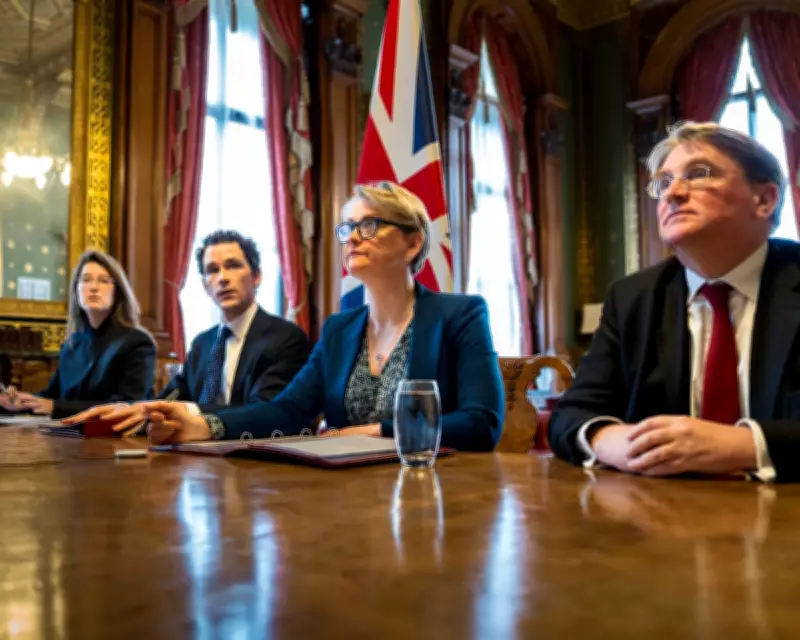
Foreign Secretary Yvette Cooper chaired a critical virtual summit on Thursday, bringing together representatives from more than forty nations to address the escalating crisis in the Strait of Hormuz. The urgent discussions focused on exploring every possible diplomatic, economic, and coordinated measure to pressure Iran into reopening this vital maritime chokepoint, which has been effectively closed by Tehran's actions.
Coordinated Global Response to Iranian Actions
During the summit, Cooper emphasized that Iran's "reckless strikes" on international shipping and its attempts to "hijack the global economy" are having severe repercussions far beyond the Middle East. She stated that nations across the globe, "who played no part in this conflict," are now suffering the consequences. The Foreign Secretary outlined how the closure is directly affecting petrol prices and mortgage rates in the UK, while also disrupting jet fuel supplies worldwide, fertiliser shipments to Africa, and gas exports to Asia.
Economic and Humanitarian Fallout
Highlighting the profound global impact, Cooper pointed to World Bank predictions indicating that a continued blockage could push an additional nine million people into food insecurity. This comes alongside unsustainable increases in oil and food prices that are hitting households and businesses in every corner of the world. The economic pain is being felt disproportionately by the most vulnerable communities.

Whitehall sources revealed that a key topic at the summit was engaging more countries from the global south to apply economic pressure on Iran, ensuring it does not profit from the strait's closure. The scale of condemnation from nations previously reluctant to impose sanctions was described as striking.
Exploring Practical Solutions
The United Nations is examining the feasibility of establishing a humanitarian shipping corridor to ensure fertiliser reaches poorer countries and prevent widespread food shortages. In addition to this week's diplomatic meeting, a further military discussion is scheduled for next week. This will be convened by Britain's Permanent Joint Headquarters in Northwood, north-west London, and will focus on the possibility of clearing sea mines and rescuing trapped vessels in the strait.
International Stances and Political Reactions
The summit proceeded without the participation of the United States, which initiated the war on Iran. Attendees included the UK, France, Germany, Australia, and several Gulf nations, all exploring ways to restore access to the maritime route. US President Donald Trump has previously suggested that reliant nations should "build up some delayed courage" and "just grab it," while also mocking British military capabilities in relation to the crisis.
Prime Minister Keir Starmer acknowledged that unblocking the lane, which carries between ten and twenty-five percent of the world's oil and gas supplies, would "not be easy." Meanwhile, Conservative leader Kemi Badenoch warned that Trump must not abandon "a mess that he's made" in the Middle East, invoking the principle that "if you break it, you own it."
Reform UK leader Nigel Farage expressed that he was not angry with his ally Trump for entering the war but found it difficult to discern the President's motivations from press conferences. Liberal Democrat leader Ed Davey urged Starmer to "step up" plans to reopen the oil and gas shipping route, calling for the Prime Minister to show a clear alternative path forward.
Global Participation and Concerns
Australia, facing soaring petrol prices and mounting concerns about shortages, was represented by Foreign Minister Penny Wong. She stated that the Canberra government seeks coordinated diplomatic efforts to reopen the strait, condemning Iran's actions for causing unprecedented energy supply shocks and impacting oil and fuel prices globally. Wong emphasized that Iran is deliberately inflicting economic pain on communities worldwide, with the Indo-Pacific region and its most vulnerable populations bearing a disproportionate cost.

The collective determination from over forty nations underscores the critical nature of the Strait of Hormuz to global trade and stability. As diplomatic and military options are weighed, the international community remains focused on finding a resolution to this escalating crisis that threatens economies and food security across the planet.