
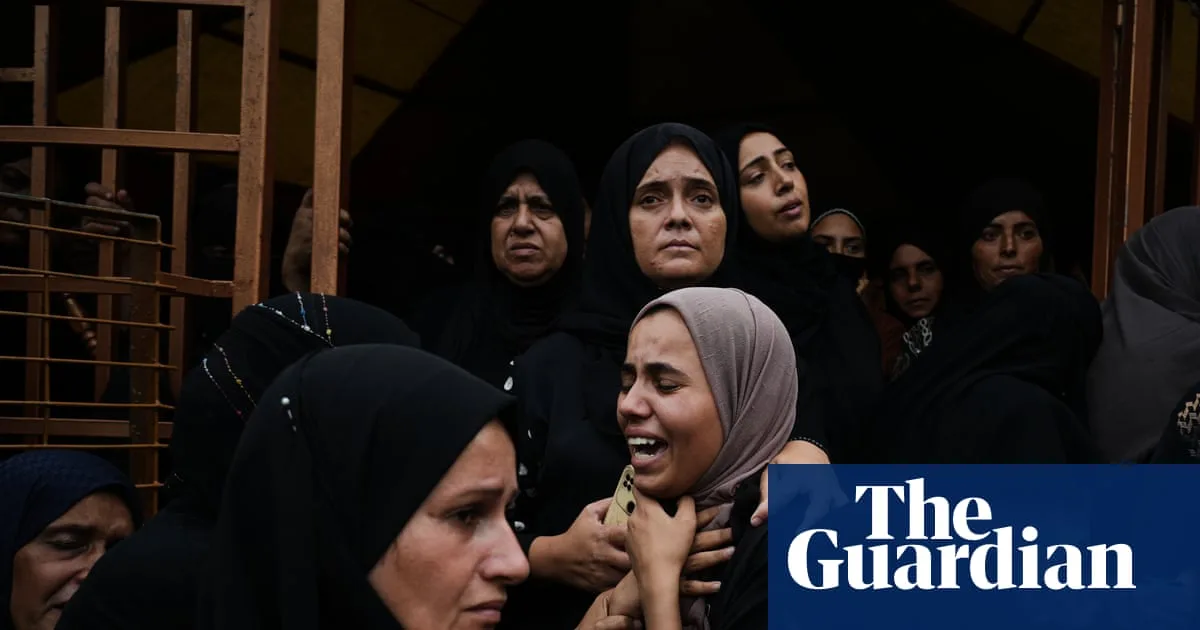
More than 75,000 people were killed in the first 16 months of the war in Gaza, at least 25,000 more than the death toll announced by local authorities at the time, according to a study published on Wednesday in the Lancet Global Health medical journal.
The research, based on a survey of 2,000 representative families in Gaza, found that 42,200 women, children and elderly people died between 7 October 2023 and 5 January 2025, comprising 56% of violent deaths. The study also confirmed the accuracy of the Gaza health ministry's reporting on the proportion of women, children and elderly among the dead.
“The combined evidence suggests that, as of 5 January 2025, 3-4% of the population of the Gaza Strip had been killed violently and there have been a substantial number of non-violent deaths caused indirectly by the conflict,” the authors wrote.
Michael Spagat, a professor of economics at Royal Holloway, University of London and one of the authors, said the research suggested 8,200 deaths were attributable to indirect effects such as malnutrition or untreated disease. He cautioned against assuming a high ratio of indirect to direct deaths, noting variation across conflicts.
The study covers the most intense period of Israel's offensive, which began after Hamas's October 2023 attack killed about 1,200 people and took 250 hostages. The new research contradicts Israeli claims of an almost equal number of combatant and non-combatant deaths.




