Israeli Airstrikes Claim 32 Lives in Gaza, Jeopardising Fragile Truce
Israeli air strikes across the Gaza Strip have resulted in the deaths of at least 32 people on Saturday, according to statements from local authorities and hospital officials. The attacks, described by Palestinians as the most intense since the second phase of the US-brokered ceasefire took effect earlier this month, struck multiple locations throughout the territory.
Multiple Sites Targeted Across Gaza
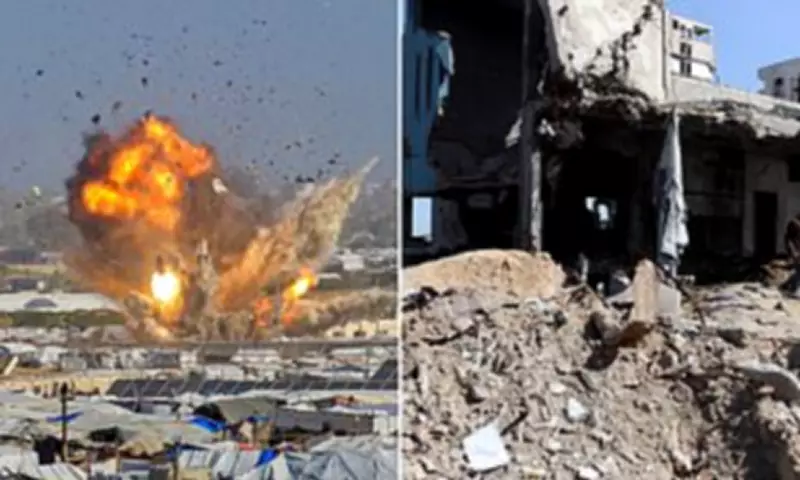
Officials from hospitals that received the victims reported that strikes hit an apartment building in Gaza City and a tent camp in Khan Younis. A separate airstrike targeted a police station in Gaza City, killing at least 14 individuals and wounding numerous others. Among the casualties were two women and six children from two different families, highlighting the civilian toll of the attacks.
Shifa Hospital provided specific details, confirming that the Gaza City apartment building strike killed three children, their aunt, and their grandmother on Saturday morning. The police station attack claimed the lives of at least 14 people, including four policewomen, civilians, and inmates. "We found my three little nieces in the street. They say 'ceasefire' and all. What did those children do? What did we do?" said Samer al-Atbash, an uncle of the three deceased children, in a statement reported by Reuters.

International Condemnation and Ceasefire Concerns
The strikes have drawn strong condemnation from international mediators involved in the ceasefire process. Egypt, one of the key mediators, denounced the Israeli actions in the strongest possible terms, warning that they present a direct threat to the political course of the truce. Similarly, Qatar, another mediating nation, labelled the strikes a dangerous escalation and cautioned that their continuation jeopardises the entire political process.
Hamas characterised the attacks as a renewed flagrant violation of the ceasefire agreement and called upon the United States and other mediating countries to pressure Israel to halt the strikes. The group's statement underscores the growing tensions surrounding the fragile truce.
Additional Casualties and Destruction
Nasser Hospital reported that a strike on the tent camp in Khan Younis ignited a fire, resulting in the deaths of seven people. The victims included a father, his three children, and three grandchildren. Video footage and images from various locations across Gaza depicted rescue workers retrieving bodies from rubble and numerous buildings reduced to ruins.
These devastating events occurred just one day before the scheduled reopening of the Rafah crossing on the border with Egypt in Gaza's southernmost city. All border crossings into the territory have remained closed for nearly the entire duration of the conflict. Palestinians view the Rafah crossing as a critical lifeline for the tens of thousands requiring medical treatment outside Gaza, where the majority of healthcare infrastructure has been destroyed.
Ceasefire Context and Military Response
The limited reopening of the Rafah crossing represents the first significant step in the second phase of the ceasefire brokered by the United States. This phase involves challenging agenda items, including demilitarising the strip after nearly two decades of Hamas rule and establishing a new government to oversee reconstruction efforts.
Nevertheless, Saturday's strikes serve as a stark reminder that the death toll in Gaza continues to rise even as the ceasefire agreement progresses incrementally. A military official, speaking anonymously in accordance with protocol on Saturday, declined to comment on specific targets but stated that Israel conducted overnight and Saturday strikes in response to what the army described as ceasefire violations occurring the day before.
Israel's military, which has targeted areas on both sides of the ceasefire's designated yellow line, has maintained that strikes since October have been retaliatory measures against violations of the agreement. In a statement issued on Friday, the military claimed to have killed three militants exiting a tunnel in an Israeli-controlled zone within Rafah.

Mounting Casualty Figures
Gaza's Health Ministry, which operates under the Hamas-led government and maintains casualty records generally regarded as reliable by UN agencies and independent experts, has documented 509 Palestinians killed by Israeli fire since the ceasefire commenced on October 10. The ministry's detailed records continue to track the human cost of the ongoing conflict, even amid diplomatic efforts to sustain the truce.