The United States military has conducted a strike on a vessel suspected of carrying drugs in the eastern Pacific Ocean, resulting in the deaths of four individuals. This incident, which occurred on Tuesday, represents the fourth such attack disclosed in recent days, as part of an ongoing campaign initiated over seven months ago.
Escalating Campaign Amid Broader Conflicts
This operation is the latest in a series of targeted strikes on vessels that the Trump administration alleges were involved in drug trafficking within Latin American waters. Despite the military's significant involvement in the Iran war, these maritime actions have persisted, underscoring the administration's prioritisation of counter-narcotics efforts.
Rising Casualty Figures and Search Operations
The latest strike has elevated the total death toll to 175 since these operations commenced in early September. Concurrently, the U.S. Coast Guard has halted its search for a potential survivor from an attack that took place on Saturday, indicating the perilous nature of these engagements.

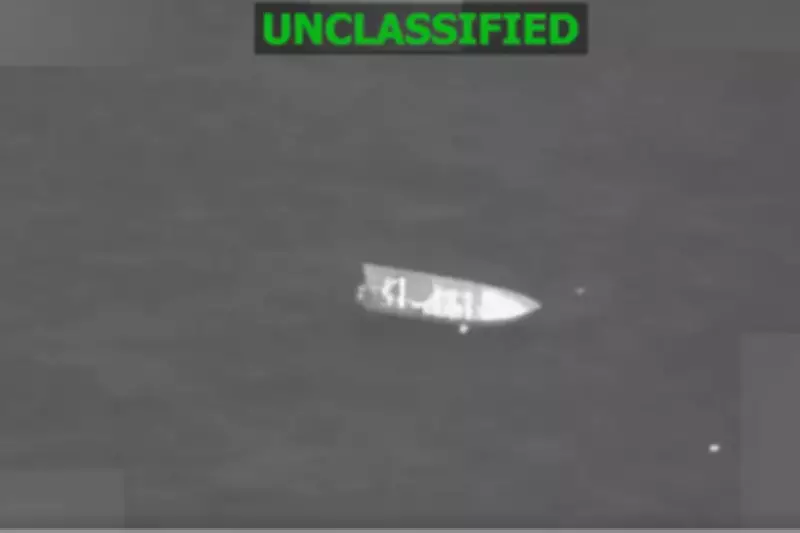
U.S. Southern Command released aerial footage on social media platforms on Tuesday, depicting a vessel adrift on the water before being struck by a projectile and subsequently exploding. Prior to this, the military reported striking two boats on Saturday and an additional one on Monday.
Administration Justifications and Criticisms
The military has asserted that all targeted vessels were "operated by Designated Terrorist Organizations" and that intelligence confirmed their involvement in "narco-trafficking operations" along known routes in the Eastern Pacific. However, no concrete evidence has been publicly provided to substantiate these claims.
President Donald Trump has framed the United States as being in an "armed conflict" with cartels in Latin America, justifying the attacks as a necessary escalation to combat the influx of drugs into the country and reduce fatal overdoses affecting American citizens. Nonetheless, his administration has offered limited proof to support allegations of eliminating "narcoterrorists."
Legal and Effectiveness Concerns
Critics have raised significant questions regarding both the legality and efficacy of these boat strikes. A primary point of contention is that fentanyl, responsible for numerous overdose deaths, is predominantly trafficked into the U.S. via land routes from Mexico, where it is manufactured using chemicals imported from China and India.
Broader Context and Historical Precedents
These strikes commenced several months prior to the U.S. raid in January that led to the capture of former Venezuelan President Nicolás Maduro. He was transported to New York to face drug trafficking charges and has entered a plea of not guilty, highlighting the interconnected nature of regional narcotics operations and U.S. enforcement actions.
The ongoing campaign reflects a contentious strategy in U.S. foreign policy, balancing aggressive military tactics with complex legal and humanitarian considerations in the fight against international drug trafficking networks.