Two of Australia's most senior former foreign ministers have issued a stark warning, urging the Albanese government to urgently reconsider the nation's foundational alliance with the United States. The call comes in response to what they describe as alarmingly unpredictable and unilateral military actions by the administration of Donald Trump.
A 'Fiercely Unpredictable' Ally
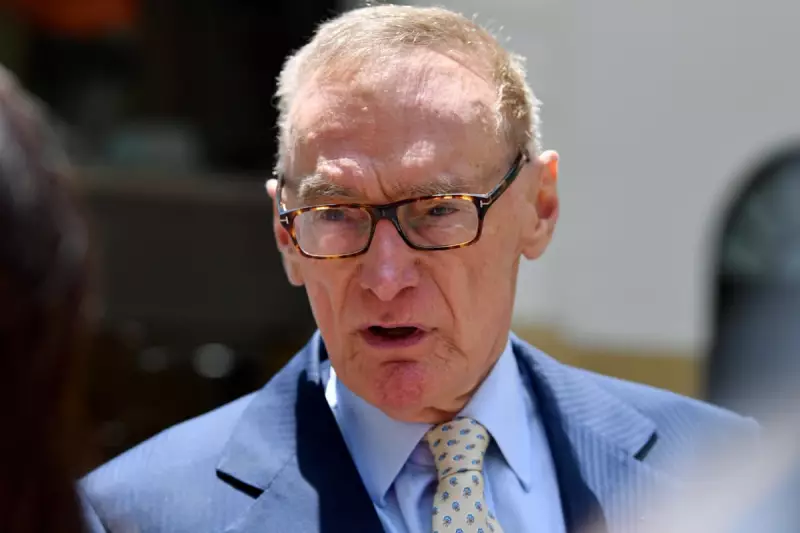
Bob Carr, who served as Australia's foreign minister from 2012 to 2013, told Guardian Australia that Trump's America had become a "fiercely unpredictable" ally. This shift, he argued, presents a "colossal challenge" for Australian national security and foreign policy.
Carr's comments follow a series of dramatic interventions by the US president. Earlier this month, the US launched airstrikes and a raid in Venezuela, leading to the seizure of the country's president, Nicolás Maduro. Subsequently, Trump has publicly threatened to "take over" Greenland, stating the US would act on the territory "whether they like it or not".

"Our US ally is fiercely unpredictable and dedicated ruthlessly to American national interests, without any pretence of being committed to universal values or a global, rules-based order," Carr stated. He added that this represented an "utterly different America" from the one that historically shared values with Australia.
Calls to Abandon AUKUS and Rethink Defence
Gareth Evans, foreign minister between 1988 and 1996, echoed Carr's concerns, stating Trump's recent actions "put beyond doubt that his America has zero respect for international law, morality, and the interests of its allies and partners".
Evans directed his criticism squarely at the AUKUS security pact, the trilateral agreement between Australia, the UK, and the US centred on nuclear-powered submarines. He called for the multi-billion dollar AUKUS submarine project to be abandoned.
"It’s a wake-up call that can no longer be ignored by the Australian government," Evans declared. "It’s now more than time for the Aukus submarine project to be abandoned, and our defence capability to be built in our own interests, not those of a now totally unreliable United States."
He highlighted the "crazy irony" of the pact, arguing it commits Australia to spend "eye-watering amounts" on a capability that might draw the nation into a US-led conflict not in its interest, with no guaranteed US support in return.
Government Response and Broader Context
The Australian government, led by Prime Minister Anthony Albanese, has offered limited criticism of the Trump administration's recent moves. Following the operation in Venezuela and moves to capture Venezuelan oil assets, Albanese said his government was "monitoring developments", calling for adherence to international law and a "peaceful, democratic transition".
Carr suggested the government's cautious approach of keeping "our head down and watch closely" was wise for now, given the uncertainty of Trump's "burst of unilateralism". However, both he and Evans believe the situation demands a fundamental strategic review.
The concerns are amplified by other US actions. In January, the US government separately withdrew from 66 international organisations and treaties, including UN commissions on peacekeeping and international law. Furthermore, the AUKUS pact itself was put under review by the Pentagon after the Trump administration was sworn in, despite Trump having endorsed it during a meeting with Albanese in Washington in October.
Australia has already pledged more than $4.5bn towards building US shipbuilding capacity as part of the AUKUS arrangement. The warnings from Carr and Evans, who have long criticised the pact, signal a growing debate about the costs and risks of Australia's deepest military alliance in an era of profound American volatility.