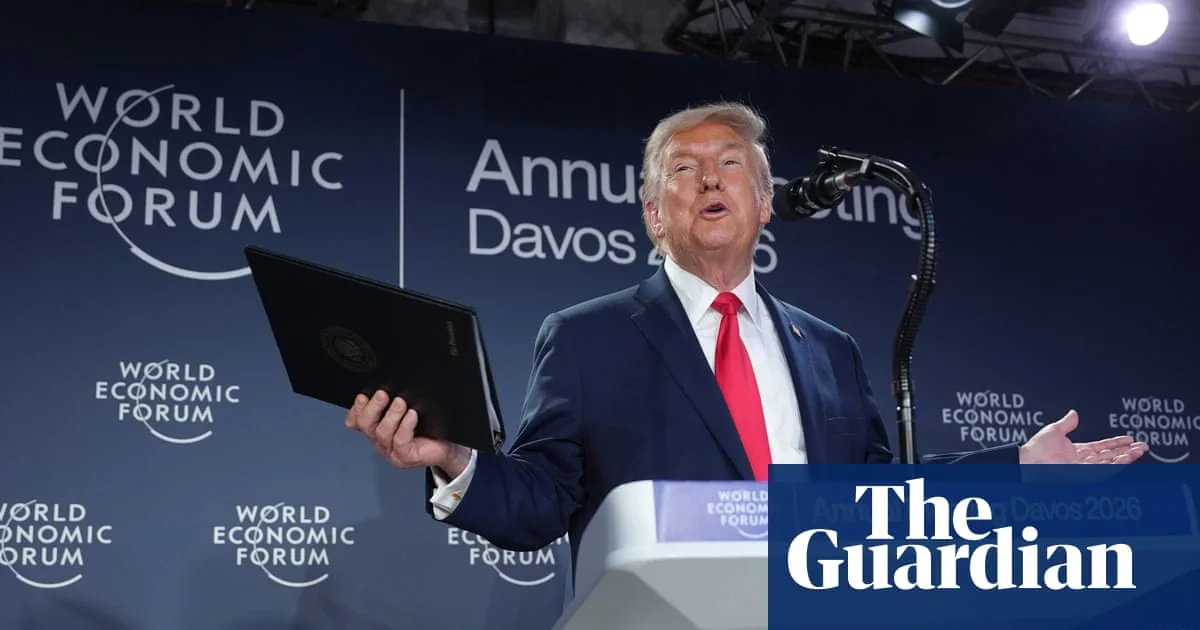
Donald Trump has wrapped up his first year back in the Oval Office with a bold assertion: that his administration has single-handedly ended eight international wars, a feat he believes makes him the prime candidate for a Nobel Peace Prize. The US president's dramatic foreign policy moves, which have included forcing regime change in Venezuela and threatening airstrikes on Iran, sit uneasily alongside his self-proclaimed mantle as a global peacemaker. As he enters the second year of his term, The Independent examines the veracity of these claims, finding that the reality on the ground is often far more complex and less peaceful than his boasts suggest.
Scrutinising the 'Ended' Conflicts
In late October 2025, during a ceremony concerning Cambodia and Thailand, Trump declared, "The eight wars that my administration has ended in eight months – there's never been anything like that." He added that resolving conflicts was "something I'm good at and something I love to do." However, a detailed review of each situation reveals a pattern of fragile ceasefires, ongoing violence, and disputes over the very definition of 'war'.
Israel-Hamas and Iran: Ceasefires Under Strain
The Trump administration did broker a ceasefire between Israel and Hamas in October 2025, following two devastating years of conflict sparked by the 7 October 2023 attacks. The deal secured the release of the last living hostages. Yet, hundreds have been killed since the truce began, with the UN reporting in January 2026 that over 100 children were among the dead from drone attacks. Hamas has regrouped and not agreed to the US's phase two plan for a new Gaza government and its demilitarisation.
Similarly, Trump claims credit for ending a 12-day war between Israel and Iran in June 2025, negotiated after US strikes on Iranian nuclear sites. Defence Secretary Pete Hegseth said this "obliterated" Iran's nuclear capabilities, though US intelligence suggested it was only set back by months. By December, Trump was considering renewed strikes as Iran's programme reconstituted, and Israel has continued to issue threats, indicating the conflict is merely dormant.
Asia and Africa: Agreements That Failed to Hold
The situation between Cambodia and Thailand exemplifies the fragility of Trump's diplomatic achievements. After US pressure led to a ceasefire in July 2025 and a further agreement in October, heavy fighting broke out again in early December. A new ceasefire was signed on 27 December, but thousands of Cambodian families remain displaced due to Thai incursions.
In Central Africa, a US-brokered ceasefire between Rwanda and the Democratic Republic of Congo in June 2025 was never properly implemented. Despite a Washington signing ceremony in December, fighting has continued unabated. By the end of 2025, the Rwanda-backed M23 rebel group held more territory in eastern DRC than ever before, with the DRC blaming the rebels for 1,500 deaths in renewed January 2026 clashes.
Disputes, Not Wars: The Blurred Lines of Conflict
Several conflicts on Trump's list involve long-standing tensions that have not escalated into full-scale war during his term, raising questions about the definition of his achievement.
He claims to have ended hostilities between India and Pakistan after a flare-up in May 2025, saying US trade concessions helped. While Pakistan thanked him, India denied any such conversation. Expert Evelyn Farkas of the McCain Institute questioned whether the incident constituted "a full-blown war."
The White House also lists the Egypt-Ethiopia dam dispute as a resolved conflict, though tensions over the Grand Ethiopian Renaissance Dam have not boiled over into physical confrontation. Trump's specific role in mediation remains unclear, with him stating in July 2025, "We're working on that one."
Furthermore, the administration points to Serbia and Kosovo, where there has been no threat of war. Progress on a first-term deal has been slow, and the core issue—Serbia's refusal to recognise Kosovo—remains untouched. In Armenia and Azerbaijan, a White House deal in August 2025 made progress on trade routes, but a final peace treaty is still pending.
The Nobel Prize Quest and a Legacy of Unpeace
Trump's assertion that he "can't think of anybody in history that should get the Nobel Prize more than me" is underpinned by this contested record. The investigation reveals that in multiple cases, ceasefires are partial, unstable, or violated. In others, the conflicts were not wars in a conventional sense, or pre-date his involvement and remain fundamentally unresolved.
The president's approach, often linking diplomatic pressure to trade deals or showcasing grand signing ceremonies, has produced headlines but not necessarily lasting peace. With conflicts from Gaza to the DRC still simmering and hundreds dead under supposedly 'ended' wars, the gap between Trump's boasts and the complex realities of international diplomacy appears starkly wide. The quest for a Nobel Prize seems, based on the evidence, to be running significantly ahead of actual, sustainable achievements.




