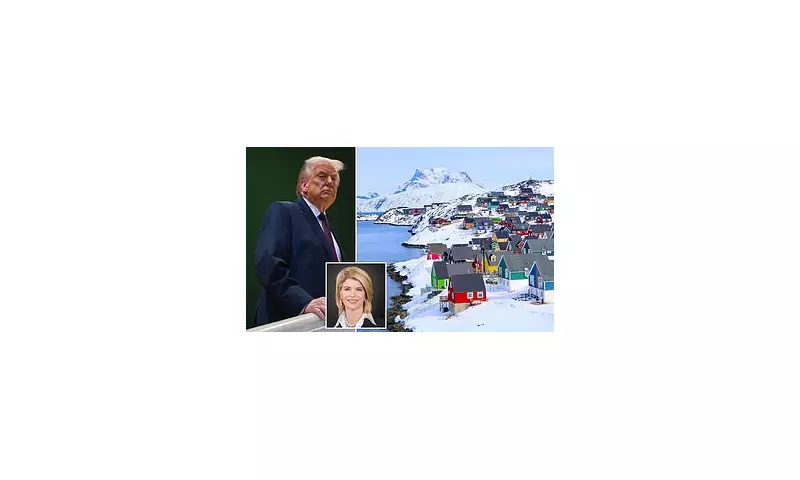
In a striking declaration that has reignited debate over Arctic sovereignty, former United States Ambassador to Denmark Carla Sands has expressed absolute confidence that President Donald Trump will secure American control over Greenland before the conclusion of his second term. Sands, speaking exclusively to the Daily Mail, framed this acquisition as an inevitable geopolitical shift, suggesting the vast island could soon mirror the status of Puerto Rico—a US territory with specific rights and representation, yet firmly under American security oversight.
A Paradigm Shift in Arctic Ambitions
Sands acknowledged that President Trump's previous rhetoric regarding Greenland had undoubtedly caused consternation within both Danish and Greenlandic political circles. However, she argued that this disruptive approach was precisely intended to challenge and ultimately dismantle the longstanding status quo. "Suddenly, anything is possible, because the paradigm has shifted, the window has shifted, and what is impossible becomes possible," Sands stated, highlighting what she perceives as a fundamental recalibration of strategic thinking in Washington.
The Davos Framework and Strategic Imperatives
This prediction follows President Trump's recent announcement at the World Economic Forum in Davos, where he revealed a preliminary 'framework' agreement granting the United States enhanced access to Greenland. This diplomatic manoeuvre coincided with a temporary suspension of tariff threats against Denmark and other NATO allies, de-escalating weeks of increasingly tense rhetoric. The strategic value of Greenland is multifaceted; its Arctic location, abundant deposits of rare earth minerals, and potential for expanded military infrastructure are viewed by the Trump administration as vital assets for countering the influence of Russia and China, especially as melting ice opens new maritime routes.

President Trump has consistently framed control of Greenland as essential for NATO's collective security, a position that continues to meet firm resistance from the Danish government, which opposes any outright sale of the territory. Following meetings with NATO officials in Davos, Trump confidently claimed to have negotiated "total access" to Greenland without financial compensation, telling Fox Business, "We’re gonna have all the military access that we want. We’re going to be able to put what we need on Greenland because we want it... We’re talking about national security and international security."
Benefits and Opposition: A Complex Landscape
Ambassador Sands contends that Greenland itself would reap significant benefits from coming under US control. "The United States will be helping them develop, having infrastructure that they so much want, and perhaps having more prosperity in Greenland and less like a welfare state," she proposed. This perspective, however, clashes with palpable local and international apprehension.
Sands recalled that discussions about Greenlandic independence from Denmark had gained traction during Trump's first term. She alleges that the Danish government, fearing the loss of its Arctic territory, subsequently launched a concerted "propaganda effort" or "psyop campaign" designed to inflame Greenlandic public opinion against the United States. "The people in Greenland are now so terrified of the United States. We are now the boogeyman because of what Denmark has done over the last year … these poor people, and they're, you know, they're not used to this kind of pressure," Sands claimed, further criticising regional polling on the issue as biased due to Danish academic involvement.

Domestic and Diplomatic Hurdles
Resistance is not confined to Europe. Recent opinion polling within the United States suggests a lack of public enthusiasm for acquiring Greenland. A Reuters/Ipsos poll indicated only 17% of Americans support the idea, with 47% opposed and 36% uncertain. Diplomatically, the leaders of both Greenland and Denmark have repeatedly expressed their displeasure. Sands cited a tense White House meeting involving Danish and Greenlandic foreign ministers with US Vice President JD Vance and Secretary of State Marco Rubio as evidence of this friction. "They understand there's going to be a process, but they don't like it," Sands observed. "They don't agree. So President Trump will use the tools that he needs and the pressure he needs to get done whatever deal he thinks needs to get done."
Sands also pointed to what she characterised as broken promises from Danish leadership on bolstering Greenland's security as a reason for diminished trust, starkly comparing Denmark to "a parent that's abusing their child," leaving Greenlandic authorities "very torn" and inexperienced in handling such intense geopolitical stress.
The Path Forward: Economic and Diplomatic Pressure
President Trump's renewed focus on Greenland at the start of the year, which included inflammatory suggestions about military options, alarmed European allies and stirred concerns about NATO's future cohesion. Although the more extreme threats of force were later moderated, the strategic objective remains clear. Sands predicts that the administration will employ a suite of diplomatic and economic instruments to achieve its goal. She specifically highlighted the potential use of targeted tariffs as a form of "friendly coercion," remarking, "I always thought of soft power in different ways, … but trade, it's like somewhere in that gray zone of of friendly coercion that is brilliant."
This persistent push underscores how the Arctic has transformed into a frontline of geopolitical competition, with the United States, Russia, and China vying for influence over emerging shipping lanes, mineral resources, and strategic defence positions. With Greenland already hosting a critical US military base at Thule and straddling these new Arctic corridors, Washington's profound strategic interest in the territory's future appears unwavering, setting the stage for continued high-stakes diplomacy in the months ahead.