Europe's Reaction to Trump's War on Iran: A Crisis of Identity and Inaction
When crisis strikes, Europe often divides, leading to paralysis. This assumption about the continent's global role is being tested by the ongoing US-Israeli war on Iran. Unlike the stark divisions of the 2003 Iraq war, Europe today appears more united in its inaction, but this unity is hollowing out its identity and undermining its ability to act independently on the world stage.
The Iraq War Legacy: Division That Galvanised Europe
Rewind to 2003, and the Iraq war epitomised European division. France and Germany vehemently opposed the US-led invasion, championing multilateralism and international law at the UN Security Council. In contrast, the UK, Italy, and Spain backed the attack, with many central and eastern European nations supporting the US as a path to security. This created a three-layered fault line: within core Europe, between "old" and "new" Europe, and across the Atlantic.
Yet, this shock spurred Europe to reflect on its identity. Millions protested, and intellectuals like Jürgen Habermas and Jacques Derrida articulated a vision of Europe rooted in law and soft power. The crisis also fostered agency, leading to the formation of the E3/EU+3 diplomatic grouping, which peacefully managed the Iranian nuclear file, culminating in the 2015 Joint Comprehensive Plan of Action—Europe's most significant diplomatic achievement, later sabotaged by the Trump administration.
Today's Iran War: A Paralysis of Principles
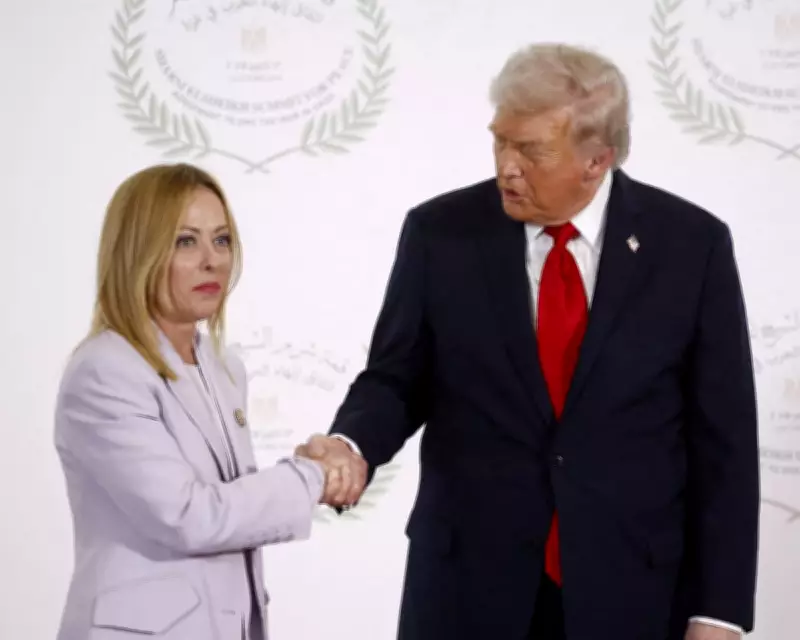
In response to the current war on Iran, Europe is less divided but more paralysed. While some leaders, like Spain's Pedro Sánchez, have condemned the war and refused base use, most adopt an ambiguous stance. European leaders across the political spectrum—from Italy's far-right Giorgia Meloni to France's liberal Emmanuel Macron, Germany's Christian Democrat Friedrich Merz, and the UK's centre-left Keir Starmer—recognise the attacks violate international law, yet none have followed with condemnation.
Meloni admitted the war's illegality to parliament but declared she neither condemns nor condones it. Merz dismissed international law as unhelpful, and European Commission president Ursula von der Leyen argued that debating the war's legality "partly misses the point," urging Europe to accept the world as it is. This repudiation of EU principles prompted European Council president António Costa to reaffirm commitment to multilateralism.
The Erosion of European Identity and Sovereignty
Europe has long defined itself by rights, law, and multilateralism, both internally and globally. While hypocrisy has been inevitable, this self-image has guided its role. Leaders like Meloni, Merz, and von der Leyen may see themselves as pragmatic, but abdicating these principles risks hollowing out European integration. If Europe abandons its norms externally, it will not emerge as a global player but be pushed by predatory powers like Putin's Russia and Trump's US.
Trump's call for European warships in the Strait of Hormuz exemplifies this dynamic. The cowardice of European leaders, cowed by Washington and drawn into a war whose consequences they will bear, undermines their sovereignty. At a time when speeches tout European independence, this subservience makes Europe less sovereign on the world stage.
The shock of division in 2003 nurtured a shared European identity and spurred action. Today, the paralysis over Iran is eroding that identity, leaving Europe adrift and less capable of shaping its future.