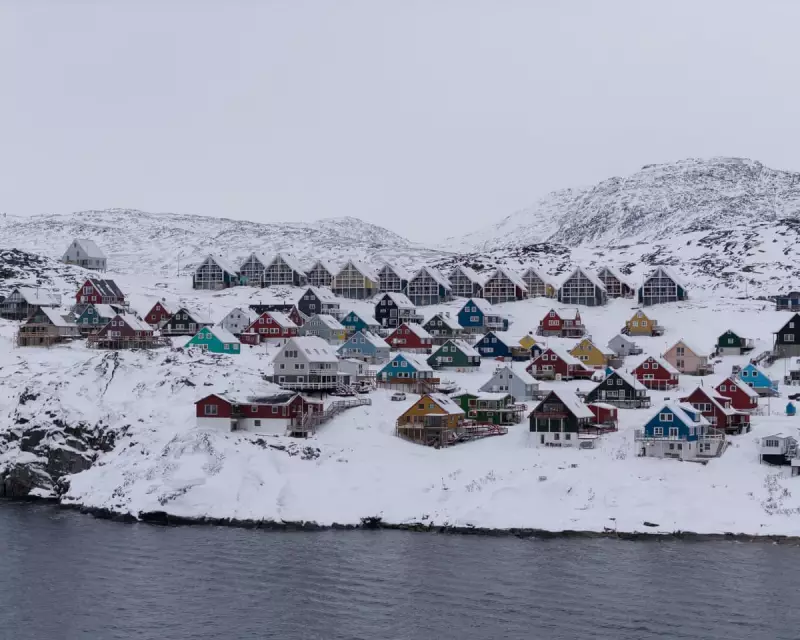
The political landscape of the Arctic has been thrown into turmoil following a stark declaration from former US President Donald Trump, who has stated his intention to take control of Greenland "one way or the other." This threat has sent shockwaves through Copenhagen and Nuuk, leaving European capitals urgently seeking a strategy to counter what many now see as a serious neo-imperial ambition, not mere political bluster.
A Stark Warning and a European Response
In the wake of a controversial US military incursion into Venezuela, which was met with silence from European allies, Trump's focus on the world's largest island is being treated with heightened alarm. His administration's open disregard for international law presents a painful quandary for Europe, which remains heavily reliant on American military might for its own security. The core question is whether to confront or appease a leader whose actions, some argue, mirror the illegal aggression he claims to oppose.
Trump aide Stephen Miller underscored this power imbalance, boasting in a CNN interview that "nobody is going to fight the United States" for the strategically vital territory. This confidence has been met with a significant shift in rhetoric from Europe's major powers. The leaders of France, Germany, Spain, Italy, Poland, and the United Kingdom issued a rare joint statement, firmly backing Danish sovereignty and warning against external claims. "It is for Denmark and Greenland and them only, to decide on matters concerning Denmark and Greenland," they asserted.

The Search for a Diplomatic Solution
While the language has hardened, the practical extent of Europe's willingness to "fight" for Greenland remains undefined. High-level talks are underway, with Denmark attempting to de-escalate the crisis in Washington. Danish officials are offering renewed security assurances while maintaining the unequivocal position that Greenland is not for sale. This stance is shared, for now, by the government in Nuuk, despite historical ambivalence towards Denmark's colonial past.
Analysts point out that Trump's stated justification—protecting Greenland from Russian or Chinese aggression—does not logically necessitate annexation. As a semi-autonomous territory within the Kingdom of Denmark, Greenland is already under NATO's defensive umbrella. Existing Cold War-era treaties grant the US significant military access, allowing for potential troop deployments and the reopening of previously shuttered bases without challenging sovereignty.
Britain's Role and Europe's Strategic Cards
Amid growing fear in Greenland, where reports describe residents considering flight, the UK under Prime Minister Keir Starmer is positioning itself as a potential mediator. Starmer's government is reportedly seeking to broker a "modus vivendi" with Washington. The aim is to address legitimate US security concerns about the Arctic region through existing frameworks, thereby alleviating Danish fears over "ownership." Foreign Secretary Yvette Cooper has visited Finland and Norway, emphasising NATO's need to bolster its Arctic presence without directly referencing Trump's threats.
European thinkers are proposing more assertive countermeasures. Former German Vice-Chancellor Robert Habeck has suggested the EU could offer Greenland a path back to membership alongside a major investment package, providing an alternative to US pressure. Meanwhile, policy experts like Fabian Zuleeg argue Europe must wield its economic leverage—through trade, market access, and regulatory cooperation—to impose a tangible cost on American coercion.
Some commentators, such as Alexander Hurst, advocate for a more radical break, suggesting Europe should consider demanding the withdrawal of US forces from its soil. "Everything short of actual combat should be considered," Hurst wrote, framing the Greenland issue as a symptom of a deeper challenge. As the crisis unfolds, Europe's response will test its strategic autonomy and its resolve to uphold the international order it professes to defend.