

Trump's Dramatic U-Turn on Greenland Annexation at Davos
In a remarkable reversal, former US President Donald Trump has backed down from his threat to militarily annex Greenland, following days of escalating tensions that rattled transatlantic relations. During his speech at the World Economic Forum in Davos on 22 January 2026, Trump reiterated his desire to acquire the Arctic territory, asserting that "you cannot defend what you do not own," only to subsequently announce he would not pursue conquest by force.
The Unspecified Deal and Its Implications
Hours after his Davos address, Trump claimed to have reached an unspecified framework agreement with NATO Secretary General Mark Rutte regarding Greenland. This arrangement reportedly prevented the imposition of additional tariffs on European nations that had participated in joint military exercises in Greenland at Denmark's invitation. While details remain scarce and the agreement's durability is questionable given Trump's documented unpredictability, initial indications suggest it preserves Greenland's sovereignty within the Kingdom of Denmark while opening discussions on Arctic security, mineral rights, and the status of US bases.
This represents a significant diplomatic retreat from Trump's previous position, which had included refusing to rule out military action against a NATO ally. The sudden about-face has sparked intense analysis about what prompted such a dramatic shift in approach from the former president.

Explaining the Reversal: Markets, Politics and European Resolve
Several factors likely contributed to Trump's climbdown. While discomfort among Republicans and the American public about attacking a NATO ally, combined with Rutte's diplomatic efforts, may have played roles, these elements alone don't fully explain the abrupt reversal. More compelling is the reaction of global financial markets, which experienced significant turbulence as the crisis escalated.
This is not the first instance of market forces influencing Trump's foreign policy decisions. His retreat on trade measures in spring 2025 coincided with market declines and China's refusal to back down. Crucially, markets responded negatively this time because Europe signalled it would not be passive in the face of American pressure.
While Europe lacks China's economic heft in dealings with the US, it possesses meaningful leverage through trade relationships. The mere suggestion that Europe might deploy this leverage, potentially reopening transatlantic trade conflicts, sent sufficient shockwaves through markets to push Trump toward de-escalation.
Europe's Failed Appeasement Strategy
The Greenland episode exposes the spectacular failure of Europe's year-long strategy of appeasement toward Trump. European leaders had pursued various conciliatory measures including:
- Offering ceremonial gifts and breaking protocol with royal invitations
- Engaging in personal diplomacy through golf outings and flattering communications
- Accepting unfavorable trade terms
- Agreeing to unrealistic defence spending targets
This approach was intended to buy time and encourage Trump to support European positions on Ukraine and security commitments. Instead, Europe received humiliation regarding Ukraine, mockery of European concerns, and ultimately the threat of Greenland's annexation. Trump's Davos statement about defending only what one owns effectively discarded NATO's Article 5 collective defence principle.
The Emergence of European Firmness
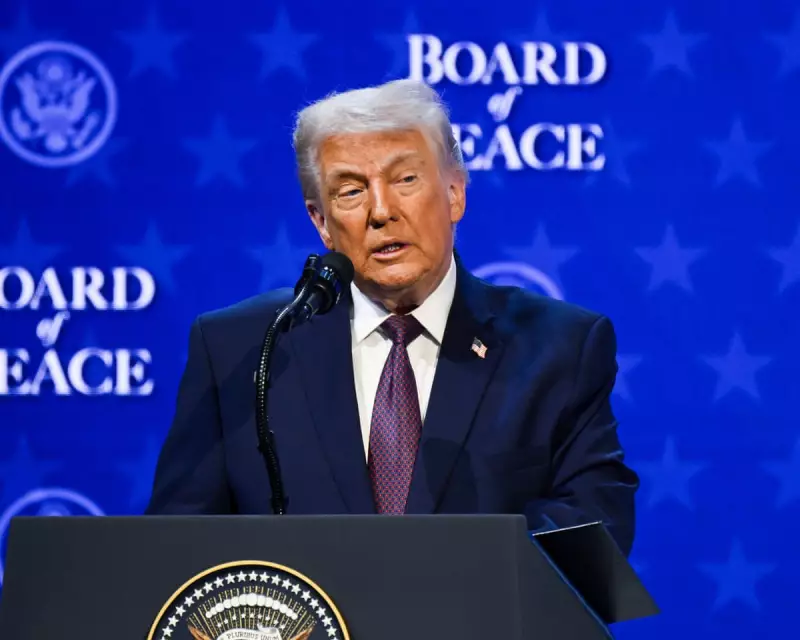
Significantly, Europe's response to the Greenland threat marked a departure from previous subordination. European leaders individually and collectively expressed solidarity with Denmark, while several nations participated in military exercises in Greenland. Most EU countries, with exceptions including Hungary and Bulgaria, avoided Trump's proposed "board of peace."
More substantively, the European Parliament suspended ratification of the EU-US trade deal on tariffs, and EU institutions began debating retaliatory measures including:

- Counter-tariffs valued at nearly €100 billion
- Potential use of the EU's anti-coercion instrument to limit US access to the single market
- Measures restricting US investment capabilities in Europe
While these remain hypothetical following Trump's retreat, their consideration represents a meaningful shift in European posture.
The Crucial Lesson for Transatlantic Relations
The clear lesson from this episode is that firmness proves more effective than appeasement in dealing with Trump's foreign policy approach. Europe's tentative display of resolve achieved what a year of genuflection could not: de-escalation of a dangerous crisis.
The risk now is that European leaders will retreat to their comfort zone of caution and inaction during the current calm. However, given Trump's demonstrated approach to international relations, further transatlantic crises are inevitable. When they occur, European leaders should remember that strength, not subordination, commands respect from leaders who value demonstrations of power above diplomatic niceties.
Europe must maintain its newfound willingness to deploy economic leverage when necessary, while recognizing that any agreements with Trump require careful scrutiny given his history of abandoning commitments. The Greenland episode demonstrates that European unity and economic resolve can effectively counter even the most dramatic threats to the continent's sovereignty and security architecture.





