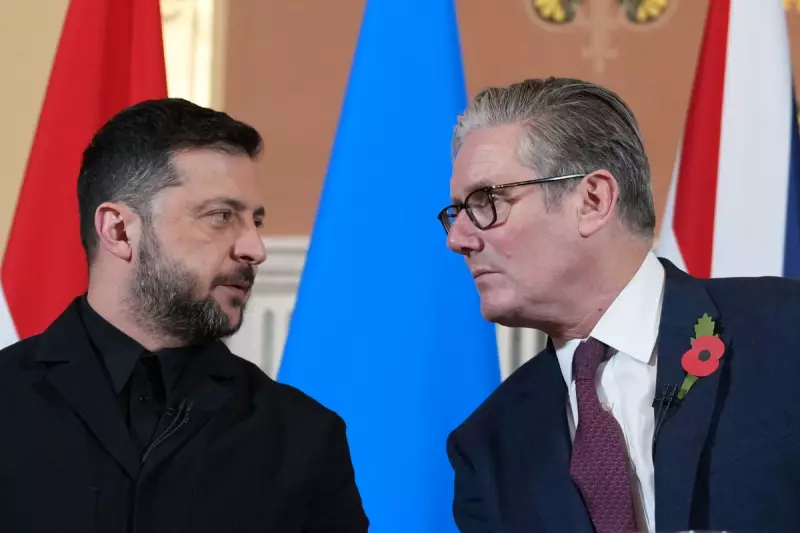
Ukraine's allies have mobilised in support of President Volodymyr Zelensky, pushing back against a controversial US peace proposal that European leaders fear concedes too much to Russian demands. The diplomatic flurry comes as Donald Trump set a deadline of next Thursday for Kyiv to agree to terms that would significantly limit its military capacity and block NATO membership.
European Leaders Unite in South Africa
Key European figures gathered in South Africa on Saturday to coordinate their response to the American initiative. The 28-point plan, quietly developed between Washington and the Kremlin, has alarmed Ukraine's partners for containing elements that mirror Moscow's long-standing objectives.
Prime Minister Sir Keir Starmer spoke with both President Trump and President Zelensky, conveying widespread concern that the current proposal fails to provide Ukraine with adequate means for self-defence. While acknowledging the plan contains essential elements for lasting peace, Starmer emphasised it requires "additional work" to be viable.
Geneva Talks and Diplomatic Manoeuvres
A Ukrainian delegation, reinforced by representatives from France, Germany and the UK, is preparing for direct talks with Washington in Geneva on Sunday to examine the proposal in detail. UK National Security Advisor Jonathan Powell departed the G20 summit early to participate in these crucial discussions.
President Trump offered some flexibility, telling reporters the peace plan wasn't his final offer. This provides a glimmer of hope for allies seeking to salvage a workable agreement that doesn't compromise Ukraine's sovereignty.
Meanwhile, President Zelensky assured the public via social media that Ukrainian representatives know how to "defend Ukraine's national interests". He later confirmed discussing the peace process with Sir Keir Starmer, noting the "vast majority" of European leaders stand ready to assist.
Contentious Provisions and Historical Parallels
The current US proposal remains deeply problematic for Kyiv and its supporters. It requires Ukraine to surrender territory to Russia, accept limits on military size, and abandon NATO membership aspirations - all key Russian demands while offering minimal security guarantees.
The plan has faced criticism even within Trump's party, with Republican senator Roger Wicker of Mississippi branding it a "so-called 'peace plan'" that shouldn't force Ukraine to "give up its lands" to Vladimir Putin.
The diplomatic discussions unfolded as Ukraine marked Holodomor Remembrance Day on Saturday, commemorating the four million victims of the Soviet-era artificial famine. President Zelensky drew parallels between that historical tragedy and the current conflict, stating Russia "has not changed and once again brings death" while urging unity in national defence.
White House press secretary Karoline Leavitt defended the proposal as "a good plan for both", developed over a month by Secretary of State Marco Rubio and special envoy Steve Witkoff. However, with European leaders insisting on substantial revisions and Ukraine demanding robust security guarantees, the path to a lasting peace agreement remains fraught with challenges.