EU Urged to Investigate Russian Meddling in Hungary's Elections
A group of cross-party Members of the European Parliament (MEPs) has raised the alarm over potential Russian interference in Hungary's upcoming parliamentary elections, urging the European Commission to take immediate action. With decisive polls just days away, threatening Prime Minister Viktor Orbán's 16-year rule, the MEPs have written to European Commission President Ursula von der Leyen and Rule of Law Commissioner Michael McGrath, calling for an urgent assessment of electoral integrity.
Allegations of Disinformation and Intimidation
In their letter, the MEPs highlighted concerns that free and fair competition is being undermined by disinformation campaigns, foreign manipulation, misuse of state resources, intimidation of journalists, and unlawful interference with opposition actors. They cited a report by the independent media outlet VSquare, which alleged that the Kremlin has dispatched a team to manipulate Hungary's elections, overseen by Sergei Kiriyenko, a key aide to Russian President Vladimir Putin.
The report suggested that Kiriyenko orchestrated a similar campaign in Moldova, involving vote-buying operations and troll farms targeting pro-EU President Maia Sandu. The journalist behind the report, Szabolcs Panyi, has faced severe intimidation from Hungarian authorities, accused of spying for Ukraine, which the MEPs described as "a state-led intimidation of unprecedented severity."

Concerns Over Voter Coercion and Security Breaches
Additionally, the MEPs raised credible allegations of unauthorised attempts to access opposition party IT systems, including by state security forces. They flagged well-documented instances of vote-buying and intimidation by Orbán's ruling Fidesz party, warning of a serious risk of voter coercion. The group emphasised that the European Union cannot credibly defend democracy externally while failing to react to such strains on electoral integrity within its own borders.
Leaked Recording Fuels Diplomatic Tensions
The appeal coincided with the European Commission demanding an urgent explanation from Budapest over a leaked phone call between Hungarian Foreign Minister Péter Szijjártó and his Russian counterpart, Sergei Lavrov. In the recording, Szijjártó appeared to offer to send Lavrov a document related to Ukraine's EU accession talks, raising concerns about Hungary's coordination with Russia.
French Foreign Minister Jean-Noël Barrot condemned the incident as "a betrayal of the solidarity" required among EU nations, while Polish Prime Minister Donald Tusk called it "really beyond shocking." The Commission's chief spokesperson, Paula Pinho, stated that the recording raised "the alarming possibility of a member state coordinating with Russia, thus actively working against the security and the interests of the EU."
Criticism of Commission's Hesitancy
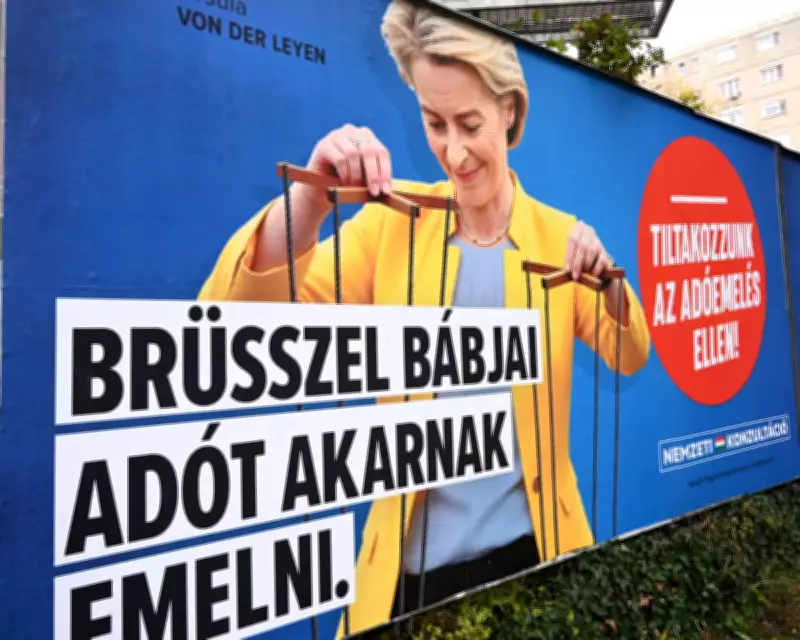
Dutch Green MEP Tineke Strik, who leads the European Parliament's work on democratic standards in Hungary, criticised the Commission for being "too hesitant" in dealing with Budapest. She noted that the Commission is "very afraid" of accusations of election interference, despite Orbán's government using anti-EU rhetoric and billboard campaigns targeting European leaders, including von der Leyen.
Strik argued that the Commission should be more outspoken to protect Hungarian citizens' interests, stating, "So far, they don't do it. I understand their reasons, but they reason too much on the basis of a normal democratic process. And that's the point that I make to them: we are not in a normal situation."
Broader Context of EU-Hungary Relations
This controversy unfolds against a backdrop of heightened tensions, exemplified by a Hungarian government billboard in Budapest depicting von der Leyen as a puppet master with the text: "Brussels' puppets want to raise taxes." Such imagery underscores the ongoing friction between Orbán's administration and EU institutions, as allegations of Russian meddling and democratic backsliding continue to strain relations.