The geopolitical chessboard of the Arctic is being redrawn, and Europe must make a bold move to secure its interests. With former US President Donald Trump's renewed fixation on acquiring Greenland, analysts are urging the European Union to act decisively by offering the vast, resource-rich territory membership of the bloc.
A Shifting Arctic: From Zone of Peace to Geopolitical Arena
Once considered a remote zone of peace, the Arctic has surged to the centre of global strategic competition. This shift is driven by an expanding US footprint, Russia's entrenched military presence, and China's growing ambitions as a "near-Arctic state". For Europe, the region is not a new frontier. The EU's presence is already established through its three Nordic member states: Finland, Sweden, and the Kingdom of Denmark, though notably Greenland left the European Communities in 1985 after gaining home rule.
The European Arctic holds vast reserves of hydrocarbons, critical minerals, and marine proteins, forming a crucial part of the continent's economic backbone. Yet, despite an EU Arctic policy existing since 2008, the broader circumpolar north has often been absent from high-level European security debates. Its stability previously offered little impetus for deeper engagement.

Trump's Interest and Europe's Muted Response
Donald Trump's revived interest in purchasing Greenland has acted as a geopolitical wake-up call. This was illustrated by a joint statement issued on 6 January by France, Germany, Italy, Poland, Spain, the UK, and Denmark, followed by Nordic foreign ministers. However, the response from EU institutions has been notably restrained.
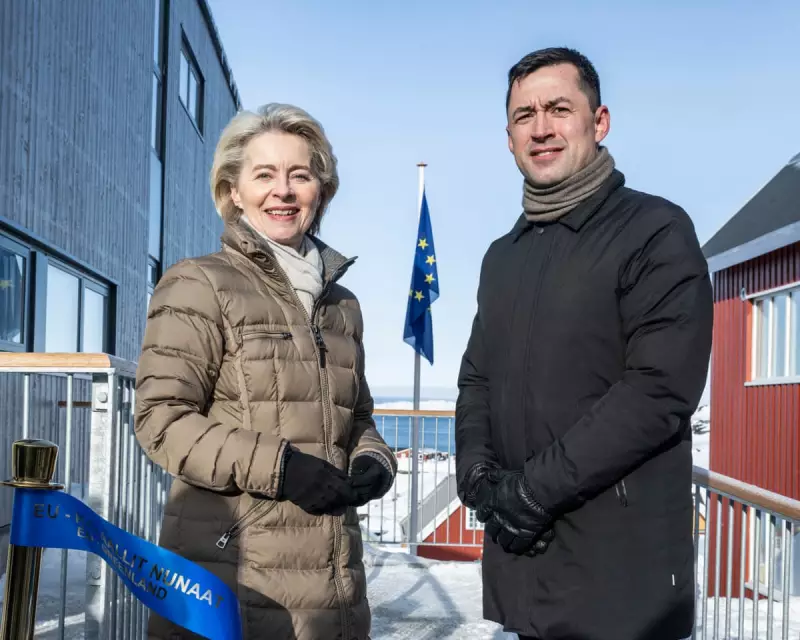
Commission President Ursula von der Leyen made no mention of the Arctic or Greenland in her September 2023 State of the Union address, highlighting the region's struggle for attention within the EU's bureaucratic framework. As the European Commission and the European External Action Service work on updating the EU's Arctic policy, experts argue the moment demands a more fundamental rethink of Europe's role in the north.
A Concrete Proposal: EU Membership for Greenland
With debates increasingly focusing on the acquisition or even occupation of Greenland, Europe's lack of a compelling counter-proposal is striking. The answer, according to analysts, is to explicitly offer EU membership to Greenland, and by extension to the Faroe Islands, Iceland, and Norway—an idea recently floated in the European Parliament.
In a world altered by Russia's war in Ukraine and transatlantic turbulence, attitudes have changed. A pragmatic, phased proposal could include:
- EU membership by 2026 or 2027.
- An early agreement on key issues like fisheries, subject to renegotiation after five to ten years.
- A substantial investment package targeting infrastructure and the sustainable extraction of critical raw materials.
- A firm commitment to preserving Inuit culture, language, and local decision-making autonomy.
This would represent a concrete offer from a continent that must increasingly engage in realpolitik. Europe's strength lies in convening power and rules-based cooperation, not domination. By acting as a convener, the EU could ensure Greenland and the wider Arctic remain a space for multilateral coordination, not unilateral hegemony.
The article's authors, former German Vice-Chancellor Robert Habeck and Arctic scholar Andreas Raspotnik, conclude that Trump's politics are straightforward. What has changed is Europe's position—from a steadfast ally to something closer to a strategic frenemy. It is time for European leaders to respond accordingly, and the Arctic may be the perfect place to start.