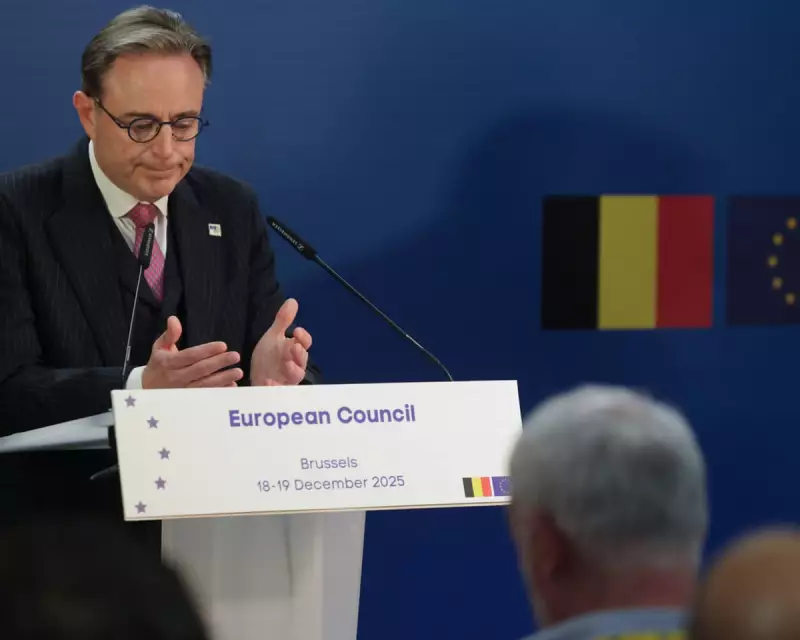
In a marathon overnight session that tested European unity, EU leaders have finally agreed on a crucial €90 billion financial lifeline for Ukraine. The deal, reached after 16 hours of intense negotiations, represents a significant political compromise and marks a potential turning point in how the bloc funds its foreign policy ambitions.
The Collapse of the 'Reparations Loan' Plan
The agreement that emerged in the early hours of Friday was not the European Commission's preferred option. For months, the plan championed by Commission President Ursula von der Leyen and German Chancellor Friedrich Merz involved a so-called 'reparations loan'. This scheme would have seen the EU borrow against €210 billion of frozen Russian central bank assets, primarily held in Belgium, to fund Ukraine, with Kyiv repaying the debt using future Russian war reparations.
This proposal offered moral symmetry—using Russian money to help Ukraine resist Russian aggression—and avoided new common EU borrowing. However, it faced a formidable obstacle in Belgian Prime Minister Bart De Wever. He argued forcefully that the plan, which Moscow decried as theft, would provoke retaliation and risked Belgian assets being seized by courts in Russia-friendly jurisdictions like China.
A Belgian Standoff and an Unlikely Coalition
De Wever, riding a wave of domestic popularity, held his ground against immense pressure from Berlin and Brussels. Up to the summit's start, many diplomats expected him to capitulate. Instead, he demanded unlimited financial guarantees from all member states against any Russian legal claims, a condition deemed unacceptable.
With the primary plan deadlocked, an alternative—using unallocated EU budget funds as collateral for a collective loan—gained traction. This 'Plan B' found a powerful advocate in Italian Prime Minister Giorgia Meloni, with French President Emmanuel Macron also lending his support. Crucially, the plan required overcoming unanimity rules for new EU debt.
In a historic move, Eurosceptic leaders Viktor Orbán of Hungary, Robert Fico of Slovakia, and Andrej Babiš of the Czech Republic were brought on board. They secured an exemption for their countries, allowing them to tell their populist bases that their taxpayers would not be directly funding Ukraine's defence.
Significance and a New Path for EU Foreign Policy
The immediate outcome is a victory for Ukraine, which will receive vital funds sooner than under the frozen-assets plan and avert a financial crisis. Politically, it is a win for De Wever, who declared "rationality has prevailed" and that the voice of smaller member states counts. It also delivered a result for the Eurosceptic trio.
Analysts suggest the deal's true importance may lie in its mechanism. Guntram Wolff of the Bruegel think tank called it a "huge deal for the EU," stating that effective foreign policy requires EU resources and debt. For the first time, a decision on new EU debt was reached without full unanimity, setting a potential precedent.
Professor Alberto Alemanno noted the "unprecedented" nature of allowing willing states to proceed with "EU budget-backed borrowing, with selective participation in collective liability." While the summit exposed familiar divisions, it also demonstrated the bloc's ability to forge a complex agreement for an existentially important goal, potentially charting a new course for collective European action.