The recent US-led incursion into Venezuela, which aimed to capture leader Nicolás Maduro, was partly motivated by the horrific conditions inside a notorious Caracas prison known as El Helicoide. Former inmates describe it as 'hell on earth', a place of systematic torture where the only respite from blinding white lights was the flicker caused by a neighbour's electrocution.
A Chamber of Horrors: The 'White Rooms' of El Helicoide
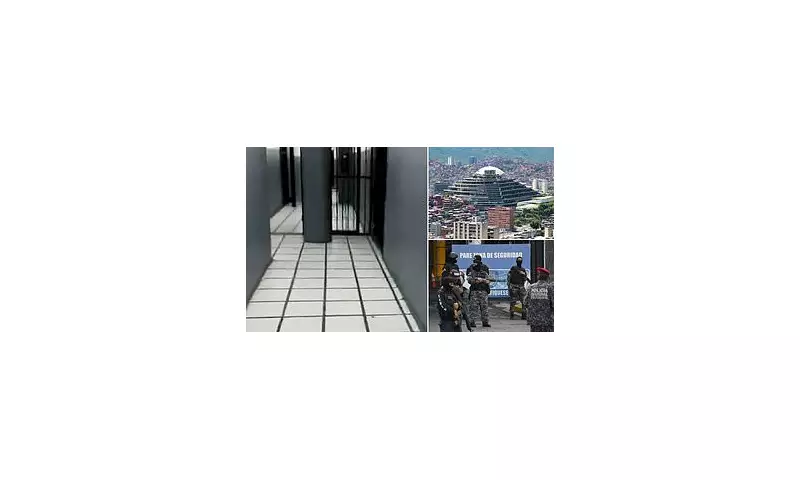
El Helicoide is infamous for its 'White Rooms' – windowless cells perpetually lit with sterile white light to inflict severe sleep deprivation and disorientation on detainees. Former prisoners report that power lapses were only temporary, often caused by the brutal electrocution of someone in a neighbouring chamber.
Opposition politician Rosmit Mantilla, held for two years, gave a harrowing account to the Telegraph. 'Some of them lost sight in their right eye because they had an electrode placed in their eye,' he stated. He described prisoners being 'hung up like dead fish' during torture sessions. Mantilla was kept in a tiny 16ft by 9ft cell nicknamed 'El Infiernito' (Little Hell), where inmates were forced to urinate next to their food due to lack of space.

Another activist, identified only as Fernández, spent two-and-a-half years in the prison. He told the Financial Times he was greeted by an officer who rubbed his hands and said, 'Welcome to hell.' He witnessed guards electrocuting prisoners' genitals and suffocating them with plastic bags filled with tear gas. Fernández was himself suspended from a metal grate for a month, deprived of basic sanitation and proper food.
From Shopping Mall to Secret Police Dungeon
The building's history is a stark contrast to its recent use. Designed in the 1950s as a major entertainment complex, the spiral-shaped structure was meant to house 300 boutiques, cinemas, a hotel, and a heliport. Construction halted after the overthrow of dictator Marcos Pérez Jiménez, and the government acquired the abandoned site in 1975.
Over decades, shadowy intelligence agencies moved in. By 2010, it had been converted into a makeshift prison for SEBIN, Venezuela's secret police, where systematic torture became routine. Alex Neve of a UN Human Rights Council mission noted, 'The very mention of El Helicoide gives rise to a sense of fear and terror.'
Political Shifts and a Path to Release?
The prison's closure was cited as a reason for the unprecedented US operation earlier this month. Following the mission, former President Donald Trump labelled El Helicoide a 'torture chamber'. With Maduro's ouster and replacement by Vice President Delcy Rodriguez, a shift may be underway.
Trump has since described a 'long call' with Rodriguez, calling her a 'terrific person' and noting discussions on oil, trade, and security. Rodriguez has already made concessions, releasing hundreds of political prisoners in multiple tranches after talks with US officials.
However, the UN believes around 800 political prisoners remain in Venezuelan custody. Whether they will be freed under Rodriguez's nascent regime is a critical question for a nation where El Helicoide stands as a physical symbol of decades of repression. For survivors like Fernández, now based in the US, the trauma endures; the jingle of keys still torments him, a sound that heralded the removal of someone for torture.