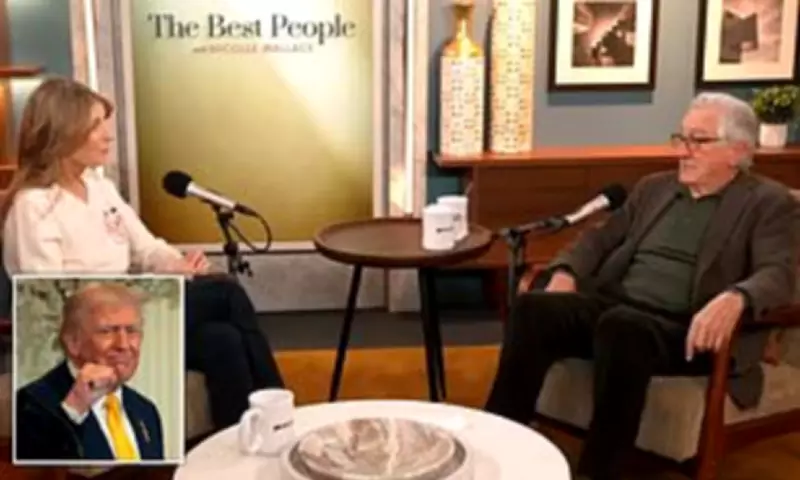
During a highly charged interview on MSNBC's 'The Best People' podcast, veteran actor Robert De Niro became visibly emotional while delivering scathing criticism of former President Donald Trump. The conversation, hosted by journalist Nicolle Wallace, saw the 82-year-old Hollywood legend break down in tears as he described Trump's presidency as destructive to the United States.
Emotional Plea for National Unity
De Niro's voice trembled with emotion as he declared, 'I want my country back,' during the Monday edition of Wallace's programme. The actor, known for his tough-guy roles in films like 'Raging Bull,' appeared overcome with feeling as he discussed the current political climate. 'You have to lift people up,' De Niro insisted, his words punctuated by visible distress. 'You can't divide people. You can't win that way.'
Wallace's Partisan Praise
Wallace, a former White House communications director turned MSNBC host, showered De Niro with admiration throughout the interview. At one point, she acknowledged, 'You weren't supposed to make me cry,' though observers noted her face remained completely dry without any visible signs of emotion. The journalist could be seen looking at De Niro with an adoring expression, hanging on his every word as he became increasingly choked up.

Trump as National Threat
De Niro framed Trump as an existential threat to American democracy, describing the country's current state as 'a no-win situation.' The actor elaborated, 'Look what we have, look who we have there. It's almost like a destiny to have this thing there, destroying - attempting to destroy this country and maybe not even understanding why.'
The interview largely revolved around Trump's presidency, with De Niro spending the better part of an hour criticising the former president. 'It's time for us who've taken this country for granted to stand up and get rid of this guy,' the actor declared. 'When you talk about the stakes of the election, it's clear, it's plain, the evidence is before our eyes.'
Call to Action and Resistance
De Niro urged Americans to take decisive action against Trump's political influence. 'I do see what we're up against, and it makes me so angry. I don't see how we can ignore it,' he stated emphatically. 'There's no easy way around this. It takes a determination and knowing that you have no choice but to go forward. If you don't go forward, it's over.'
When Wallace asked whether this moment represented a turning point toward something better for America, De Niro responded with uncertainty. 'I don't know. All I know is people have to resist, resist, resist. There's no easy way,' he asserted. The actor added a dramatic metaphor: 'You better jump and run through the fire because if you don't run through the fire, you're not getting out, and that's what we have to do.'
Historical Context of Criticism
This emotional interview represents De Niro's most recent public condemnation of Trump, but it follows months of outspoken criticism from the actor. Just months earlier, De Niro participated in nationwide 'No Kings' protests against the administration. In October, during an appearance on MSNBC's 'The Weekend,' he compared Homeland Security Advisor Stephen Miller to Joseph Goebbels, Adolf Hitler's chief propagandist.
During that previous interview, when asked whether Trump would graciously leave the White House after his term, De Niro responded unequivocally: 'No way. We see it all the time - he will not want to leave.' This consistent pattern of criticism underscores De Niro's deep concerns about Trump's impact on American democracy and institutions.
The Interview's Aftermath
The emotional exchange between Wallace and De Niro highlights the intense partisan divisions in contemporary American politics. While Wallace presented the interview as a heartfelt conversation about national values, critics might view it as another example of celebrity political activism within a partisan media framework. Regardless of perspective, De Niro's tearful plea for his country has undoubtedly added another chapter to the ongoing cultural and political debates surrounding Trump's legacy and America's future direction.