Damaged Car in Tehran After Israeli-US Strike, Iran's Strategic Dilemma
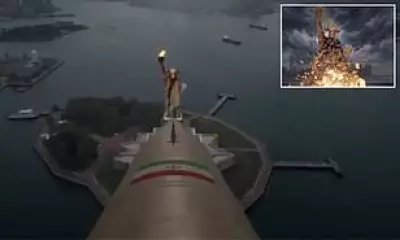
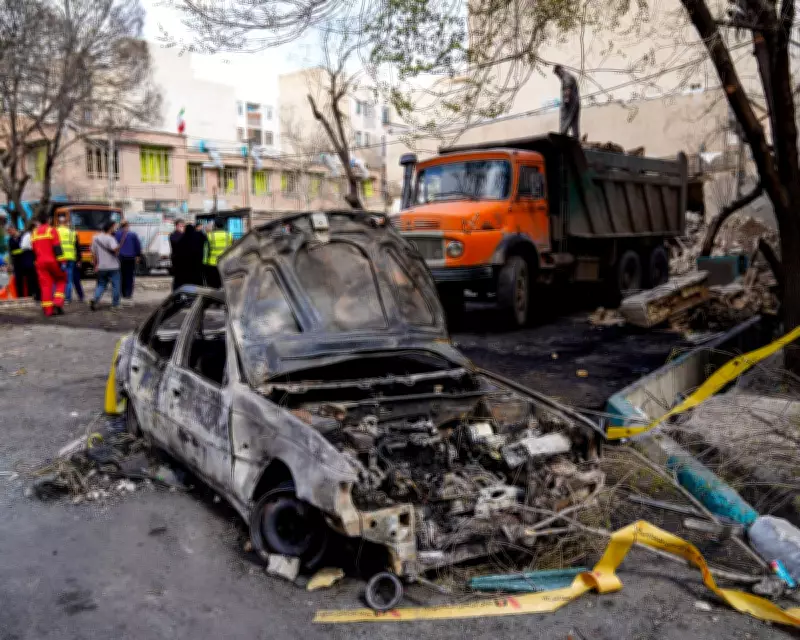
A damaged car remains on the ground in the aftermath of a coordinated Israeli-US strike in Tehran, Iran, on 28 February 2026. The attack, part of a broader assault, targeted Supreme Leader Ali Khamenei's compound, with heavy plumes of smoke visible from the site. Film on social media and satellite imagery confirmed the destruction, though Khamenei's fate is uncertain. The strike aimed to effect regime change through bombing, a tactic with no credible justification in international law, according to analysts.
Iran's Response and Regional Escalation
Iran, recognizing an existential crisis, quickly launched ballistic missiles and drones against Israel and US allies in Jordan, Kuwait, Bahrain, Qatar, the UAE, and Saudi Arabia, drawing six other countries into the conflict. The UK, not party to the initial attack, supplied fighter jets to protect regional allies. Initial signs indicate the military contest is one-sided, with Iran targeting Israel with 25 waves of attack by 5.30pm local time, while Israel's Magen David Adom reported 89 people wounded. Casualties from Iran's retaliation have been limited, but one person was killed in Abu Dhabi from falling debris, and a fire broke out at the Fairmont hotel in Dubai after a hit.
Strategic Options and International Law
With few good strategic options, Iran's best prospect may be to retaliate while it can and retain control of the streets, as the US and Israel have expressed no intention of mounting a ground invasion. The regime could try to enforce a closure of the Strait of Hormuz, through which an estimated fifth of the world's oil supply passes, by mining shipping lanes with Russian Kilo class and midget Ghadir submarines. However, the US is likely to disrupt such operations. The US and Israel plan a bombing campaign that could last weeks, while Iran runs down its estimated stock of 2,000 ballistic missiles. Its ability to retaliate at scale may only last a few days, compared to the US's capacity for over 125 bombing missions daily from each aircraft carrier.

Civilian Impact and Succession Plans
A primary school for girls in Minab, southern Iran, was struck, killing 85, according to Tasnim news agency, highlighting the inaccuracy of so-called precision bombing. Khamenei had named four layers of succession for key government and military jobs earlier this month, aiming to ensure regime survival. HA Hellyer, a senior fellow at the Royal United Services Institute, noted that without boots on the ground, the monopoly of force domestically remains with the Iranian regime, changeable only through mass defections.
Military Details and Global Implications
Explosions were heard in Tehran, Isfahan, Kermanshah, Qom, and other large cities in a broad assault that began in the morning, a deliberate change from night-time strikes for operational surprise. Hundreds of targets were struck in multiple waves, with little opposition from Iran's depleted air defences. The US amassed two carrier strike groups in the region, each with about 75 combat aircraft and Tomahawk cruise missiles. Lord Ricketts, former UK national security adviser, criticized the war, stating it started with vague objectives, no international law base, and little support from Gulf states or other US allies.