
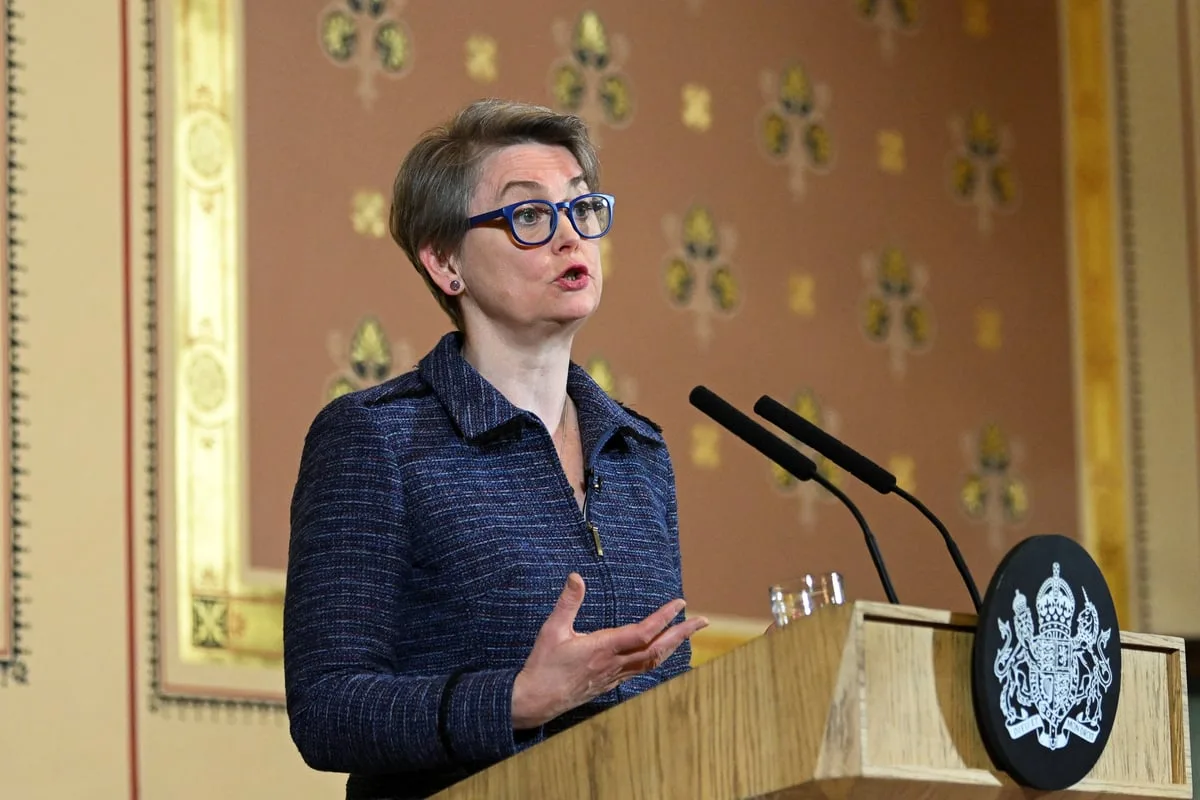
Foreign Secretary Yvette Cooper has pushed back against Donald Trump’s description of European nations as “decaying” and “weak”, instead praising the continent’s “strength” and commitment to Ukraine. She also defended London Mayor Sadiq Khan after the US president called him a “disaster” and a “disgusting mayor”.
Speaking after a speech marking 100 years of the Locarno Pact, Cooper said Europe had shown “determination” in its support for Kyiv. “What I see in Europe is strength,” she told journalists, citing increased defence investment and backing for the “coalition of the willing”. On Khan, she said: “I think the mayor is doing an excellent job for all of London.”
Trump’s remarks, made in a Politico podcast interview, accused Europe of failing to control immigration and end the Ukraine war, warning some nations would “not be viable countries any longer” without border policy changes. He also claimed Khan had been elected “because so many people have come in”. Khan responded by suggesting Trump was “obsessed” with him and that Americans are “flocking” to London.
Cooper acknowledged the fragility of the Ukraine situation but insisted US commitment to NATO remained strong. “The discussions that I had with secretary of state Rubio yesterday were incredibly clear about the strength of the US commitment to Nato,” she said, following a meeting with Marco Rubio.




