Iran's Leadership Crisis: The Race to Replace Khamenei
Iran is facing a profound leadership vacuum following the death of Supreme Leader Ayatollah Ali Khamenei, who was killed in a surprise bombardment by U.S. and Israeli forces. After ruling the Islamic Republic for 37 years, his demise has triggered an urgent scramble among the nation's elite to appoint a successor, marking only the second such transition since the 1979 Islamic Revolution.
The Selection Process and Interim Governance
In the interim, a provisional governing council is steering Iran through this unprecedented crisis. The council includes President Masoud Pezeshkian, hard-line judiciary chief Gholamhossein Mohseni Ejei, and senior Shiite cleric Ayatollah Ali Reza Arafi. Foreign Minister Abbas Araghchi has indicated that a new supreme leader will be chosen early this week, a decision that rests with the 88-member Assembly of Experts.
This clerical panel, whose members are popularly elected after vetting by the Guardian Council, is legally mandated to swiftly name a successor. However, Khamenei's extensive influence over both bodies suggests that any new leader is unlikely to represent a radical departure from existing policies. The supreme leader holds ultimate authority over all major state decisions, including matters of war, peace, and the contentious nuclear program.

Key Contenders for the Supreme Leadership
The field of potential candidates is diverse, spanning from hard-liners advocating confrontation with the West to reformists favoring diplomatic engagement. Here are the leading figures in the succession race:
- Mojtaba Khamenei: The son of the late supreme leader, a mid-level Shiite cleric with strong ties to Iran's Revolutionary Guard. Despite never holding public office, he is widely seen as a contender, though his selection could challenge the republic's anti-hereditary principles.
- Ayatollah Ali Reza Arafi: A member of the provisional council, Arafi was appointed by Khamenei to the Guardian Council in 2019 and later elected to the Assembly of Experts. He leads a network of seminaries and is a respected senior cleric.
- Hassan Rouhani: A relative moderate who served as president from 2013 to 2021, Rouhani negotiated the landmark nuclear deal with the Obama administration. He left the Assembly of Experts in 2024 after being disqualified from reelection, which he criticized as undermining political participation.
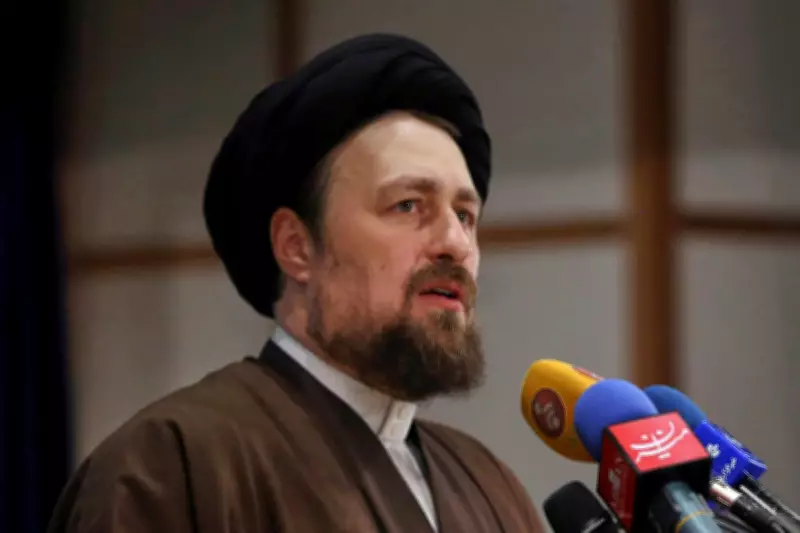
- Hassan Khomeini: The grandson of the republic's founder, Ayatollah Ruhollah Khomeini, he is viewed as a moderate but lacks government experience, currently working at his grandfather's mausoleum in Tehran.
- Ayatollah Mohammed Mehdi Mirbagheri: A senior cleric popular with hard-liners, serving on the Assembly of Experts. He was close to the late Ayatollah Mohammad Taghi Mesbah Yazdi, who advocated for Iran's right to develop "special weapons." During the COVID-19 pandemic, Mirbagheri denounced school closures as a "conspiracy" and heads the Islamic Cultural Center in Qom.
As Iran navigates this critical juncture, the choice of supreme leader will significantly impact its domestic stability and international relations, with the world closely watching the outcome of this historic selection process.