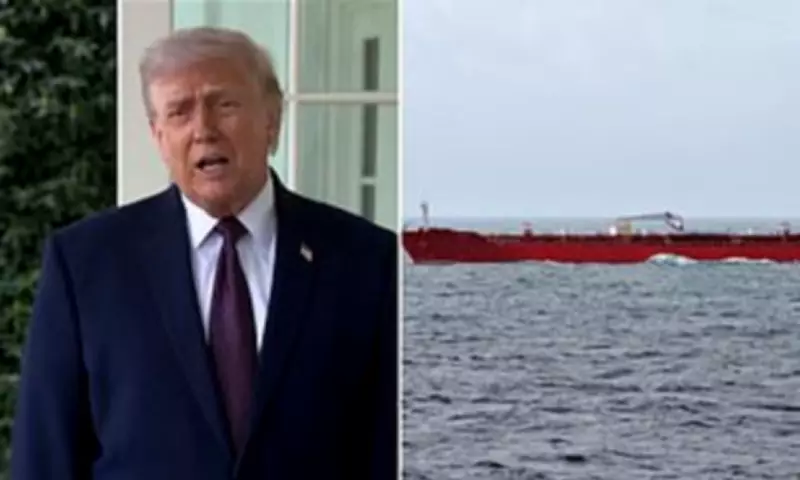
Chinese Tanker Defies Trump's Hormuz Blockade Amid Rising Tensions
A Chinese oil tanker has openly defied former US President Donald Trump's naval blockade of the Strait of Hormuz, passing through the critical waterway after Beijing issued a stern condemnation of Washington's actions. The vessel's transit comes amidst escalating geopolitical friction, with China accusing Trump of engaging in 'dangerous and irresponsible' behaviour that threatens global maritime security.
Trump's Blockade Threat and Chinese Response
Donald Trump had threatened to stop 'any and all ships' from using the Strait of Hormuz beginning Monday, following the collapse of peace negotiations with Iran. The former president declared that Iran's navy was effectively destroyed and warned that any remaining 'fast attack ships' would be 'immediately eliminated' if they attempted to interfere with his blockade strategy.
Despite these warnings, the Chinese-owned tanker Rich Starry proceeded through the strait on Tuesday. The vessel, which carries approximately 250,000 barrels of Iranian crude oil, is owned by Shanghai Xuanrun Shipping Co Ltd and had previously been sanctioned by the United States.

Chinese Foreign Ministry spokesman Guo Jiakun strongly criticised the American position, stating: 'The US increased military operations and took a targeted blockade action, which will only exacerbate tensions and undermine the already fragile ceasefire agreement and further jeopardise safety of passage through the Strait.'
Multiple Vessels Challenge the Blockade
Shipping data revealed that the Rich Starry was not alone in challenging Trump's blockade. The tanker had loaded its cargo at the United Arab Emirates' Hamriyah Port before transiting the strait, according to tracking information from Kpler and MarineTraffic.
Additionally, two other Iranian-linked tankers entered the Gulf via the Strait of Hormuz on Tuesday. The Handy tanker Murlikishan was reportedly heading to Iraq to load fuel oil, while the Panama-flagged Peace Gulf was en route to Hamriyah Port. The latter vessel typically transports Iranian naphtha to other Middle Eastern ports for eventual export to Asian markets.
Regional Concerns and Iranian Warnings
Saudi Arabia has urged the United States to abandon the blockade and return to diplomatic negotiations. Saudi officials reportedly fear that the American closure could provoke Iran into escalating tensions and potentially disrupting other vital shipping routes, including the Bab al-Mandeb chokepoint in the Red Sea through which approximately 12 percent of global oil flows daily.
Iranian Supreme Leader Mojtaba Khamenei warned that Tehran possesses 'large, untouched levers' to retaliate against the blockade, dismissing Trump's threats as mere 'tweets and imaginary plans.' Meanwhile, Parliament Speaker Mohammad Bagher Ghalibaf cautioned Americans about potential economic consequences, suggesting they might soon 'be nostalgic for $4-$5 gas.'
Background of the Strait Closure
The current crisis stems from Iran's earlier decision to shut down the Strait of Hormuz, through which approximately one-fifth of global oil passes, following joint US-Israeli military strikes that triggered worldwide economic disruption. Tehran had initially allowed limited friendly ship traffic while implementing an unofficial toll system, but Trump's blockade aims to completely restrict all vessel movements.
Despite a tenuous two-week ceasefire agreement between the US and Iran that included reopening the strait, traffic has remained severely limited. Marine trackers indicate only about 40 commercial ships have crossed since the ceasefire began, a dramatic reduction from the typical daily volume exceeding 100 vessels.
Military Realities and Ongoing Threats
While Trump claimed that the Iranian Navy's threat has been eliminated from the waterway following US military actions since February 28, security experts note that although much of Iran's larger naval assets have been destroyed, the smaller boats that traditionally patrol the Strait of Hormuz remain operational and potentially dangerous.

Iran has issued warnings about possible antiship mines in the area and urged vessels to follow new coastal routes with guidance from the Islamic Revolutionary Guard Corps. The country has also threatened via marine radio to destroy any unauthorized ships attempting to cross the strait during the blockade period.
Trump announced the blockade via Truth Social on Sunday, declaring: 'Effective immediately, the United States Navy, the Finest in the World, will begin the process of BLOCKADING any and all Ships trying to enter, or leave, the Strait of Hormuz.' He added the stark warning: 'Any Iranian who fires at us, or at peaceful vessels, will be BLOWN TO HELL!'
The former president insisted that Iran wants to reach a deal 'very badly,' suggesting the primary obstacle remains nuclear ambitions, but maintained that an agreement could still be possible despite the recent breakdown of peace talks in Pakistan and widespread concerns that the fragile ceasefire could collapse at any moment.